

In late January 2026, I visited Dzikra Afifah and Louise Henryette’s new studio in Dago, Bandung. They just moved, and were in the middle of preparing for their duo exhibition Of the Unknown Creature at ArtSociates (31 January – 27 February 2026).
It feels like a casual visit at first, lots of catching up, continuing a conversation that had been long overdue. But being here, it was hard not to notice how their daily routines and working habits sit so close to each other. By the time I arrived, most of the work was almost done. Dzikra was busy firing her ceramic pieces, and Louise was varnishing her paintings, both going back and forth between finishing, packing, and other things. It was basically done on auto-pilot.
Under the same roof, I kept noticing how they handled the space differently. Dzikra would clean as soon as something was done, resetting the table, clearing the floor. Meanwhile, Louise left things as they were, holding on to the small leftovers from the working process. These things kept repeating throughout the day. And for Dzikra and Louise, making work is bound to what’s around them, such as humidity, space, weight, time, even their own bodies, and their recent move hasn’t just changed where they work, but also how they measure the process. How long does something take to dry? How far can a piece be moved? How does air actually circulate in the room?
We ended up talking about that, along with the move, the studio, and how sharing a working as well as a living space actually works for them. Here’s the conversation, put together from our long, unstructured chats during my visit and stay at their studio.
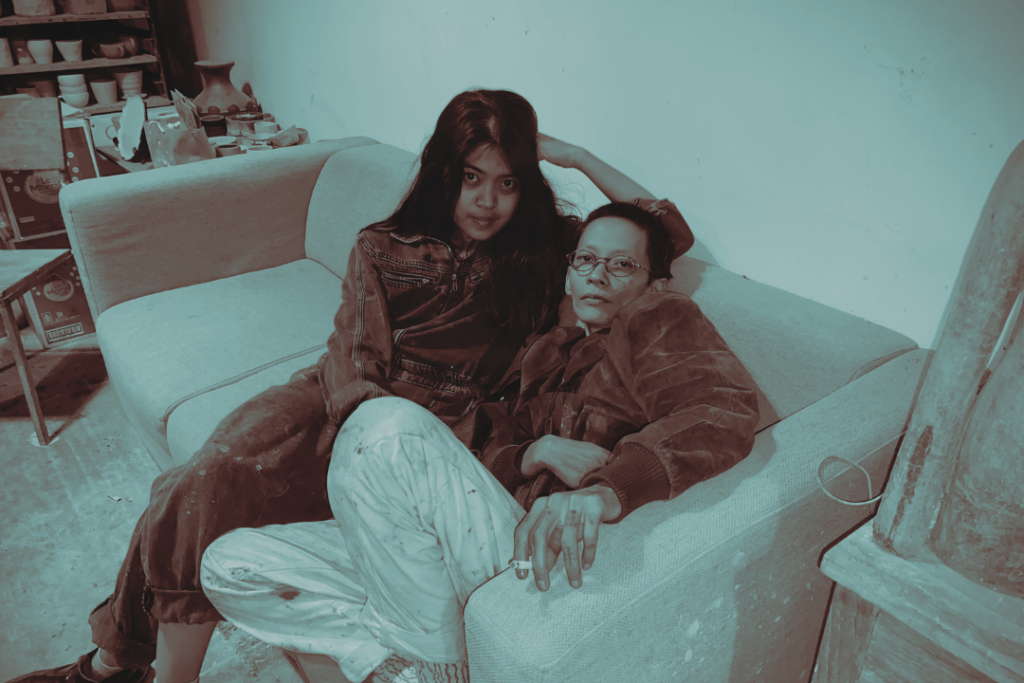
Can you introduce yourselves and share what you do on a daily basis?
Dzikra (DZ):
Hi, I’m Dzikra, a sculptor artist based in Bandung. Most days, you’ll find me busy making sculptures. But I also clean a lot. I wash, mop, and rearrange books. It’s my way of keeping my soul alive. I call it “solitary exercise.” It’s supposed to be something like running… but more functional, because at least the house gets cleaned.
When your body is tired (but not from making art), your mind quiets down. You don’t overthink. You don’t have the energy for small talk. It’s peaceful in a very practical way.
In the morning, I also do simple weight training with the dumbbells I have at home. It helps build muscle reflex, especially for lifting sculptures. Basically, I train my body so it can keep up with my work.
Louise (LO):
Hi, I’m Louise, I’m an artist living in Bandung and have been living and working here since 2007. I work with many mediums, including sound, installation, sculpture, printmaking, and painting. However, I think whatever the medium is, drawing is always my main vision, and all of my works are deeply rooted in the act of drawing.
Cooking is already an everyday thing for me. But what really makes me feel alive is checking the maintenance of tools, figuring out what’s broken and what can be fixed. Even when I’m tidying up, I focus more on the tools. I don’t like stains or marks from work, my tables have to be super clean. But, sometimes they’re so clean that I forget where I put things. After working, I prefer to clean the tools first before cleaning the whole space.
We’ve been together for almost seven years. Our old house was very crowded. “Let’s clean up,” was a regular phrase. Dzikra is extremely thorough when organizing, everything spotless and in place. Meanwhile, I’m the type who still collects tiny leftover scraps from our work, her or mine,because I believe they can become something someday. But when those pieces disappear, I feel like I’ve lost something… even though I can’t remember what it was or where I last put it.
I love making boxes for materials. I carefully sort everything, and it can take days to finish one box. I reuse cans, clean them up, it’s like my warming-up ritual before creating. In our new place, since we finally have some land, I’ve already started again. By day two, I was already warming up by picking leaves, pulling out weeds. Dzikra often scolds me because there are “more important” tasks to do.
Back in Cibiru, our rice cooker broke. During the move, they broke again. Dzikra thought they should be thrown away, but I still wanted to fix them, maybe not for their original function, but to repurpose them, like heating copper plates for etching. In the end, they were sold as scrap. I got instantly mad. But… I’m learning to understand.It’s just that when it comes to letting go.

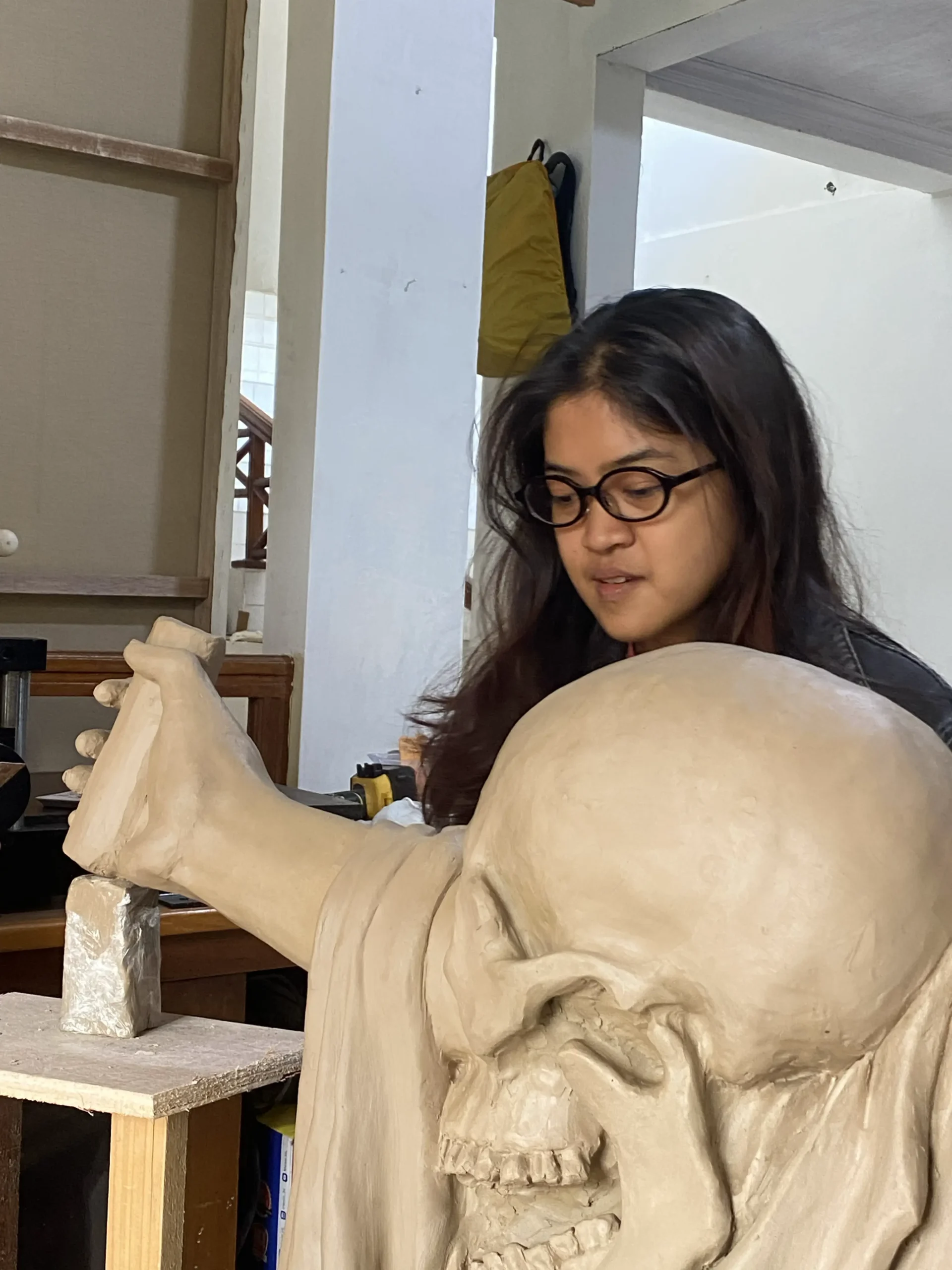
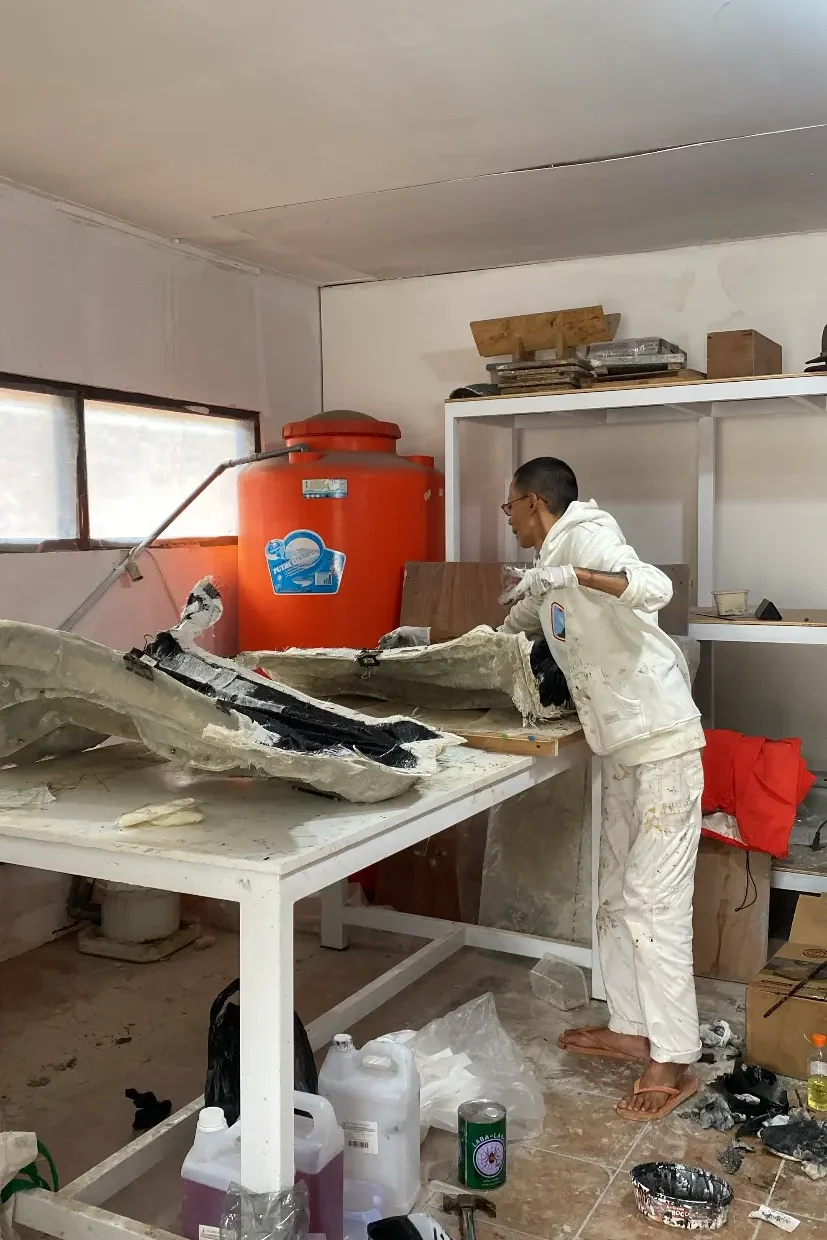
You both recently moved. What were the struggles and considerations?
DZ:
We moved because the previous place simply wasn’t enough anymore. It couldn’t accommodate the scale of the works or the process itself. There was no more room to grow.
We found this new place in Dago, and the biggest impact is space it’s wider, more proper, and honestly, it gives us a lot of “homework” in a fun way. There are so many windows to clean. Suddenly, in one day, I want to do many things at once. I can start with this, then move to that. The openness changes everything.
Before this, my studio was basically a boarding room, and sometimes I used the campus studio. It was tight. Every time I finished a work, I had to think hard about where to place it. Sometimes I had to rotate space with Louis. It felt compressed.
We had two or three other house options. Some were too new, I felt almost guilty imagining making them dirty as a studio. Some didn’t have the potential to function as a studio for my needs.
Fun fact: in our previous studio, we could see each other working. Now, because we each have our own space and rhythm, we don’t really see each other work anymore. Sometimes I miss that. I kind of want to build something where we can watch each other work again, but at the same time, this distance also works.
As long as the space is flexible, we can adapt.
LO:
Before moving here, I looked at three different houses along the main road. Some of my previous works were gigantic, but they were often knock-down pieces. Actually, I can adapt to almost any space.
After living with Dzikra, I started thinking differently. Dzikra’s works tend to be more solid and not assembled or knock-down, so we had to consider things like loading access, especially for bringing works to the kiln. In that sense, our current place feels more spacious and flexible. Even though Dago has many steep roads, logistically it still feels more manageable.
What changed after moving?
DZ:
Here, the rhythm of my work changed the most. I work faster. My breathing feels smoother. The air is better geographically. Space really affects how I think and move.
LO:
I only realized something important when working on a new gypsum piece for an exhibition. Usually, I could easily find gypsum casting materials (the kind often used for house ornaments). But after moving to Dago, I noticed that in the northern area, especially Dago, there aren’t many sellers for gypsum casting. Most shops sell wall compounds instead.
That’s when I became more aware of humidity and how it affects casting and molding. It suddenly made sense why most gypsum craftsmen are located in East and West Bandung.
The difficulty is technically the same, but now I have to calculate air and weather conditions much more carefully. The climate here is unstable. In Cibiru, the margin of timing error during casting might be around 1–30 seconds. In Dago, it can shift by hours. It changed how I measure time, air, and material behavior.
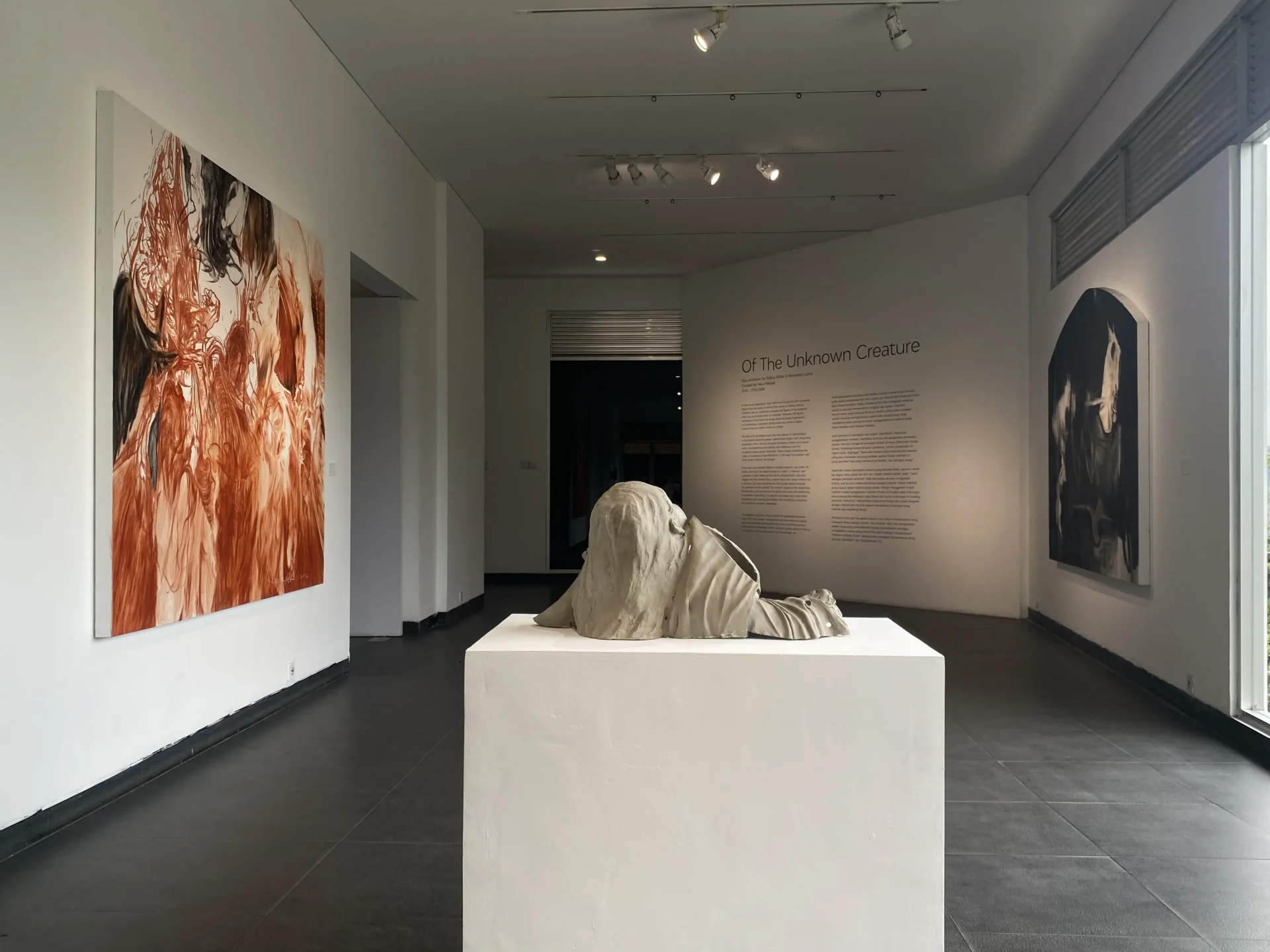
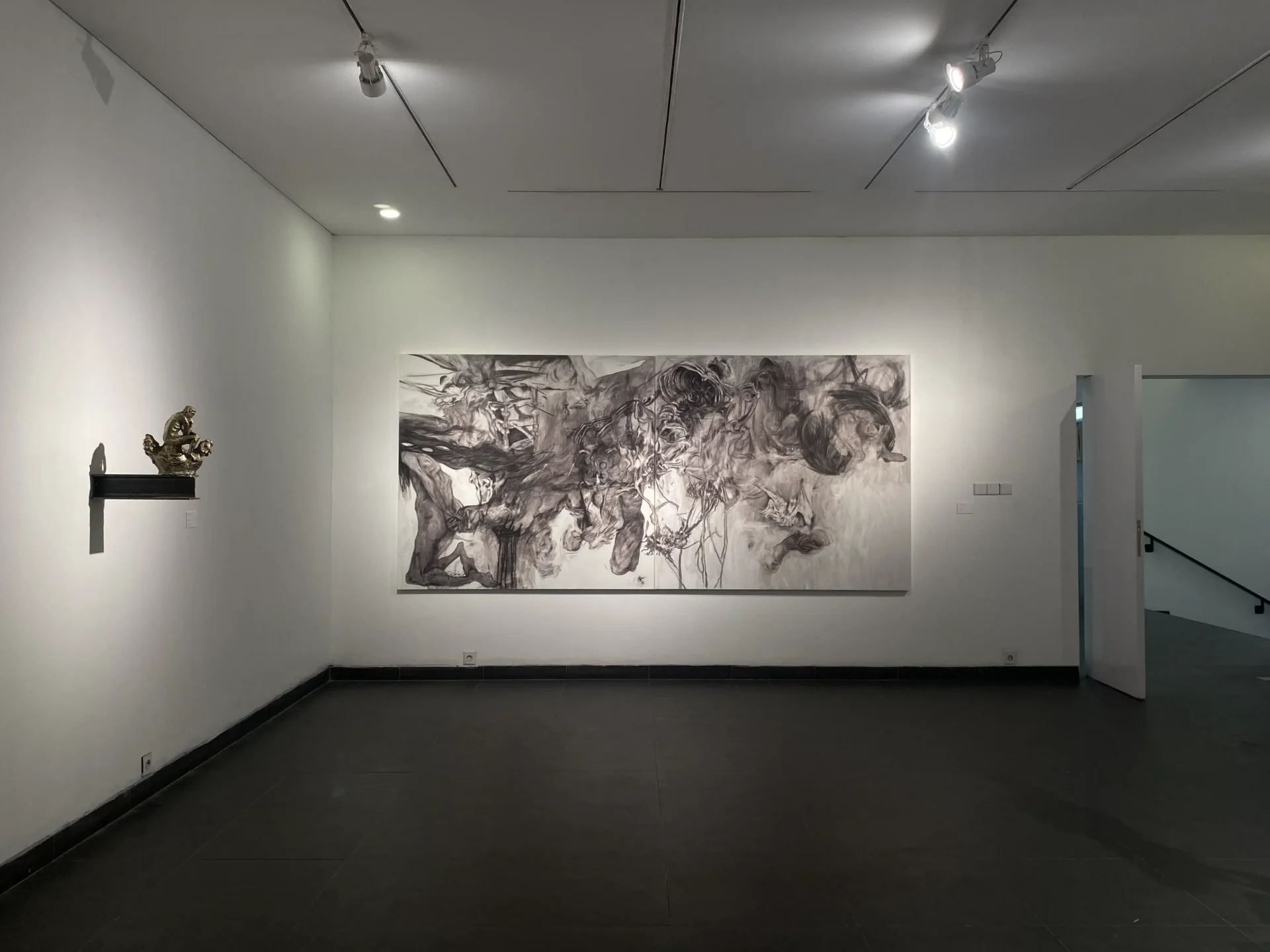
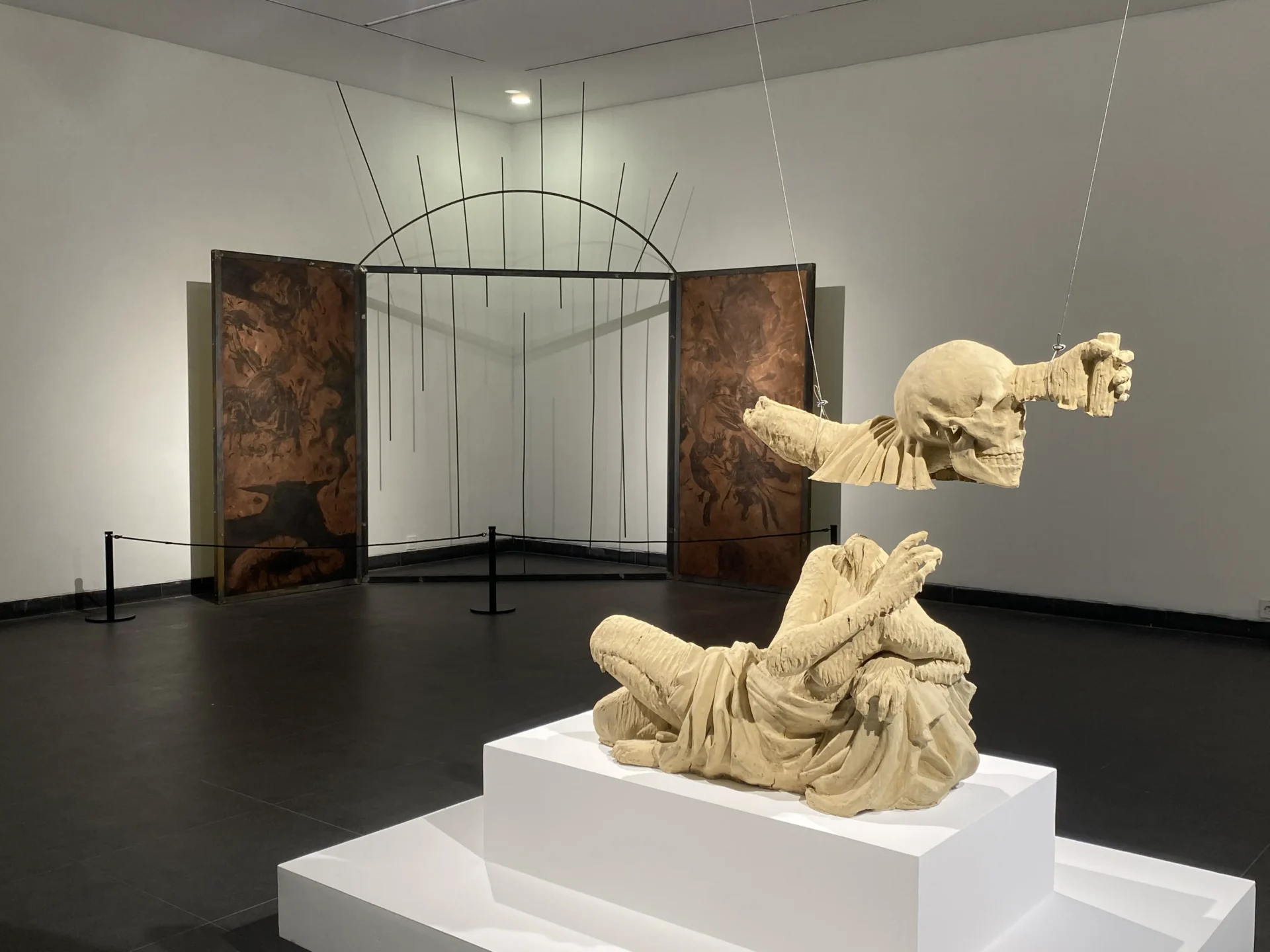
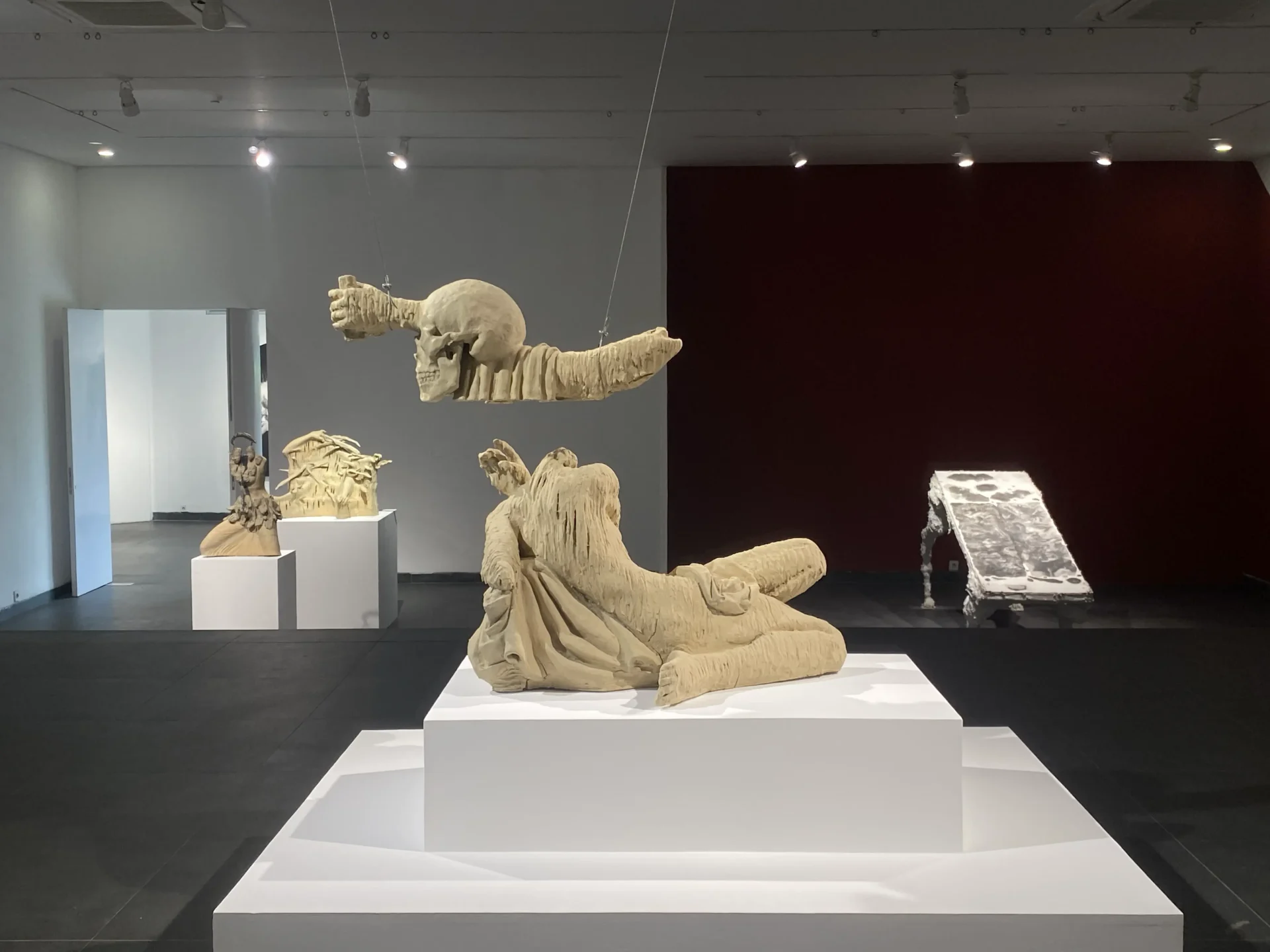
Congratulations on your duo exhibition. What makes you excited about this collaboration?
DZ:
I’m excited about Louise’s work. She casts her pieces underground, we literally dig them out of the soil and bring them into the gallery. There’s something powerful about that transformation, from buried to exhibited.
Louise understands my process, how I work, how I think. And I understand what she needs too. We both know how to treat each other’s work properly because we often help each other. We solve problems together.
This duo exhibition feels exciting because it’s not just two artists showing work side by side. It’s two processes that have been intertwined for years, emotionally, technically, and intellectually.
LO:
Honestly, I don’t think I could do this kind of collaboration with anyone else but Dzikra. At the same time, I feel more anxious about her work, especially when her pieces are being fired in the kiln. We both carry each other’s emotional weight. Maybe because we’re so close, we deeply care about the final outcome of each other’s work.
Living and working side by side, is there any intervention in each other’s practice?
DZ:
Unconsciously, yes, we do intervene in each other’s work. Because we don’t just share a workspace, we also share an emotional space. But isn’t that the beautiful part? Working alongside your partner hehehehe.
Somehow, we both understand the line. It never becomes disrespectful interference. Sometimes we comment on each other’s work. Louise tends to comment more on the technical aspects — pointing out where she thinks something is technically wrong.
But for me, sometimes that “wrong” part is exactly what feels right.
And I think that tension, between technical correctness and personal instinct, is part of what keeps the conversation alive.
LO:
When it comes to making decisions,building structures, designing displays, working with iron and heavy materials, it just works between us. Through the process, I find myself loving her more. I admire how she keeps getting better, both in her work and in the way she works. Working together feels like building something bigger than just an exhibition, it’s also about growing, as artists and as partners.
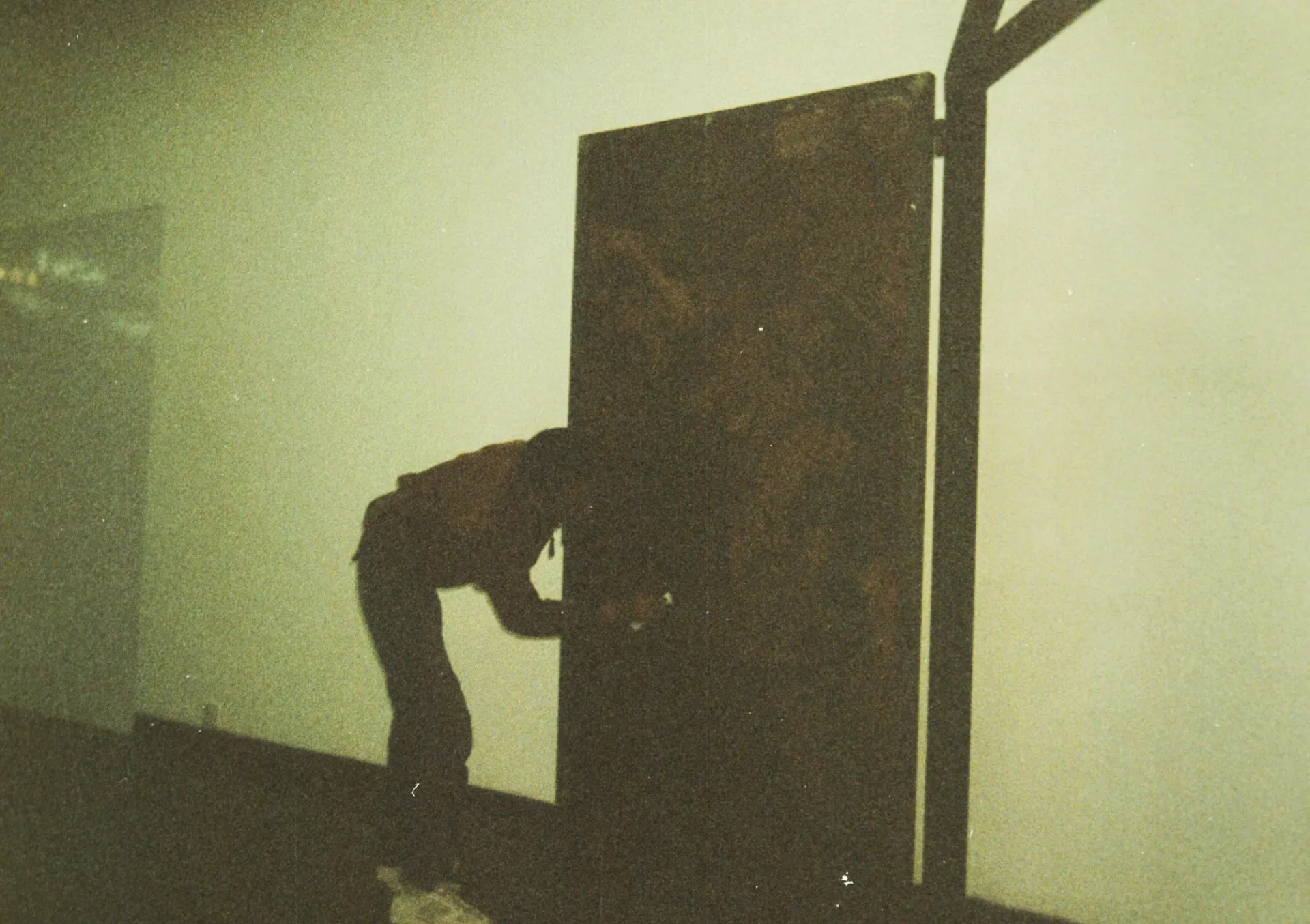
There are pieces I don’t want to sell because I want to continue developing them. Some works have already been exhibited, but I still want to grow them further. For example, the door piece “Inang di Ambang Pintu.” People can purchase the plate print or the paper version, but the installation itself needs its own space. It deserves to stand independently.
Working together feels like building something bigger than just an exhibition, it’s also about growing, as artists and as partners.
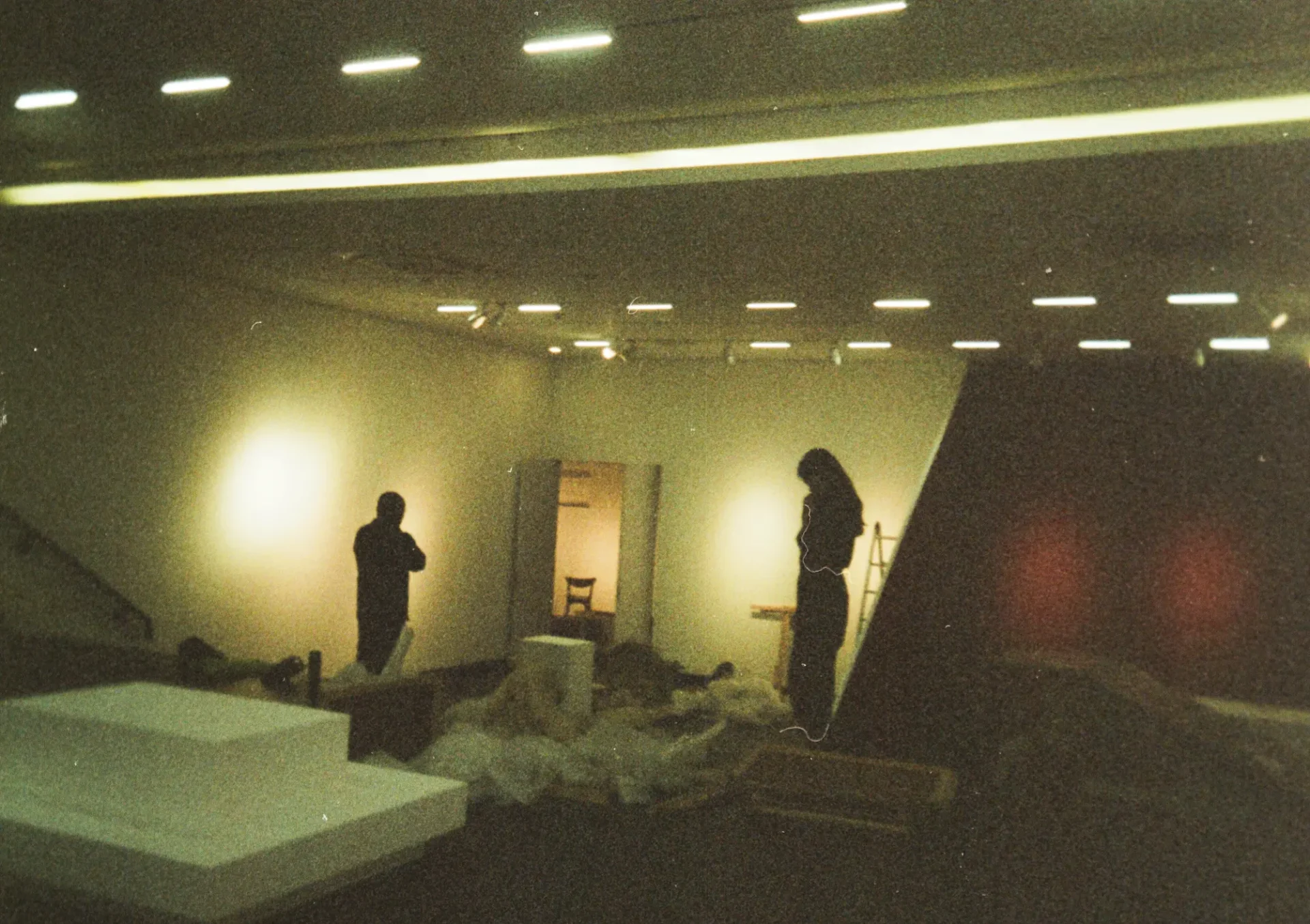
What are your house rules?
DZ:
We don’t share tools. Even if it’s something small — brushes, scissors, cutters, paper, paint, chemicals, work tables, pencils, pens, rulers, pliers, screwdrivers, staple guns, even measuring tapes, we each have our own. Yes, we even have separate measuring tapes.
Because at the most basic level, we believe we each need to own our tools individually. It would be ridiculous if we worked together and lived together, but ended up fighting over a ruler. That’s not allowed.
It’s actually these small boundaries that prevent bigger emotional conflicts. Protecting tiny territories keeps us from unnecessary tension.
The only things we share are bigger equipment like the drill or the jigsaw.
I learned a lot of this from Louise. Her artistic journey started earlier, so she already had many tools and materials. I remember six years ago, I borrowed her soft pastels. She asked, “Do you like these?” And then she immediately bought me my own set so I could use mine, and she could use hers. She even asked, “What else do you need?” just to make sure we wouldn’t have to share.
There was even a time when someone borrowed her brush and returned it. After that, she refused to use it again.
LO:
After reading a book, it’s technically not allowed to go straight back to the shelf. Or at least… that’s where the arguments usually begin. We often fight about things like that.
Dzikra reads neatly at the table, her books stay there with little notes beside them. Very organized. Me? I’m not that disciplined. My books can end up anywhere. Then she tidies everything up until it looks super neat… well, neat enough. And the cycle repeats.
For example, when we get a food box or something from a friend, I get excited reading the ingredient lists and recipes. I love collecting them. I tear off the packaging, keep the recipe parts, and save them. But Dzikra usually cleans them up or throws them away. I think I might have a tiny hoarding tendency.
So what do I do? I start collecting new ones again. It’s actually kind of funny, this pattern. Eventually, Dzikra made a special box just for my paper scraps, magazines, packaging, and random recipe clippings. Now I have a designated place for “my treasures.”
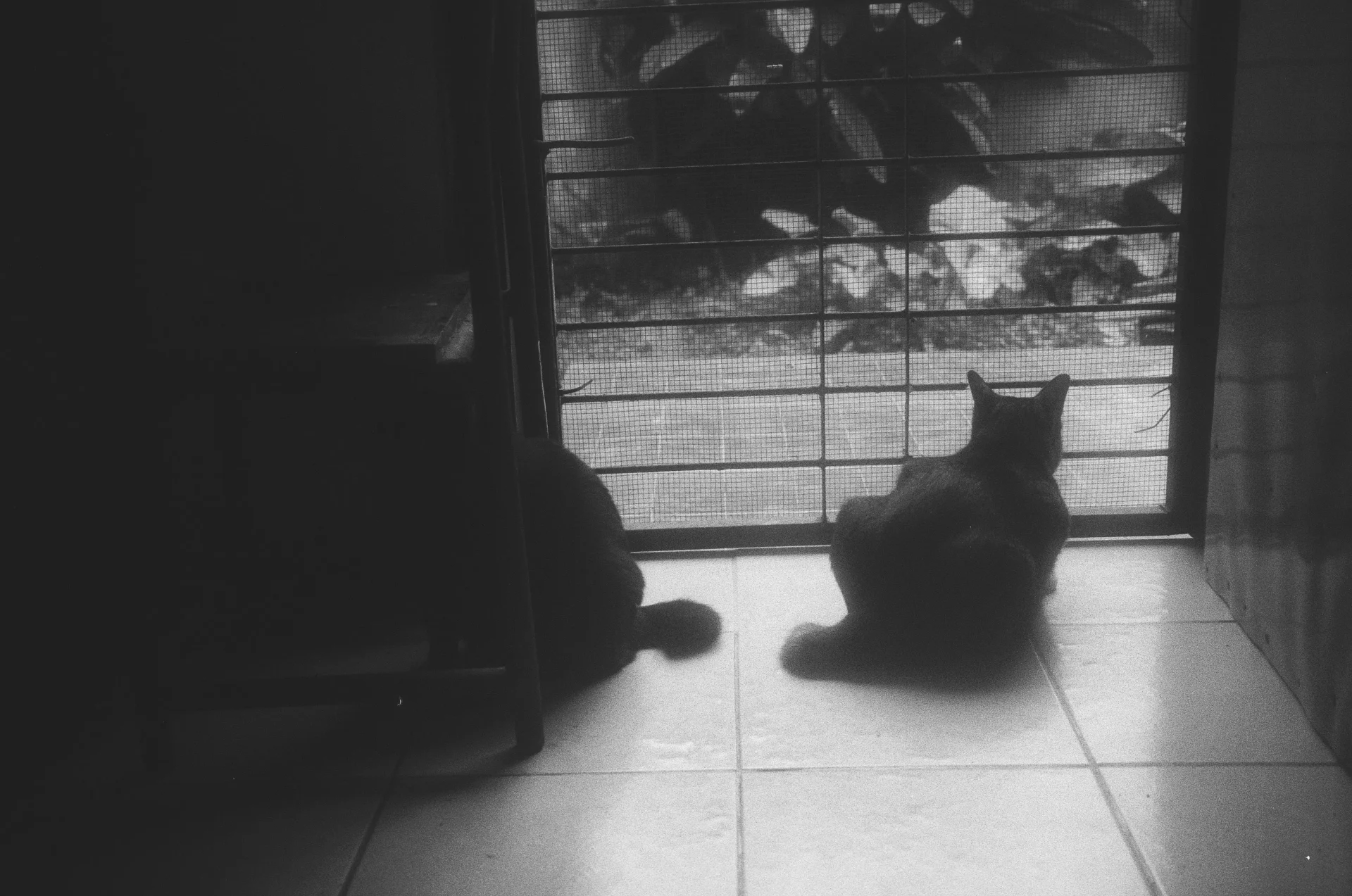
Do you have pets? What made you decide to have them?
DZ:
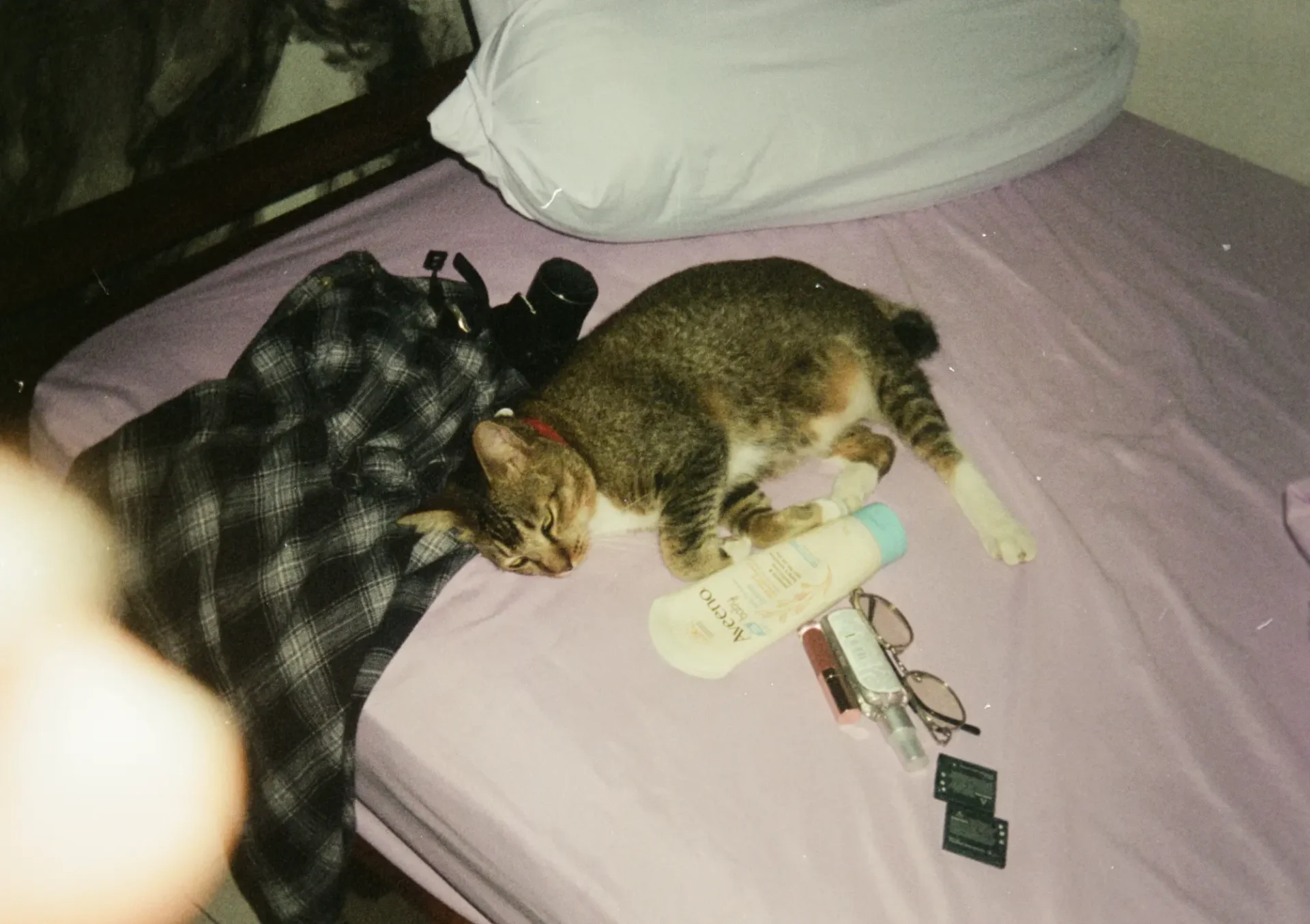
Yes, I do. They’re my emotional support system. I’m not sure whether they influence my work or not, but maybe they do, actually. When I’m exhausted, I cuddle with Midut and Mas Tutu, and somehow I feel refreshed again.
The decision to have cats started because Louise already had one. Then one day, I rescued a kitten who seemed to have been abandoned because she was black. She was buried under rubble from a collapsed house while it was raining. I took her home. She became my first cat called Mumul Love. She later passed away from cancer. She had a kitten named Ibi, who also passed away from poisoning.
After losing both of them, Louise found another cat at Pasar Kaget near a fruit seller in Cibiru. We named her Midut. Then one day, another cat suddenly showed up at our house. Our neighbor had thrown him away because they didn’t want to keep him anymore,so we took him in and named him Mas Tutu.
I’m so happy to have them. Midut once became overweight because she loves to eat, she even had to go on a diet. Now it’s Mas Tutu who’s getting chubby. They bring so much warmth into our lives.
LO:
They’re very, very important. They teach me empathy. Sometimes they give me signals like, “Hey, don’t be selfish. I want this.” And I have to pause and listen. Maybe because I’ve loved animals since I was young. I used to have several dogs too. They always ask for something in their own way, and I like that feeling of being needed.
It’s like they’re saying:
“I want to eat this.”
“I want to be petted.”
“My bedsheet is dirty, please wash it.”
They have a strong sense. From the beginning, I never positioned them as animals that just live outside or as “just pets.” I talk to them. We have conversations. There’s a sense of responsibility. I have to work so they can eat well. If they get sick, I want to be able to take them to a good doctor. But lately, I feel a bit sad because I don’t take them out for walks as often as I used to.
If you weren’t an artist, what would you be?
DZ:
Honestly, nothing else. Since I was little, whenever someone asked what I wanted to be, I confidently said, “an artist.” Even though I had no idea what an artist actually did. It was kind of strange, actually. I grew up in a village where the professions I saw around me were farmers, teachers, police officers, doctors, soldiers. Those were the visible options. Becoming an artist wasn’t exactly a common reference.
But with the limited knowledge I had back then, I still chose “artist.” And of course, my parents didn’t approve, hehehe the classic story. I was serious about it. I mean, come on, I’m the first daughter. Still, somehow, I never imagined being anything else.
LO:
I want to focus on agrarian art, maybe. If I weren’t an artist, I’d want to raise goats and have a semi-outdoor kitchen that I build myself. Back in 2007, I joined some friends who were making cheese and other farm-based products. I loved it so much,goat’s milk for cheese, handmade processing, everything slow and intentional.
I’m fascinated by people who live in the mountains of Nepal or Tibet. They’re amazing. In places with real winter seasons, people develop resilience around food survival. They preserve food naturally, without chemical preservatives, using sun, clean air, and time. Food can last for months through careful preparation. I love that kind of knowledge.
I sometimes think we might face extreme heat seasons in the future too. Traditional preservation methods feel important. Things like homemade dried meat, hung up, cured naturally, no formalin, no shortcuts driven by mass production pressure. Just patience, environment, and care. That kind of life feels exciting to me. Simple, resilient, and deeply connected to the land.
What is your favorite snack or dish?
DZ:
Anything Louise cooks.
No matter how good the food is outside, I always end up eating more of Louise’s cooking. There’s just something about it, maybe it’s the taste, maybe it’s the familiarity, maybe it’s the love in it.
Even if we eat something amazing at a restaurant, somehow her food still feels the most satisfying. It’s not just about flavor, it feels like home.
LO:
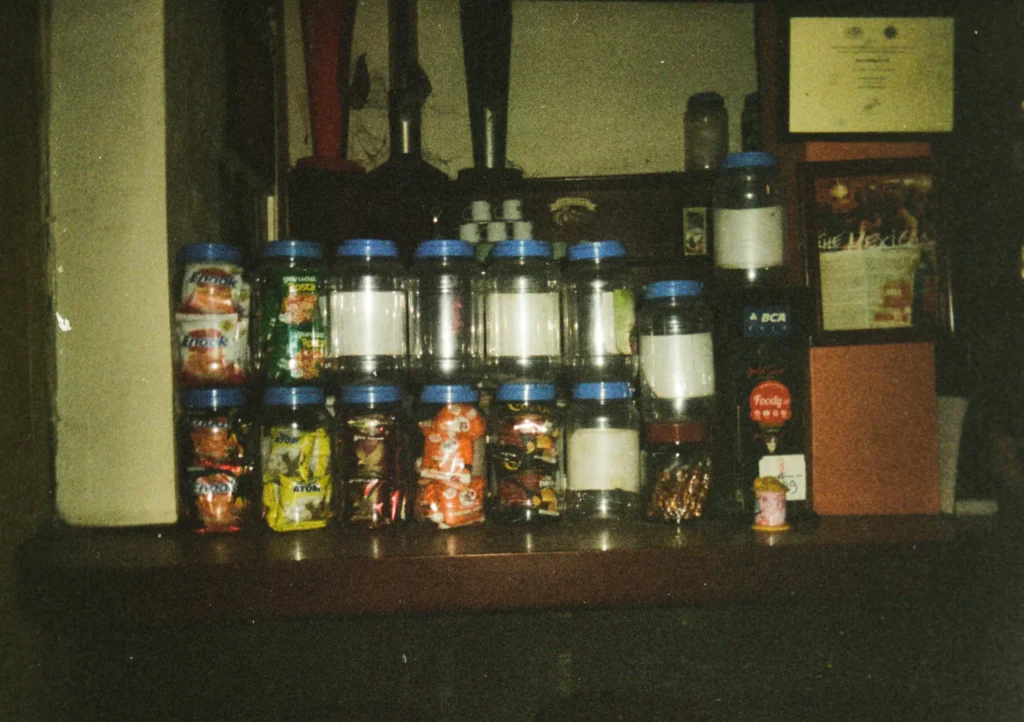
Chocolate. Always chocolate. Lately I’ve been cutting it down because my sugar blood levels got a little warning during a check-up and Dzikra definitely scolded me about it. Back then, I could literally fall asleep with Nutella. It was my stress reliever. Every day. If I woke up in the middle of the night, I’d just dip a spoon into chocolate. Sometimes it would still be in my mouth as I drifted back to sleep. IIce cream too. Anything sweet, sugary, candy, I love it. There’s always candy in my house. In my pocket. In my bag. Somewhere close to me at all times.