

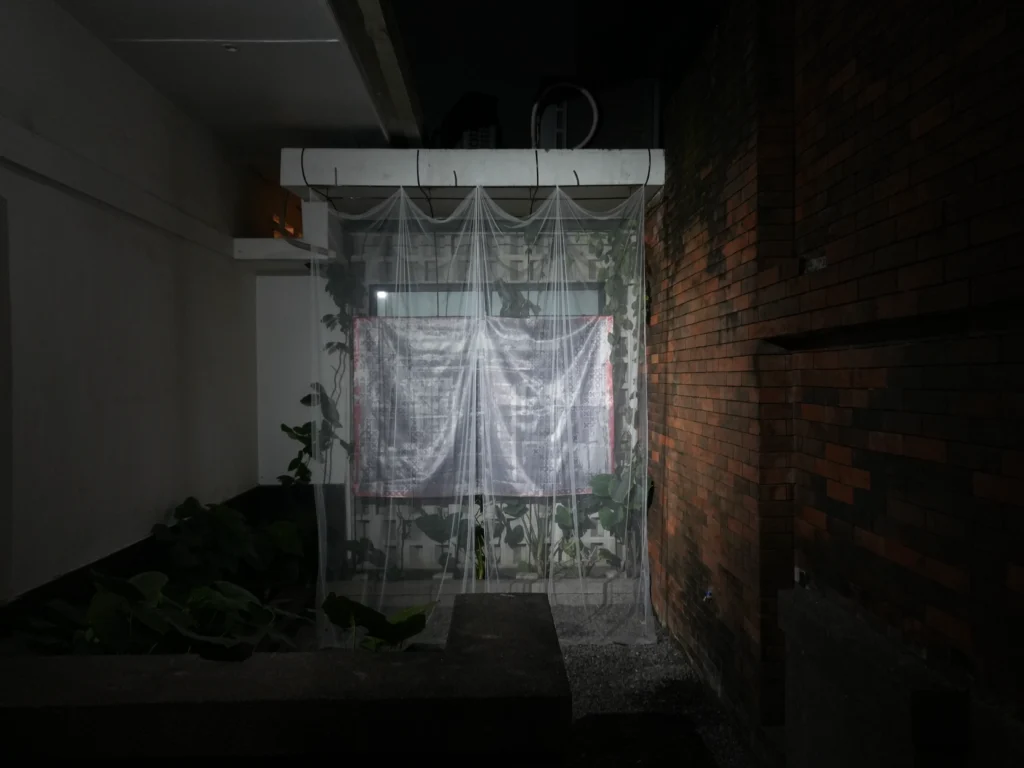
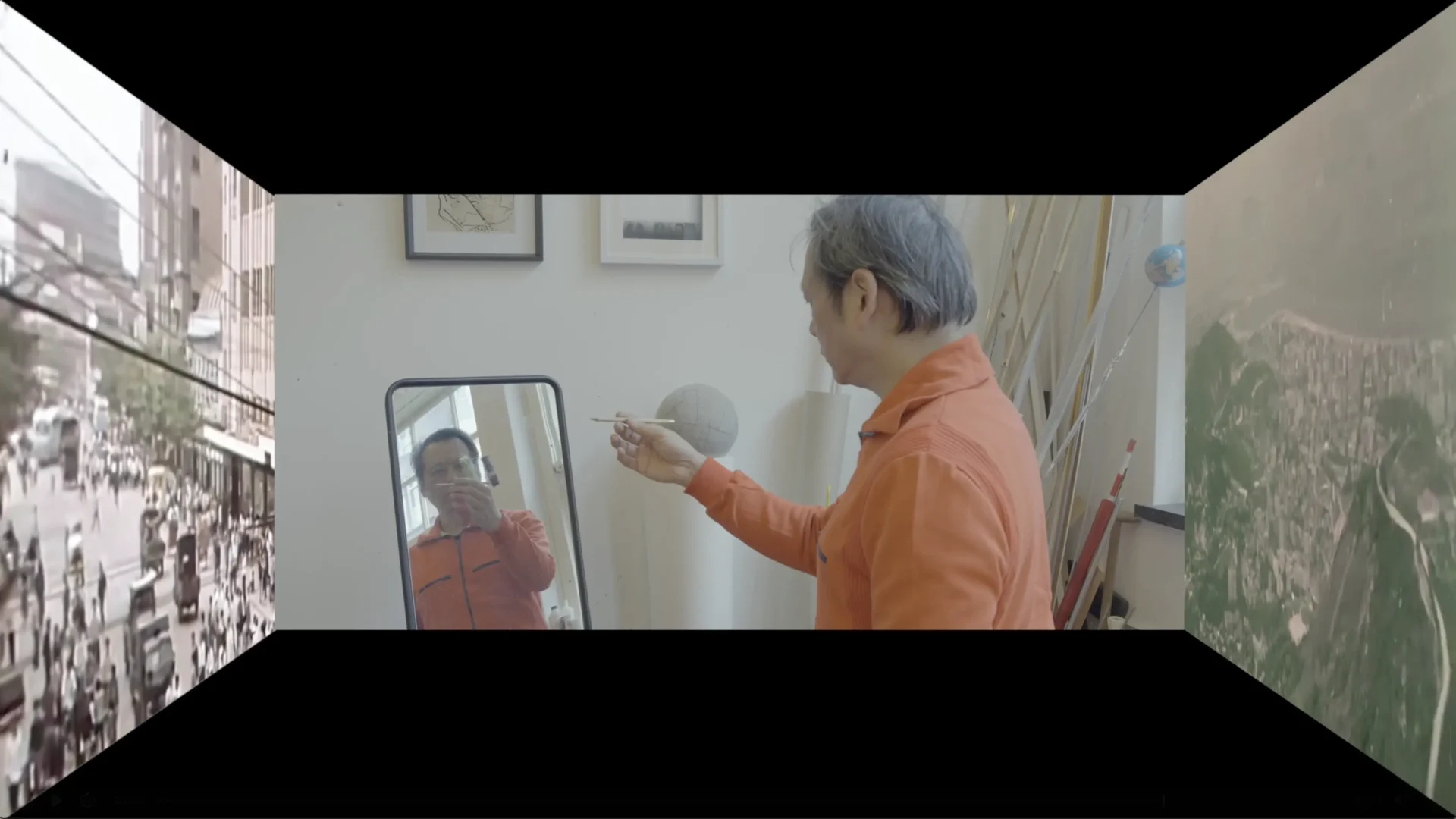
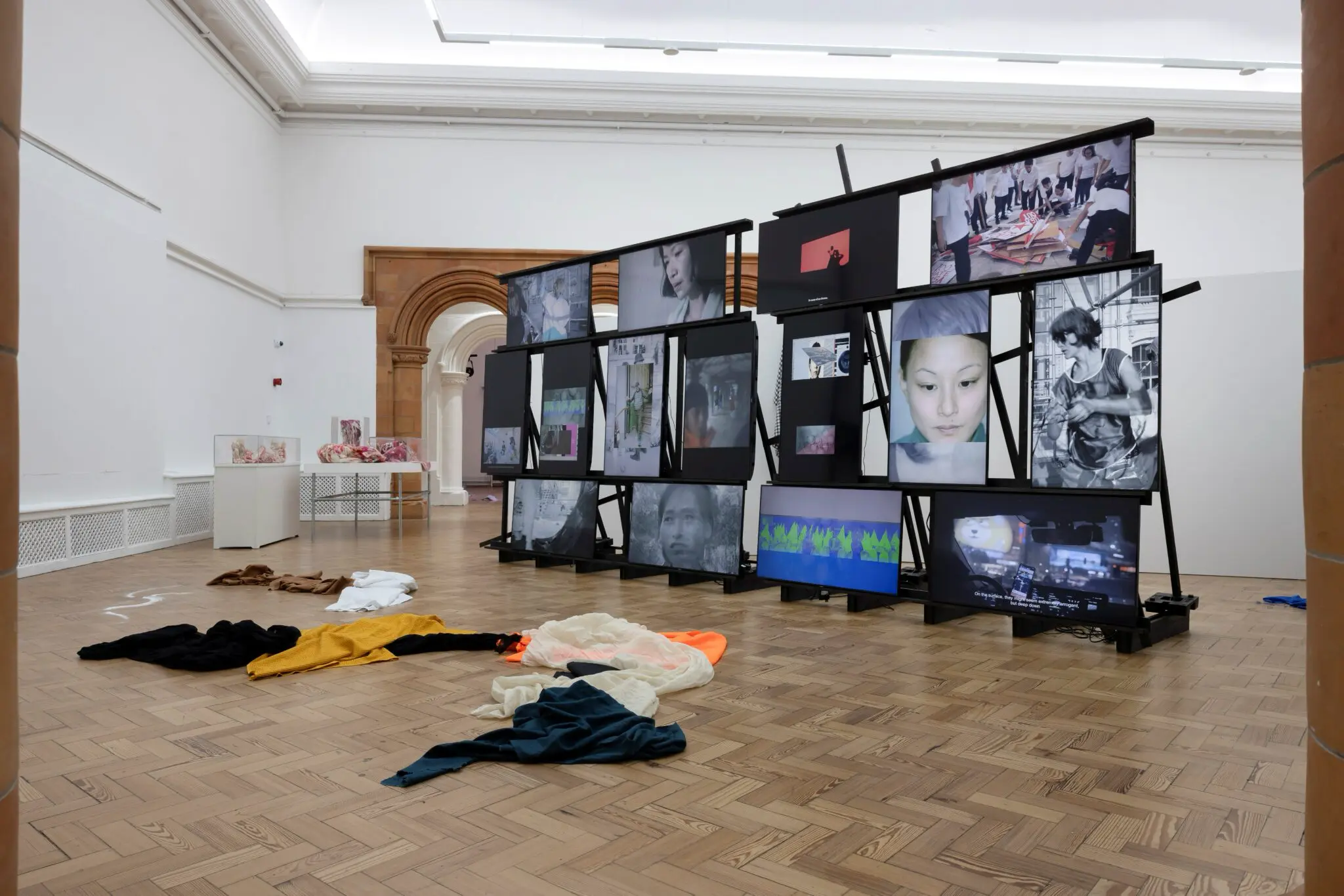
InTRACES, on view at n0lkecil Project 101 in Surabaya until 25 October 2026, Amsterdam-based artist and filmmaker Kexin Hong presents Between Silence, a film that follows her former teacher, the artist Tiong Ang, on a homecoming to Surabaya, towards a past he can only partly recall and a history, 1965, that was silenced for decades.
In this conversation, Kexin talks about working with absence, planning a shoot around what cannot be planned, and what the body knows before the mind does.
How did you first meet Tiong Ang, and what made his story one you wanted to stay with?
I first met Tiong when I was doing my master’s degree in the Netherlands, where he was my teacher. I was working on Imaginary Rescripting Film, a film about collective memory and cultural trauma, and I interviewed him for it. That conversation is where I first learned about the history of 1965, and about the very personal history of his own family. What stayed with me was when he spoke of a “blank canvas/memory,” and how he, as an artist, used his creativity to redraw it and eventually came to see art as a way of healing. There was something in those words that I could not quite let go of.
As a creator, I have always been drawn to experiences that resist language: things we cannot quite speak about, yet which continue to live within the body. That kind of memory, even in its absence, carries an emotional weight that resonated with Tiong’s own experience of trauma. Perhaps that was the moment I felt his story was not simply something I wanted to document, but something I wanted to stay with.

You work across film, installation and moving image. Why does film feel like the right form for this story?
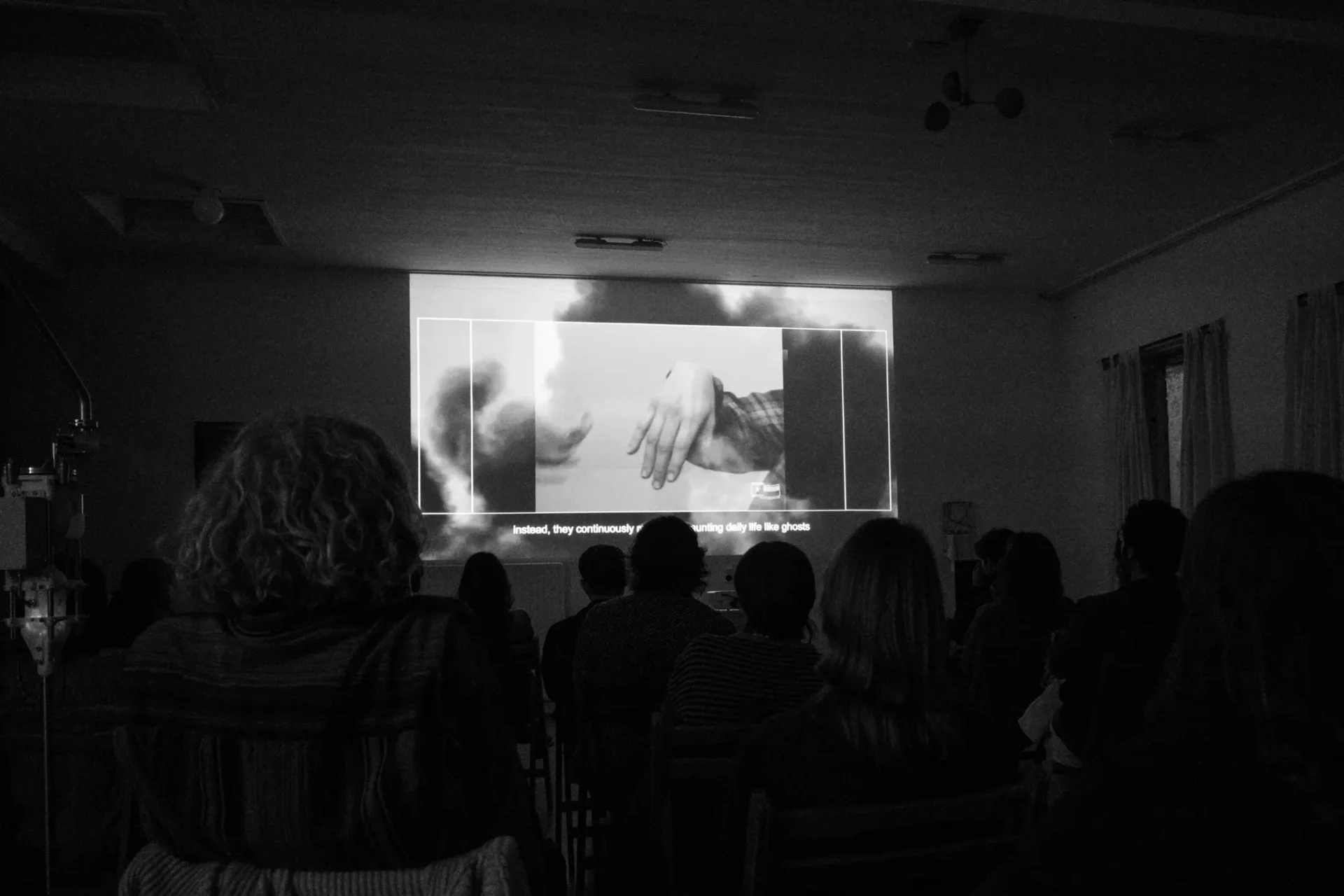
Installation, or material-based work, leaves much more room for interpretation and can absorb many different readings. But 1965 is a history that has been muted for so long, and there is so much blank space that needs to be filled. Precisely because of that, I felt a form was needed that could deliver this history, and the silence around it, more appropriately.
Editing might inevitably shape the narration, but film is still the most suitable medium I can imagine. It offers a way of reducing misunderstanding, and of bringing back into view the voices of people whose agency and visibility have been repressed for so long.
You’re based in Amsterdam. How do you prepare for a project rooted in a place where you don’t live, like Surabaya?
I did extensive research on Indonesia and Surabaya, and spent a long time talking with Tiong about Indonesian history, the political environment, and how these larger circumstances have shaped the lives of people like him and his family.
But in a way, I had already experienced everything in my imagination before I landed. There were still differences between what I imagined and what I encountered, so I spent the first week simply living there: the temperature, the humidity, the food, the people, all the physical sensations you cannot understand from a distance. I think the body is perhaps the smartest connector we have to the world, and sometimes it understands a place before the mind does.
It also changed my expectations of the work. My previous projects were usually intense and dense. This time I wanted to slow down, to let the film breathe, and to allow for something less controlled.
What does a typical shooting day look like?
We usually start by checking all the equipment, the batteries, and whether a location needs additional lighting. Our producer would share the schedule the day before. When we filmed in the mountains, for example, we would set off around 9 a.m. for the road trip. Anything could become part of the film along the way, so we kept an eye on the light, the battery and the storage. Afterwards, we would return to our accommodation to check the footage for technical problems, such as a dirty sensor, and discuss with the team whether anything needed to be reshot that same day.
Tiong’s early memories are “blank” or hard to access. As a filmmaker, how do you plan a shoot around something that isn’t “fully” there?
When a project is about trauma and historical memory, it is almost impossible to plan fully. To plan means trying to control something before it happens, and that isn’t really possible in a documentary mode, especially on a journey like this homecoming. Tiong was not simply returning to a place; he was also trying to figure out what he was feeling and where those feelings came from. We could not know in advance what would happen, or even what we were looking for.
If there is nothing left in our memory, at least the body remains.
The body remembers in ways we may not be able to name, and sometimes it guides us back to a place before we understand why we are there. So the only planning tool we really had was the body itself. It became our navigator, our compass, and perhaps even the trace of something that had lost its trace.
You filmed in places such as hospitals, cemeteries and caves. Which place stayed with you most?
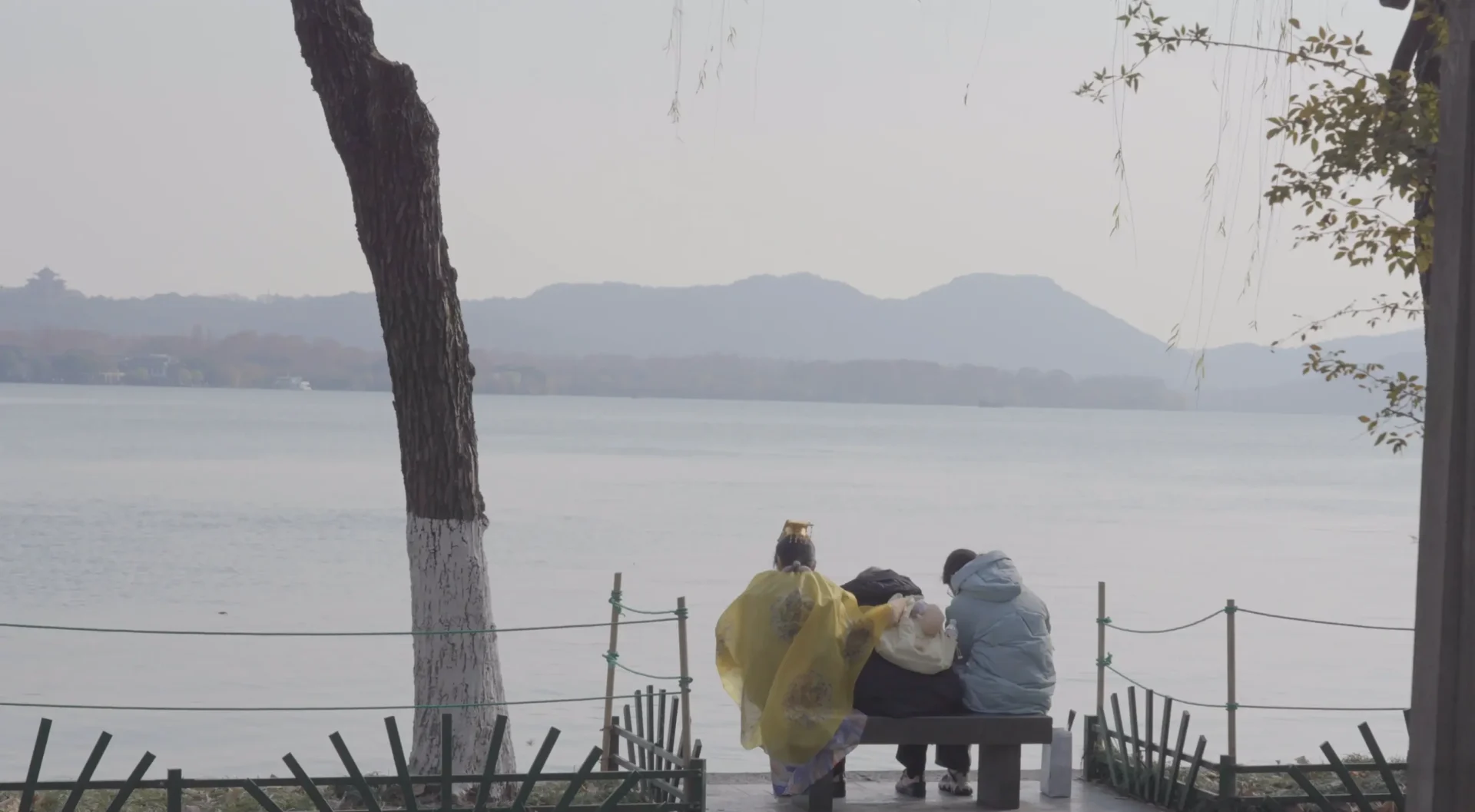
Perhaps the most unusual “place” was the car. During the road trip it became a temporary space through which emotions and memories could travel from one location to another. We spent most of our time there, sharing a small space, and it was often during those long drives, when we were not consciously thinking about the camera, that some of the most intimate stories surfaced almost by themselves. Those were often the most truthful moments, but also the hardest to capture, because they came and went so quickly. As a filmmaker, you can only respond when they happen. That is what makes documentary filmmaking both beautiful and frustrating.
Another moment was more emotional, or maybe simply more bewildering. We went to the hospital where Tiong had always believed he was born, to ask for his birth certificate. The person responsible for the records looked through the documents and told us he had not, in fact, been born there.
A memory that had existed for more than sixty years, and had become part of Tiong’s understanding of his life, was suddenly called into question by a document. Everyone on the team was shocked. We had gone looking for evidence to confirm a memory, only to find that the evidence told us something else. It reminded us how fragile memory can be.
What we call truth is not always found in an archive. Sometimes it lives, uncertainly, in the stories we carry with us.
Tiong is essentially playing a version of himself. How do you know when a take feels “true” versus when it feels performed?
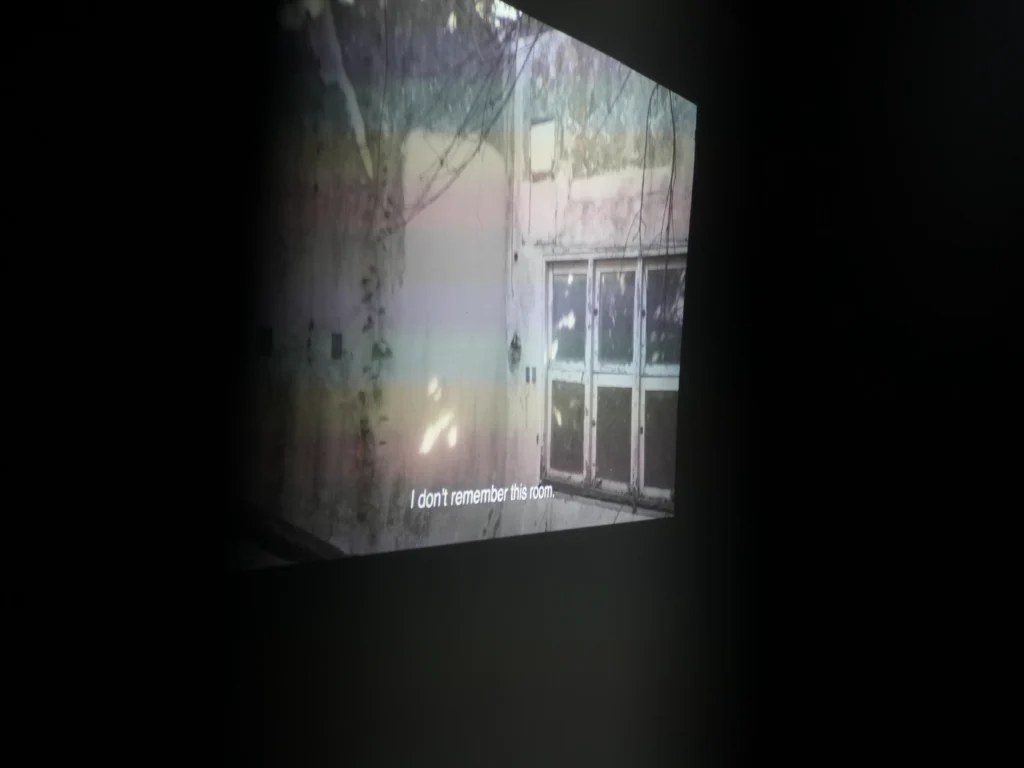
Almost all of the footage was captured from my position as an outsider, or perhaps more accurately a kind of ghost. Tiong played himself in the film while also filming another collaborator, Finsa, so I gradually made myself invisible, letting the gaze of the film stay almost entirely on him.
There was very little for me to ask him to perform. He was simply himself, moving through places and situations that were already part of his life. A few moments could be understood as performance, but even then what Tiong performed was something very ordinary: walking. He was asked to walk as a “soulless ghost”, which sounds like a particular kind of performance but in practice was almost nothing, just a body moving through a space. Perhaps that is what made those moments feel true to me. The performance was not about pretending to be someone else.
Trauma and memory are heavy things to sit with. Has this project changed how you deal with difficult memories?
This journey was, in many ways, a continuous process of reflecting, being triggered, and healing. I had spent so much time researching trauma, through theory and through my own practice, that I thought I knew how to deal with it. But being in Surabaya made me realise that certain traumas are held in the body. They can stay there quietly, sometimes for years, without asking to be seen, until one day you stand in front of something and your body knows before your mind does. That was when I began to understand, more intimately, why we call something trauma in the first place. It is not always something we can analyse or explain. Sometimes it simply remains, beneath language.
For that, I am very grateful. In Surabaya I formed new connections, new forms of intimacy, relationships I still find difficult to name. They gave me a different experience of love, one I had not expected to find through making a film about trauma. Through them I began to notice when an emotion moved through me, where it stayed, and what it made me want to do. These feelings did not have to remain outside the work. They could enter the film and become part of the way I looked, the way I listened, the way I stayed with another person. And somehow, they also came back with me, into my own life.
After screenings, some audience members told me they had been moved to tears, or that something in the film had stayed with them. Knowing that the work could touch something people had been carrying was also a very precious form of healing for me.
This interview has been edited for length, clarity and sequence.
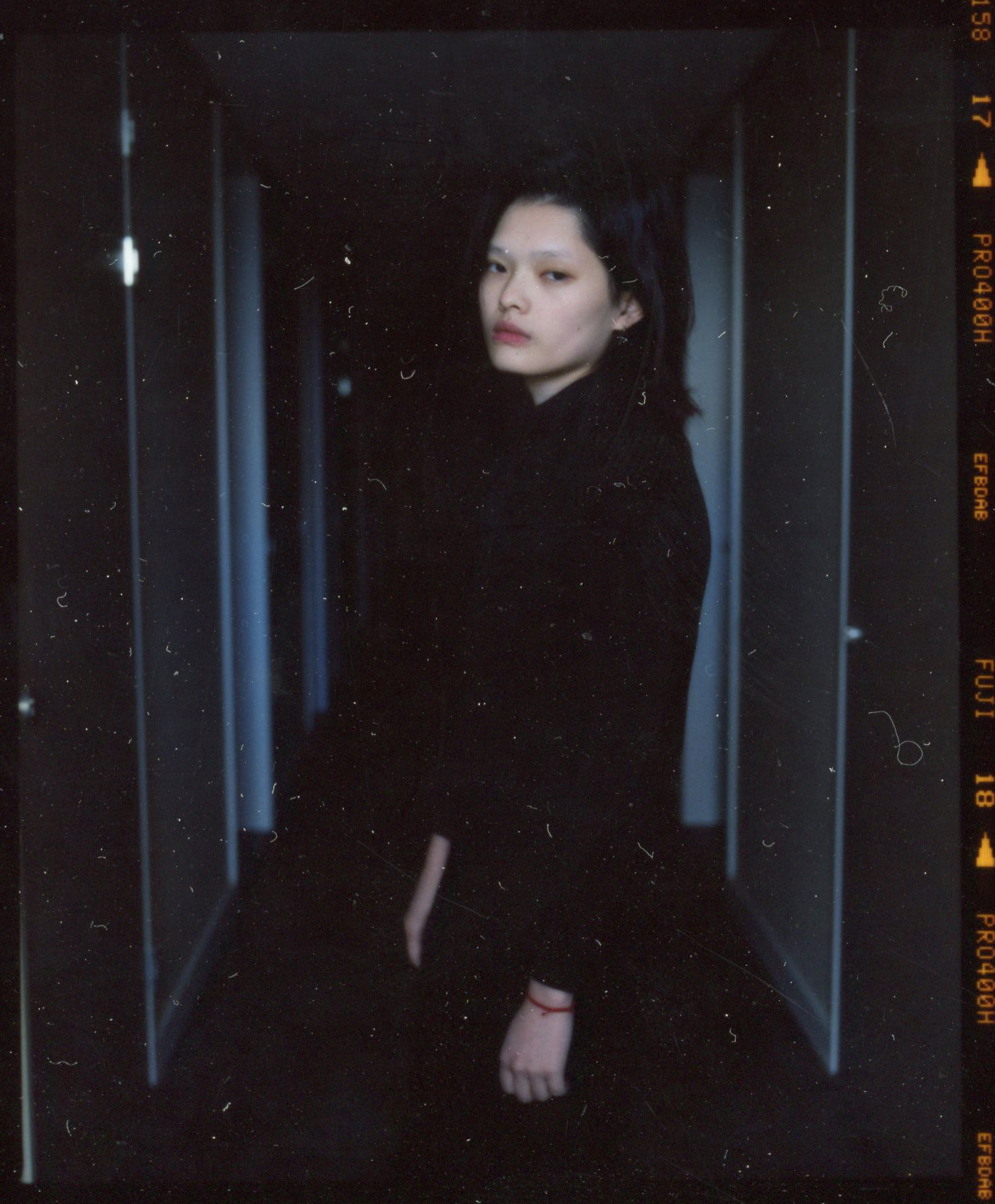
Kexin Hong is a multidisciplinary artist and filmmaker based in Amsterdam. Her artistic practice spans various mediums—from moving images, installations, and essay films—as she explores the psychosocial and political forces that shape human perceptions of reality.
Photo credit: the artist & n0lkecil.
