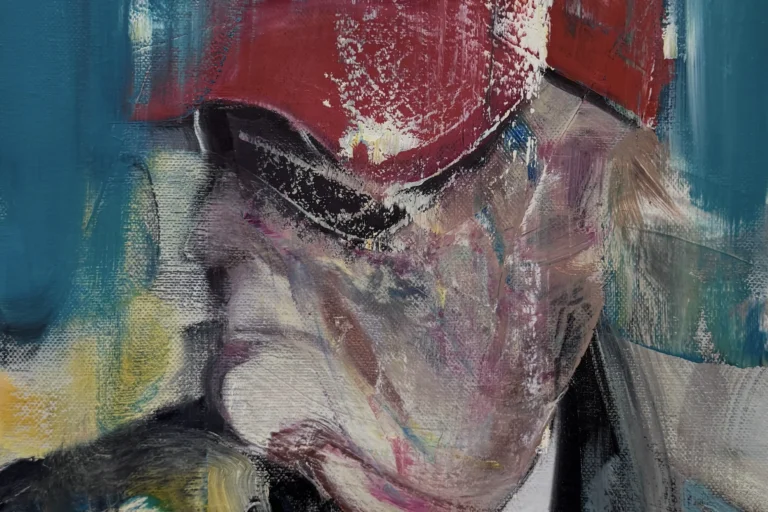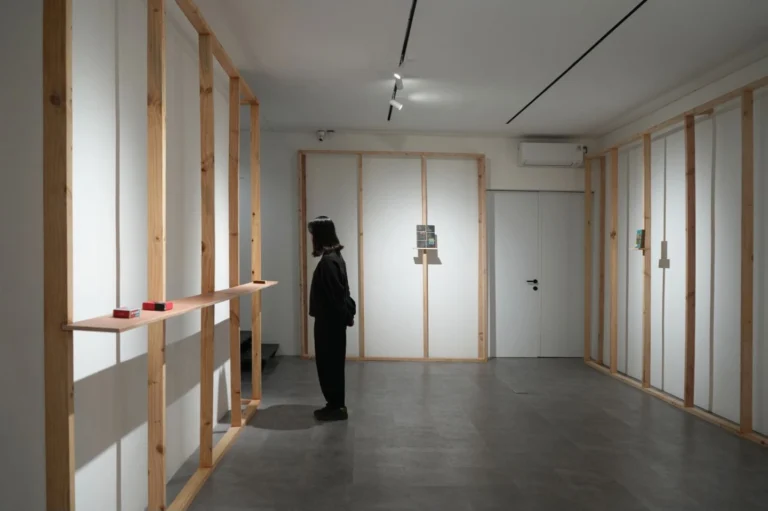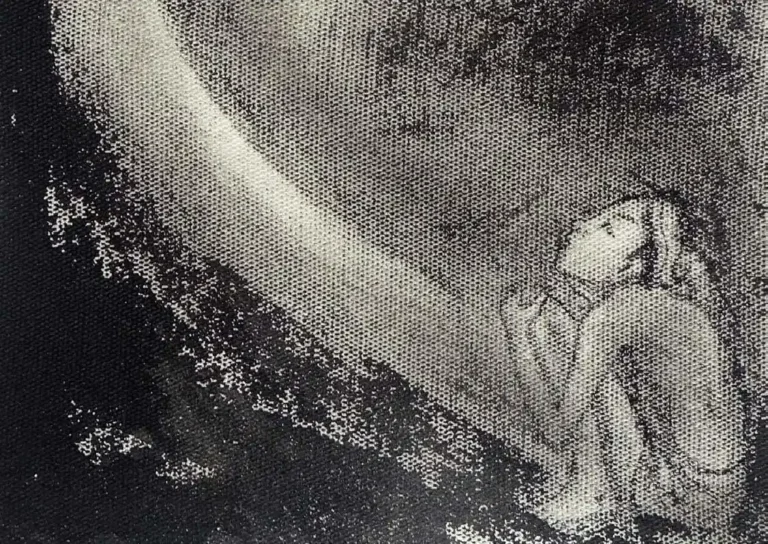

The exhibition She lit my mouth without a word is Natalie Sasi Organ’s first solo presentation at ara contemporary, where her return to Thailand frames how memory is held through the body as the works move through cycles of desire and loss. It unfolds across paintings, kinetic installations, sculptures, and texts from 11 April to 9 May 2026.
A small poem-painting diptych placed to the left of the entrance, Cure for Bites (2026), recalls a childhood moment when the artist was told “ไปหายาย” (“go see Grandma”), a phrase her mother would often repeat when she had mosquito bites. For viewers unfamiliar with the practice, betel chewing involves a mixture of betel leaf, areca nut, and lime paste that reacts with saliva and turns the mouth bright red. In the work, this is recalled as a childhood experience of seeing the substance used, somewhat unexpectedly, as a remedy for mosquito bites, especially through the astonished eyes of a child.

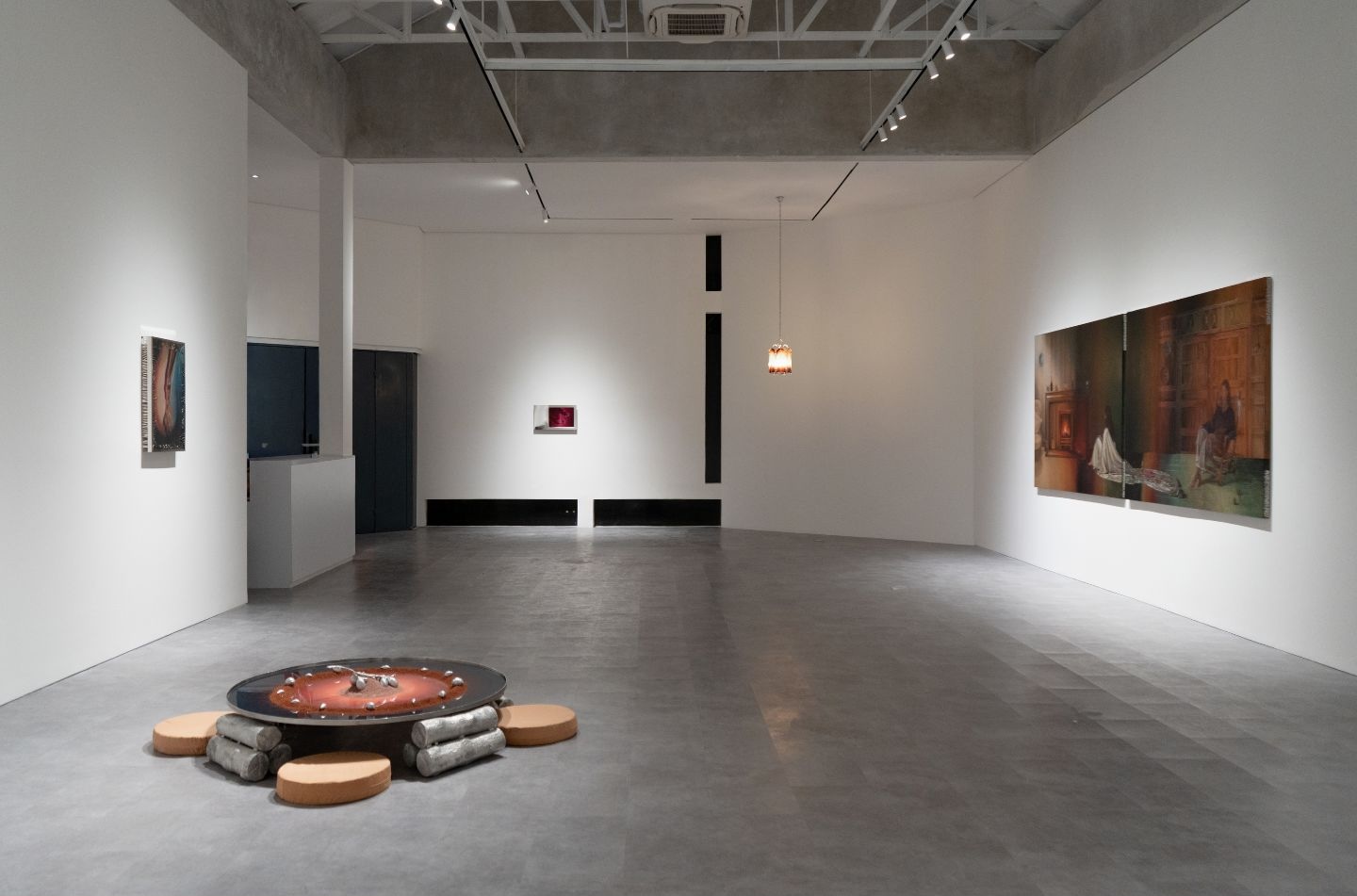
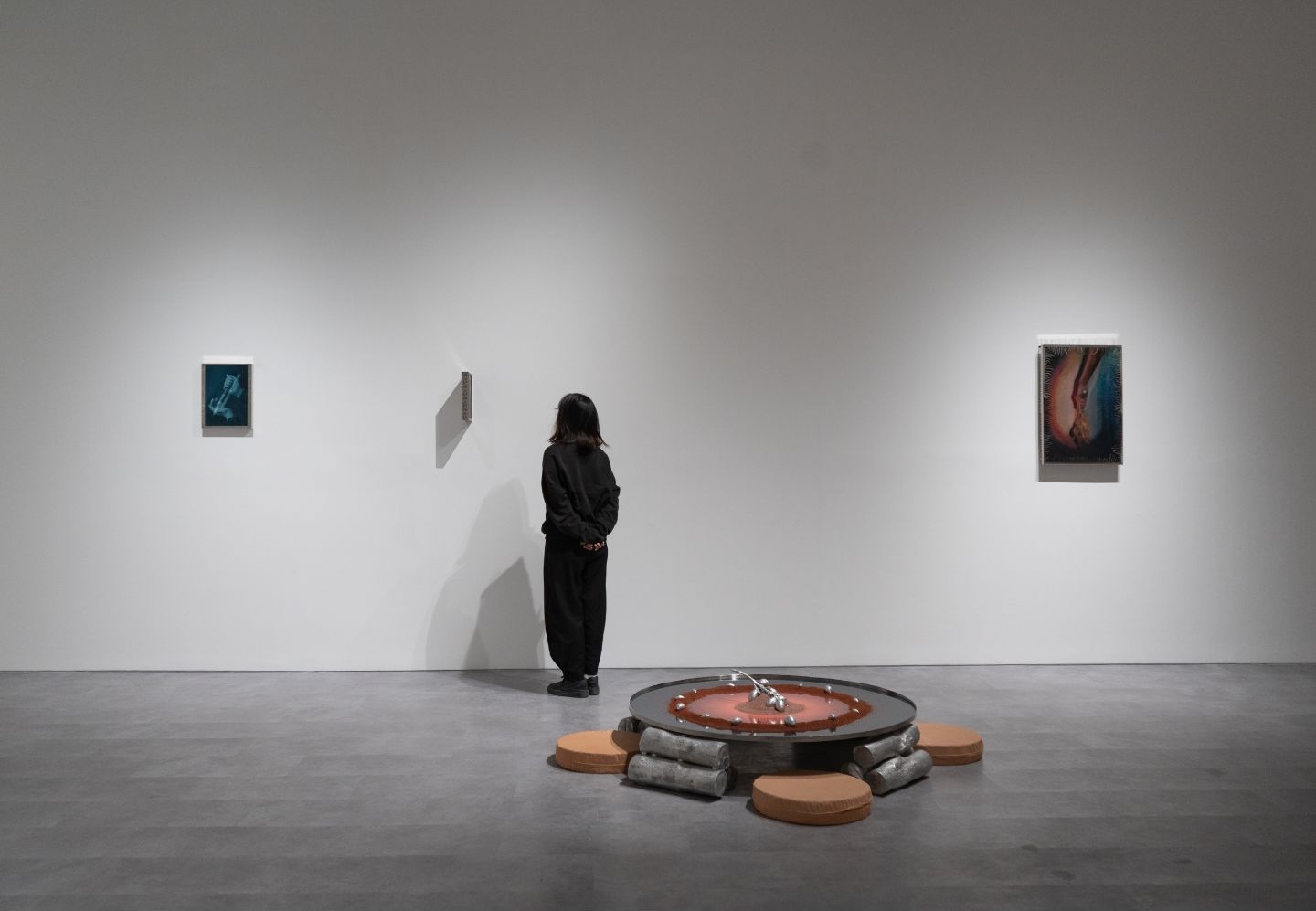
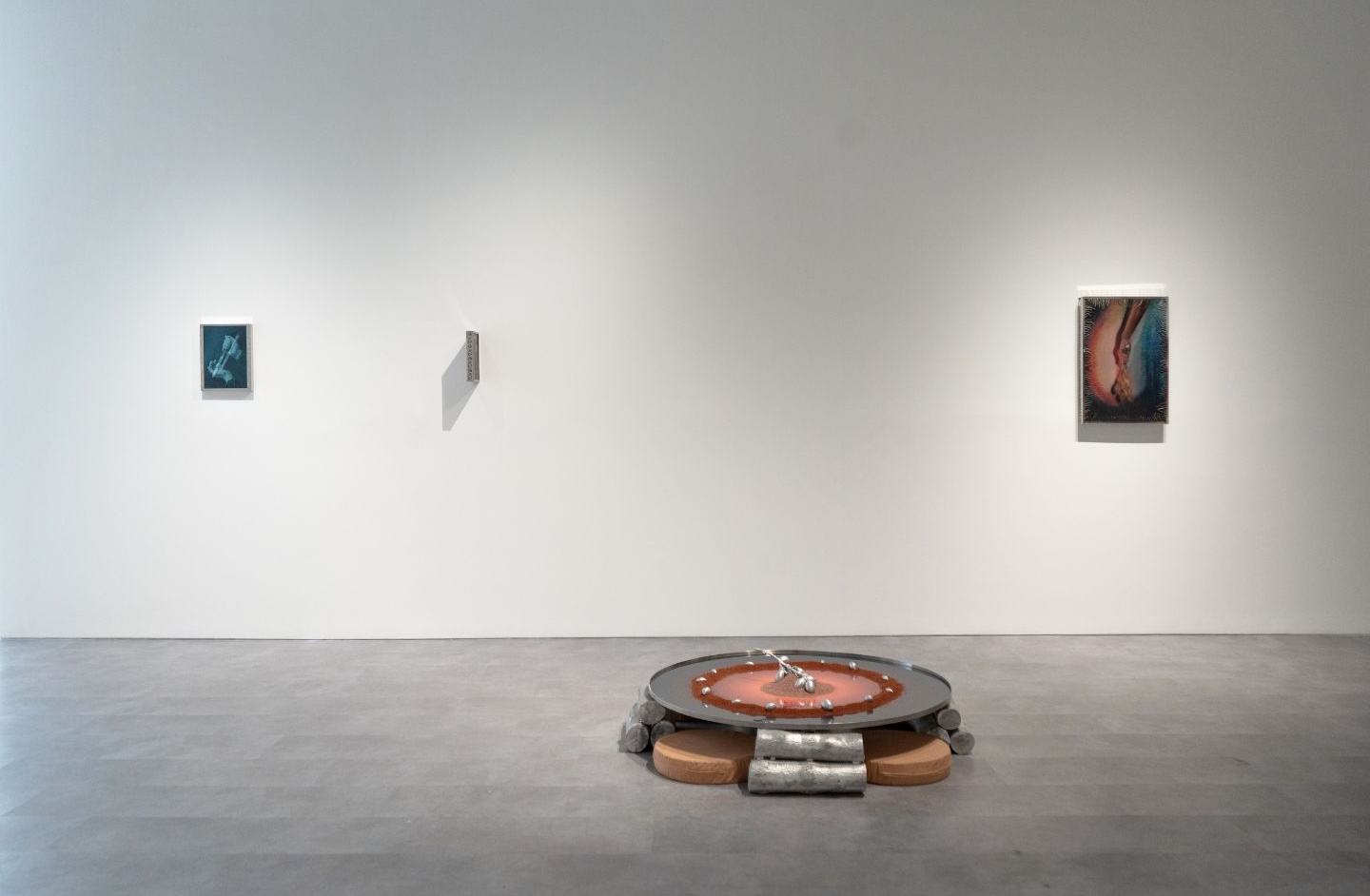
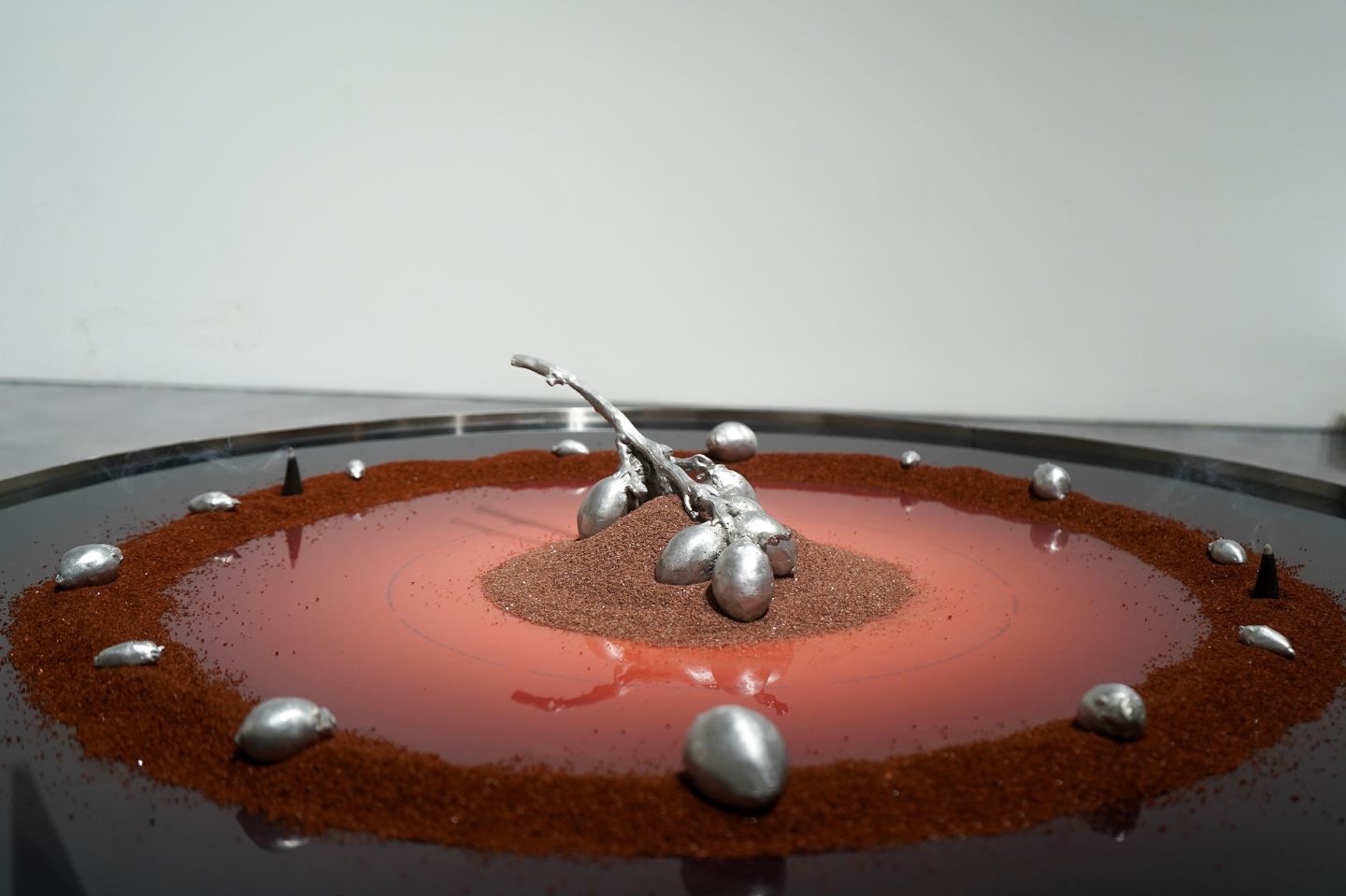
Across the exhibition, betel nut appears repeatedly as both material and image, which the artist uses to think about how cultural practices leave physical traces on the body. In Southeast Asia, betel chewing has long been part of social and ceremonial life, used to welcome guests, exchanged in rituals, and valued for its mild stimulating effect. From the late nineteenth century, during the reign of King Rama V, the practice declined under imported ideas of modernity linked to hygiene and “civility”, and was later discouraged through state campaigns in the 1940s. Once widely practiced but later seen as “backward” or vulgar, it is recast in aluminium in this exhibition, appearing as sculptural forms placed on surfaces.
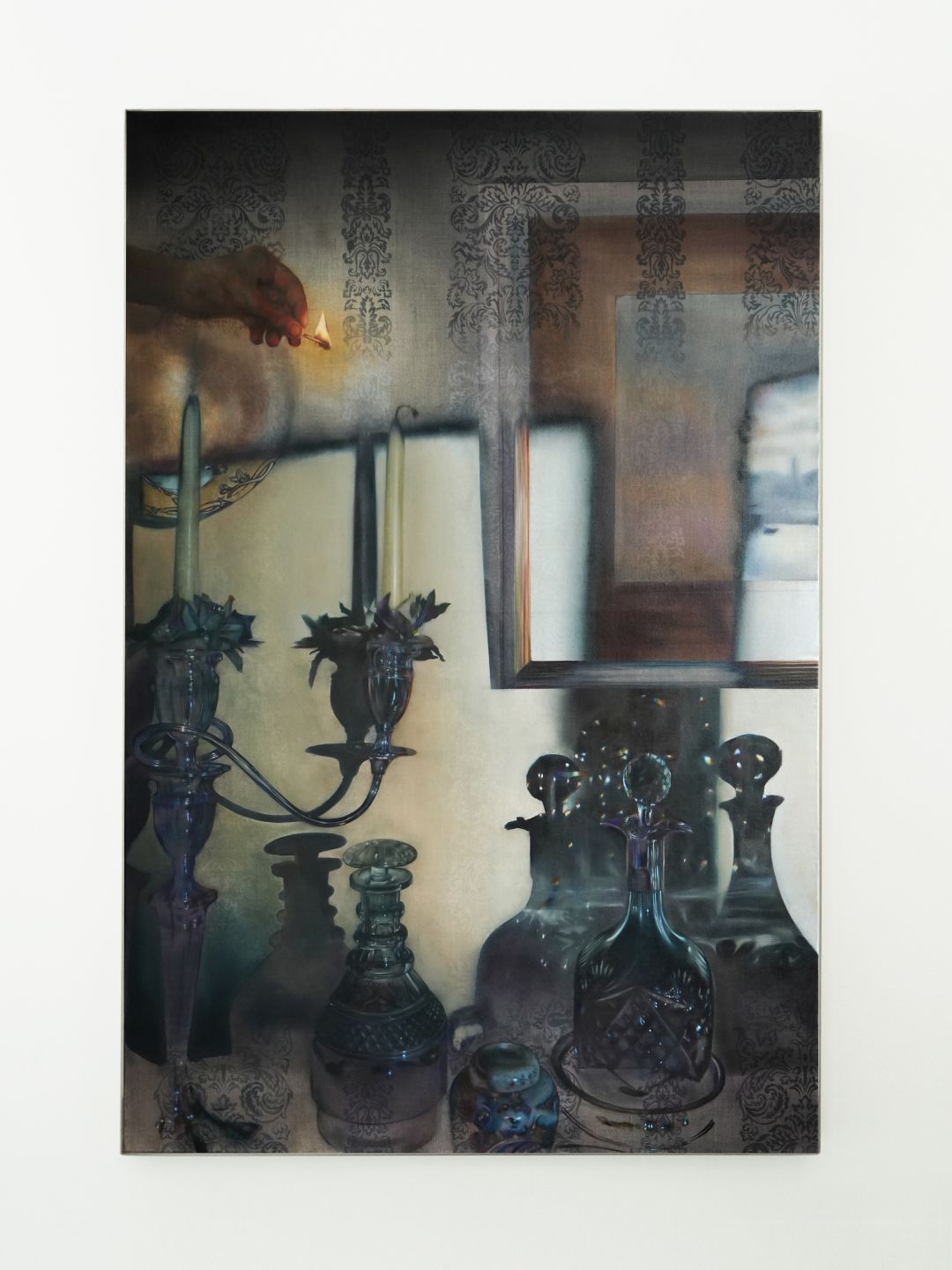
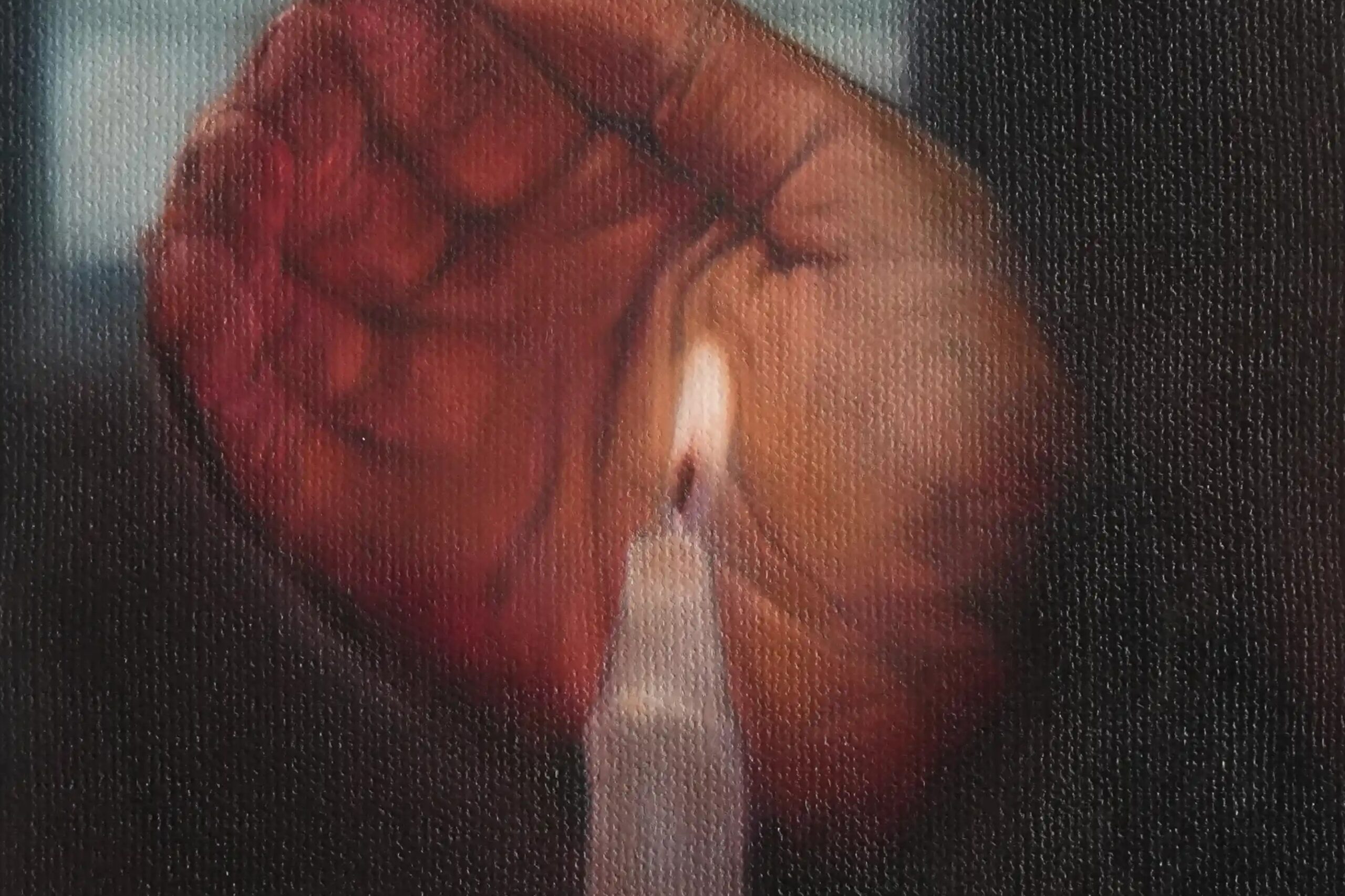
The repeated use of this material leads into a recurring and guiding element of fire in the exhibition, shaping how the works are seen and experienced, as its light never fully stays still and leaves some areas only partly visible. It appears in different forms across the exhibition, including fire holding a cluster of betel nut in the palm of a hand, a candle lit and then extinguished leaving a thin trace of smoke, and flames flickering in a hearth. Fire is also connected to Yu Fai (อยู่ไฟ), which literally translate to “to stay with fire”, a traditional postpartum practice in Thailand that uses heat to support recovery after childbirth. At the center of the gallery space, Hold your feet to the fire (2026), viewers are invited to kneel and look through glass panels, so their bodies must adjust their position and attention in response to the work.
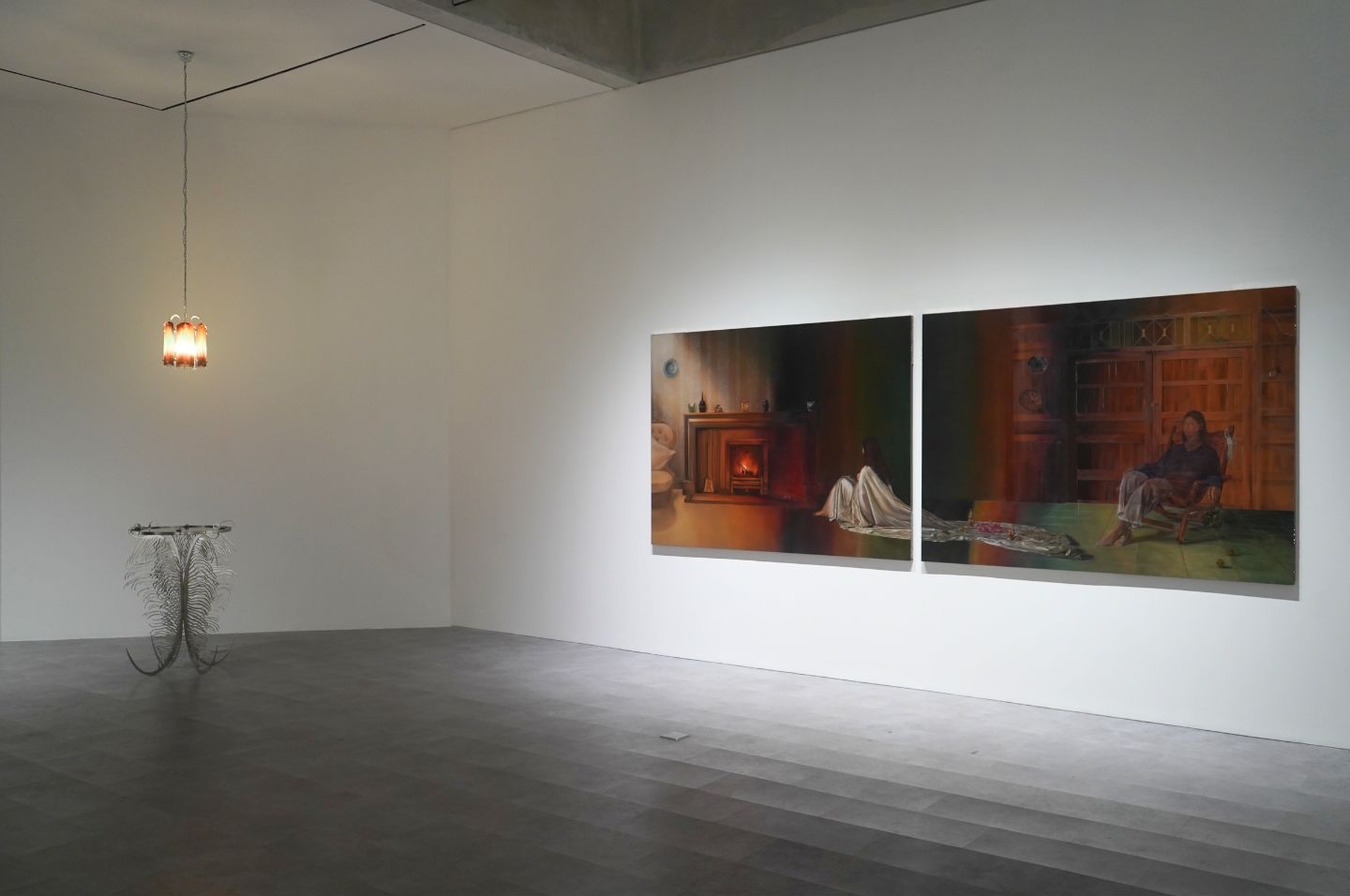
This sense of partial visibility continues in the large diptych I bloomed where cut, I burned where placed (2026). In this work, Sasi Organ places herself in two domestic spaces from her childhood, her maternal grandparents’ home in Hua Hin, and her paternal grandparents’ home in Bristol. Each space shows a different idea of home. In one painting, her figure almost fades into a wooden chair. In the other, she faces a fireplace where a betel nut is burning. A piece of silk stretches across both canvases, loosely linking the two interiors.
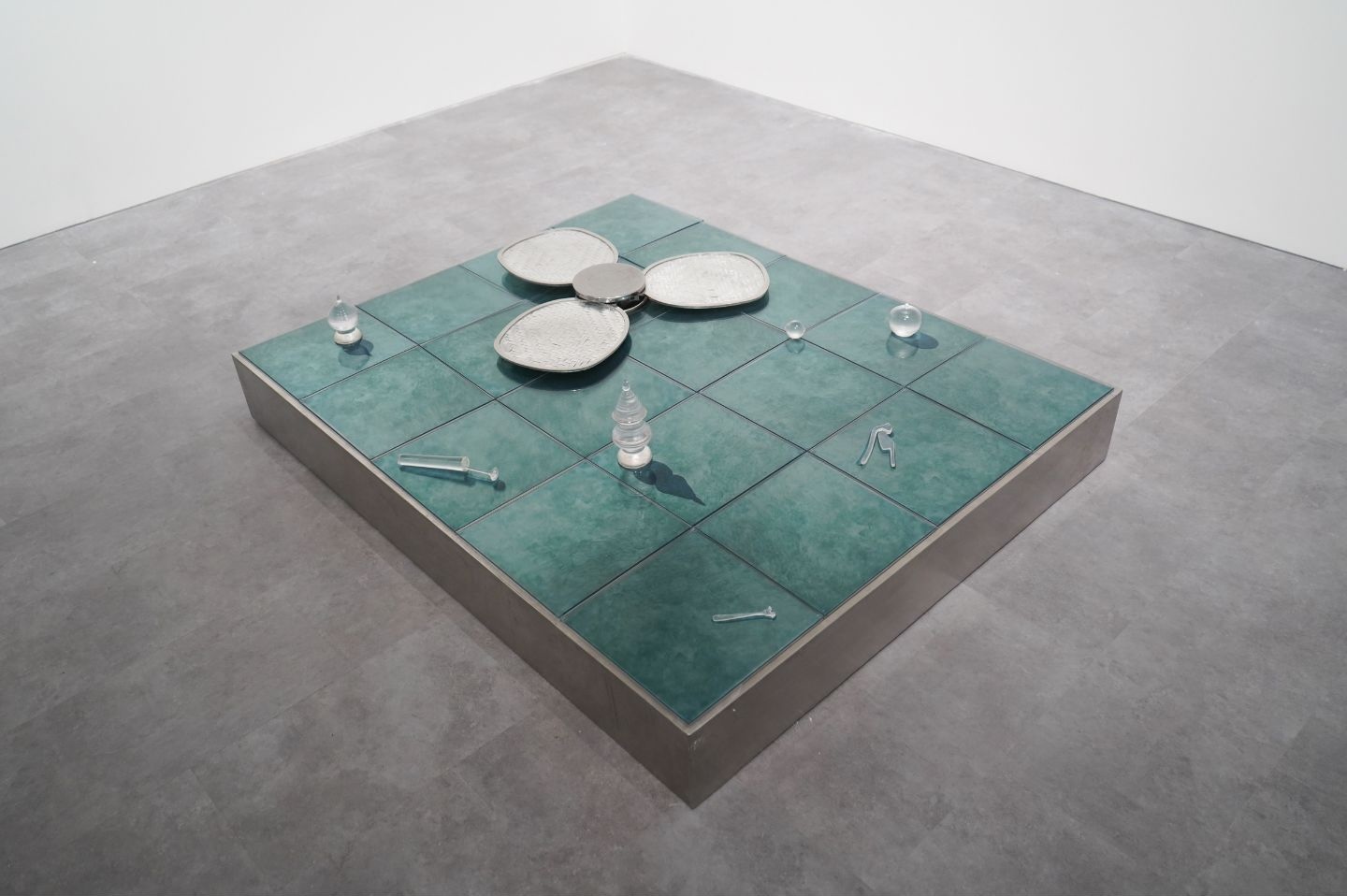
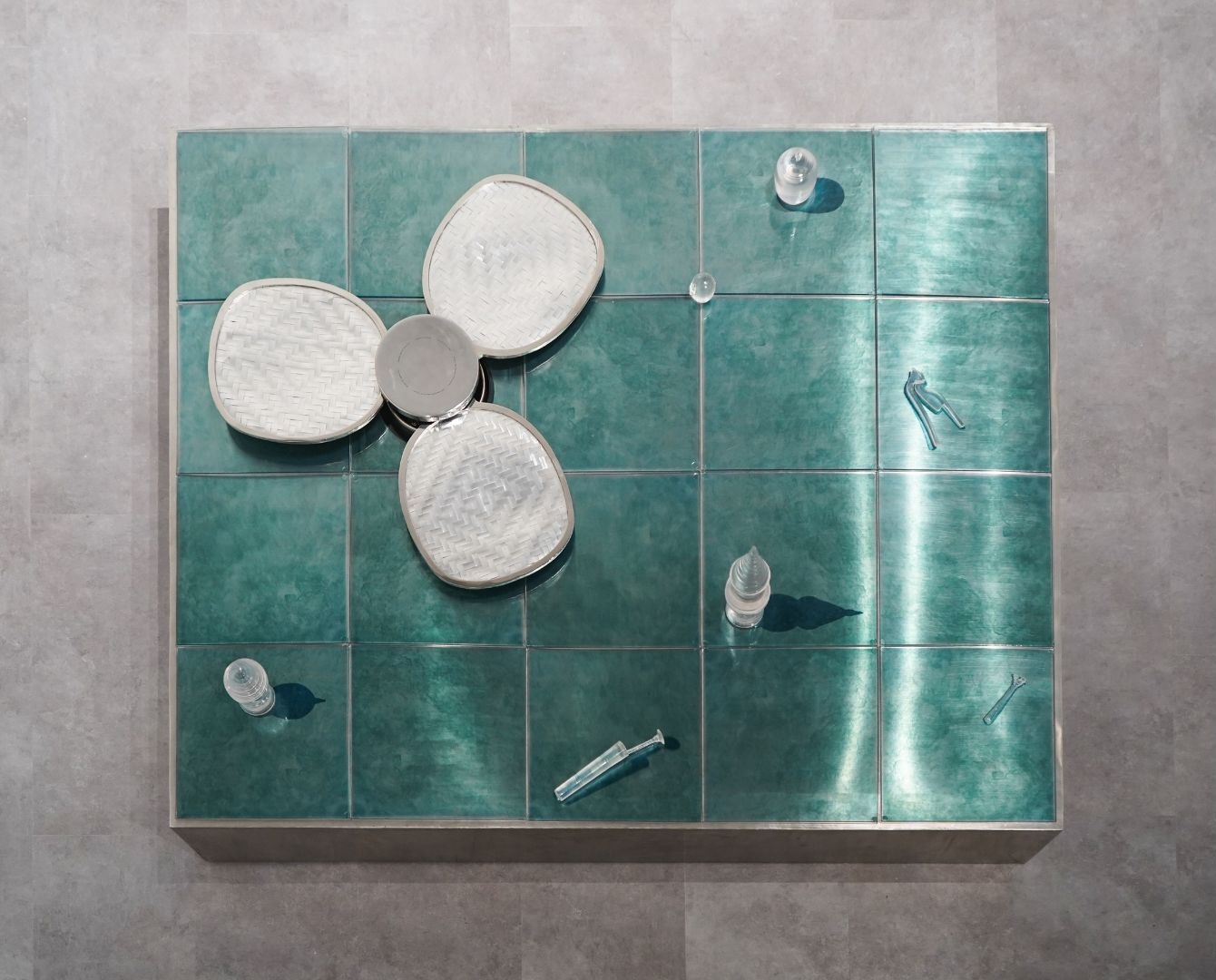
This attention to gesture continues in I learned fire at her knee (2026). Traditional hand fans are reworked into metallic ceiling fans and placed on the floor, drawing on a childhood memory. When children passed in front of adults, they were expected to bow, but the artist would often run past. Her grandmother would lightly strike her legs with a fan as an affectionate gesture of discipline. It shows how the body learns through repeated actions. As the grandmother’s memory fades, these recollections remain and anchor the artist to her maternal lineage.
The exhibition suggests how memory is held through objects, gestures, and bodily traces, as each element returns without fully explaining itself. The question of what is kept and what is allowed to fade remains present, and the works continue to hold that uncertainty in place.
ara contemporary
She lit my mouth without a word
A Solo Exhibition by Natalie Sasi Organ
11 April – 9 May 2026
ara contemporary
Jalan Tulodong Bawah I no 16
Jakarta 12190, Indonesia