
PAYAU, the solo exhibition by Iwan Yusuf at EDSU House, operates as a decisive moment within an artistic practice that has spent two decades negotiating the limits of form and perception. Presented from 21 November 2025 to 1 February 2026, the show brings used tiger trawl nets into the white cube through a series of site-specific installations. This choice establishes the exhibition as a statement on material intelligence since the nets arrive carrying histories of labour, extraction, and ecology, and their presence anchors the exhibition in concrete experience and prevents the work from drifting into formal abstractions.
The title payau, referring to brackish water (a condition formed when fresh and salt water meet) frames the exhibition through the idea of ‘mixture’ as a working condition. The exhibition PAYAU points to the long and winding journey that can be read through Iwan Yusuf’s artistic path over the last two decades where his works have moved across hyper-realist portrait painting, figurative sculpture, land art, and installations using nets and boat forms, and this exhibition in Yogyakarta gathers fragments of those directions.
In this solo show, Iwan Yusuf upcycles tiger trawl nets, a type of fishing nets that is now banned due to its role in damaging marine ecosystems. Closely tied to coastal labour, these nets enter the white cube where they begin to act differently. Instead of being connected to the sea, the nets now hang, stretch, and bend against the wall and the density of the layering suggests the amount of physical work required to shape them.

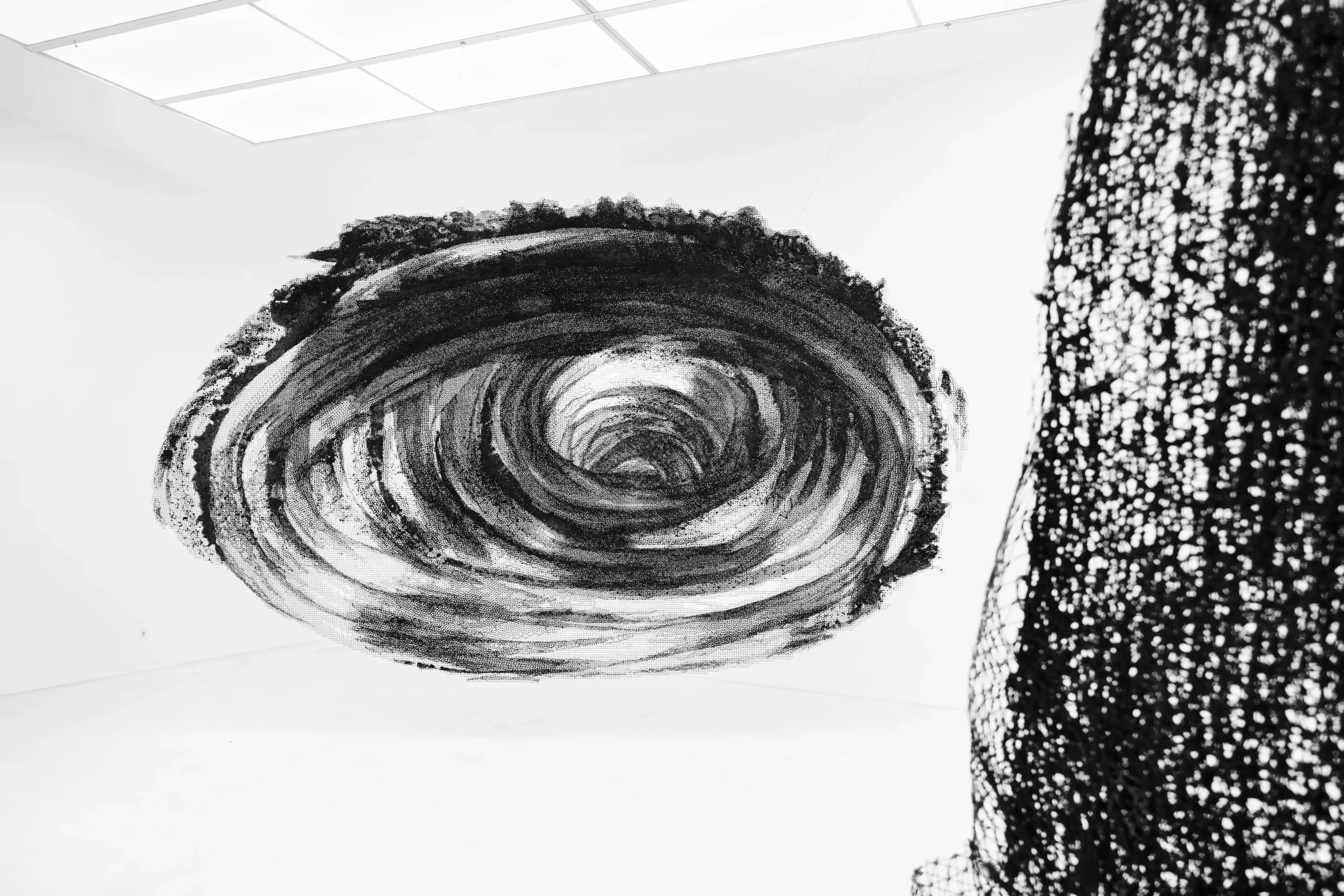
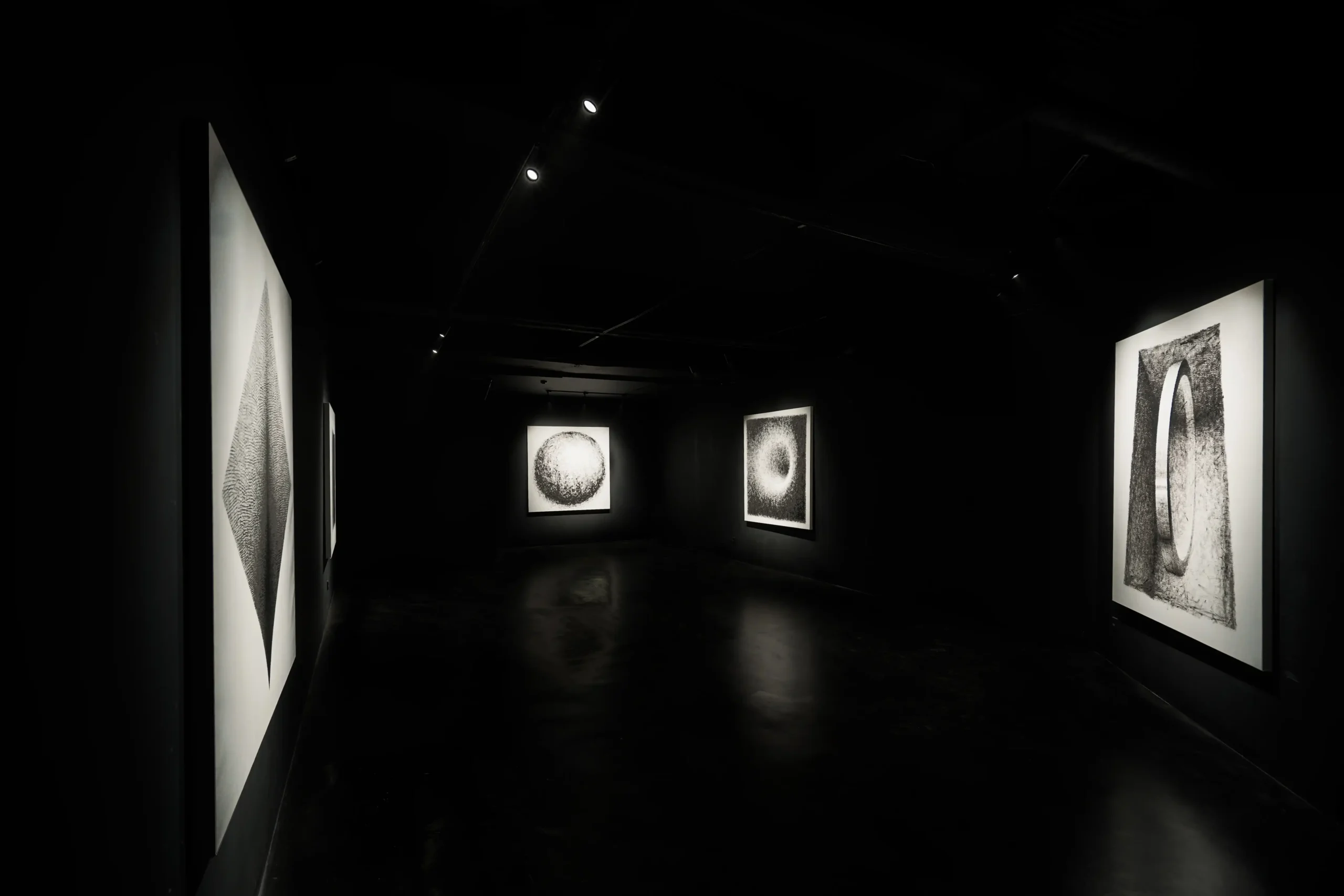
This uncertainty becomes clearer when we see through Iwan Yusuf’s working process. The installations in this exhibition begin as charcoal drawings on paper, which are then reconstructed at scale using layered grids and nets. The transition from drawing to installation does not aim to stabilize the forms as the artist pursues a tension between flatness and depth.
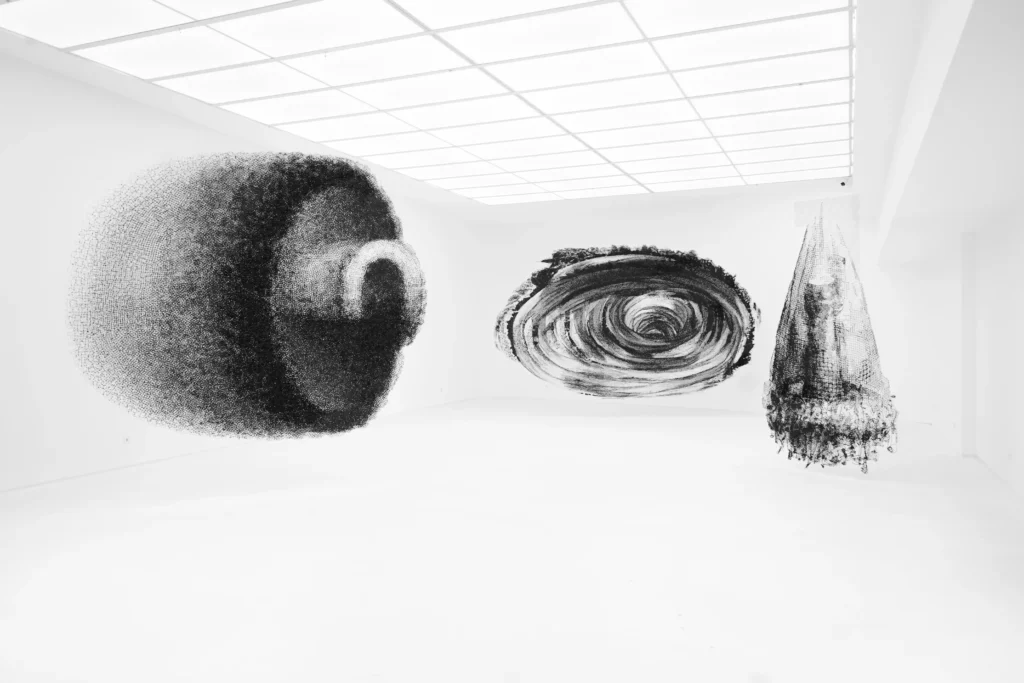
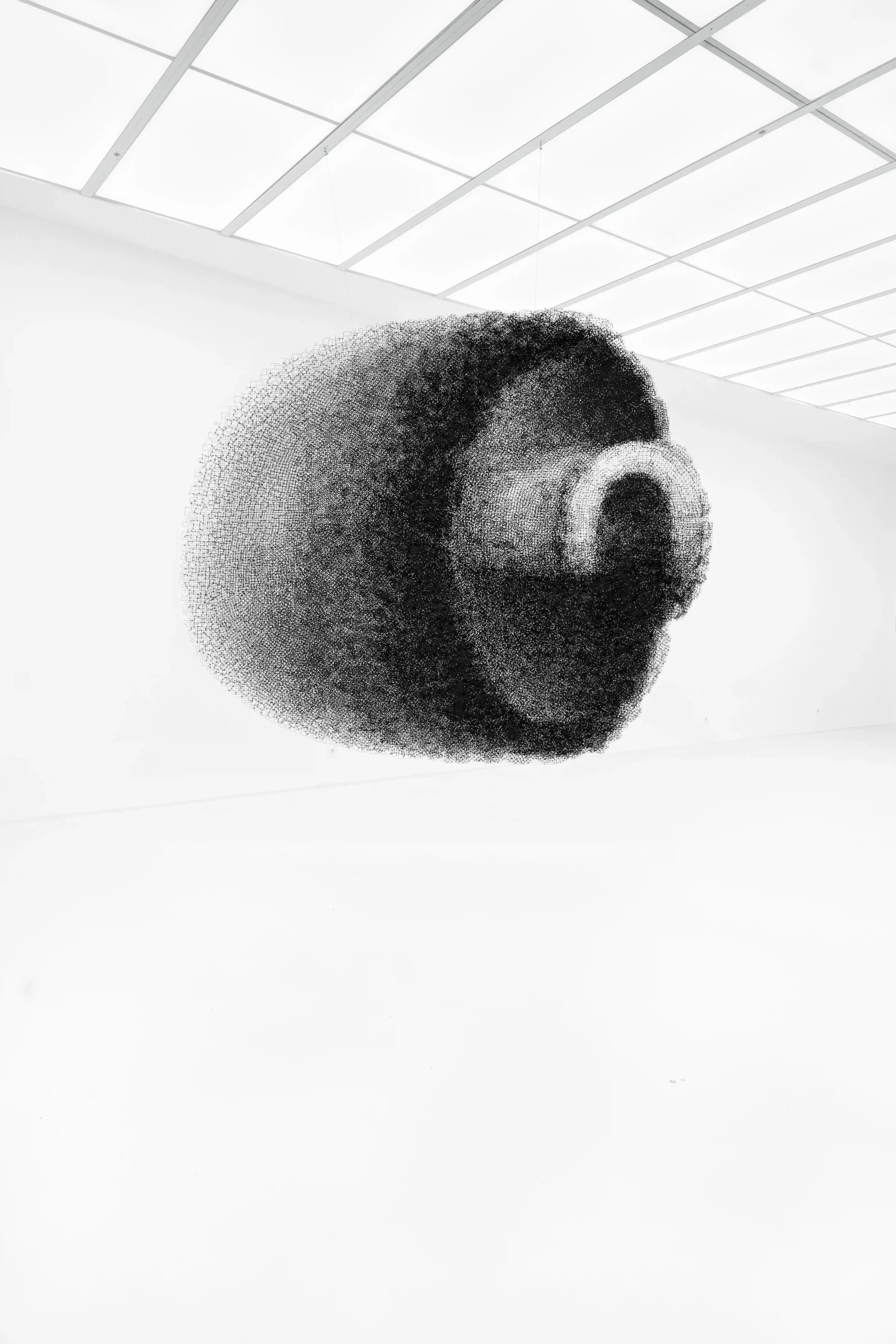
Seen from a distance, the gallery appears almost overly clean with its white walls, bright ceiling and uninterrupted floor surface. Against this controlled setting, the installations made from tiger trawl nets immediately register as dense and dark interruptions. On side, a large rectangular work hangs and stretches horizontally, its surface composed of intricate netting that forms a heavy mass. A circular shape emerges at its centre, pressed into the field like an imprint, appearing flat at first glance yet the edges reveal slight folds and shadows, suggesting depth that becomes clearer as one adjusts their position.
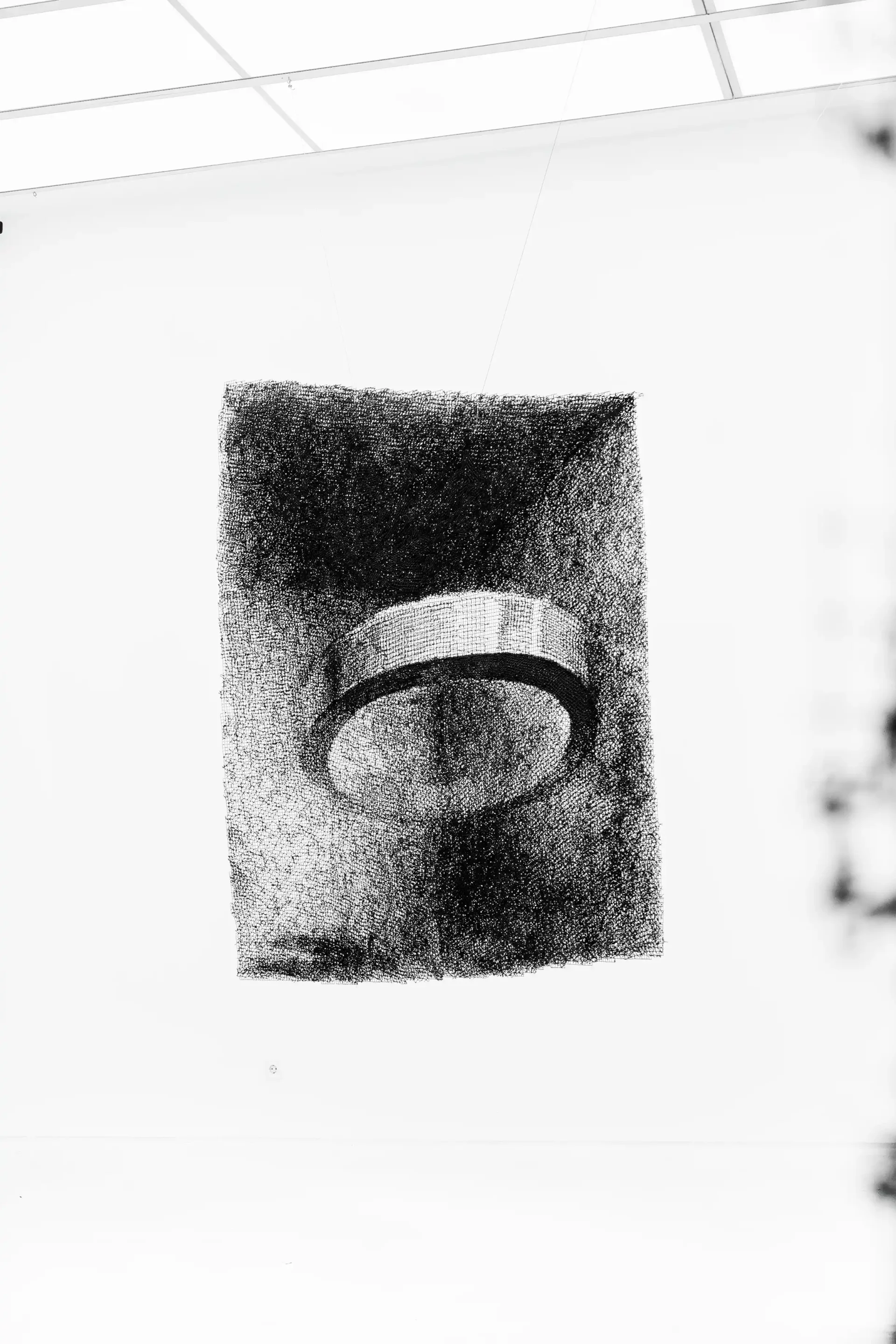
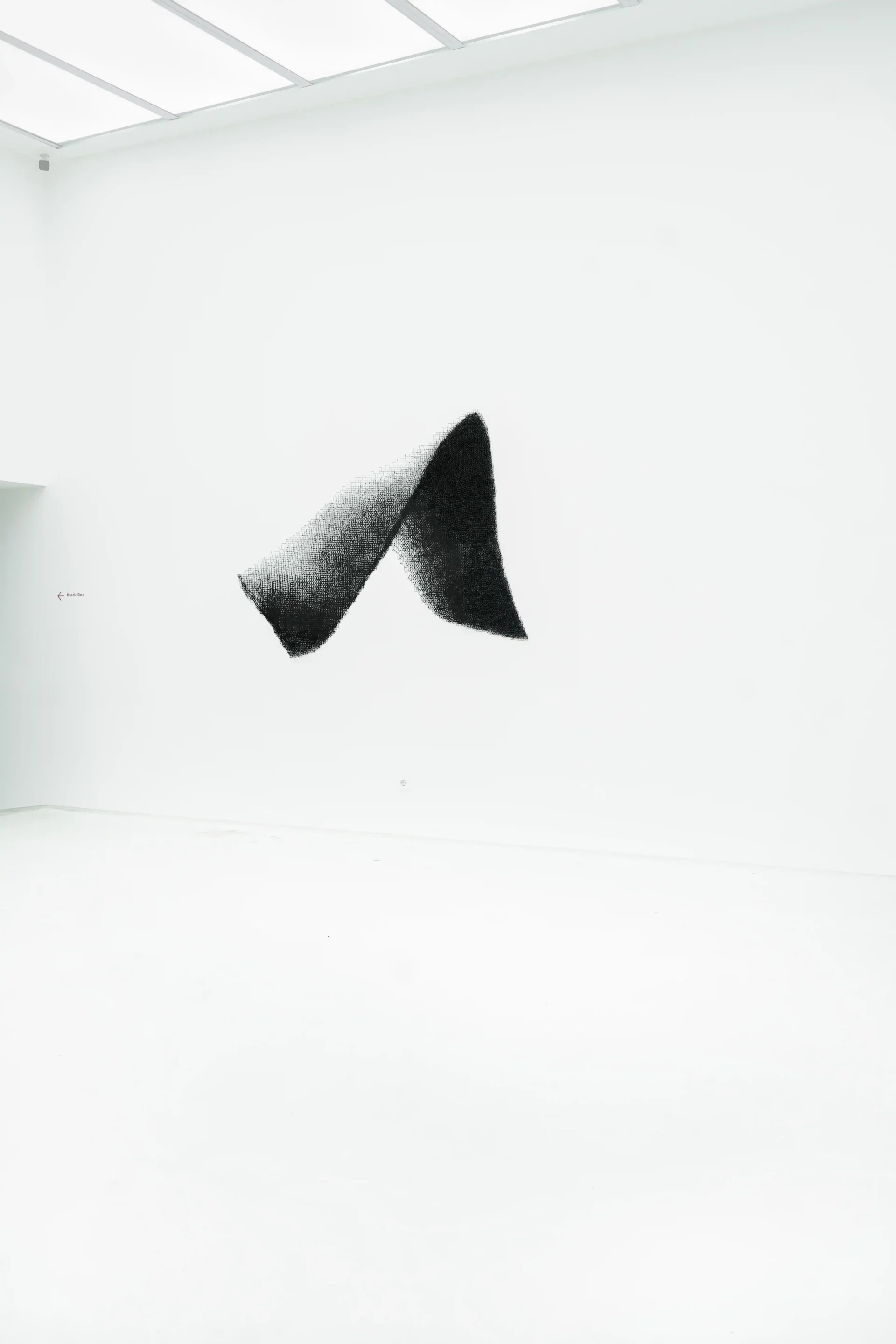
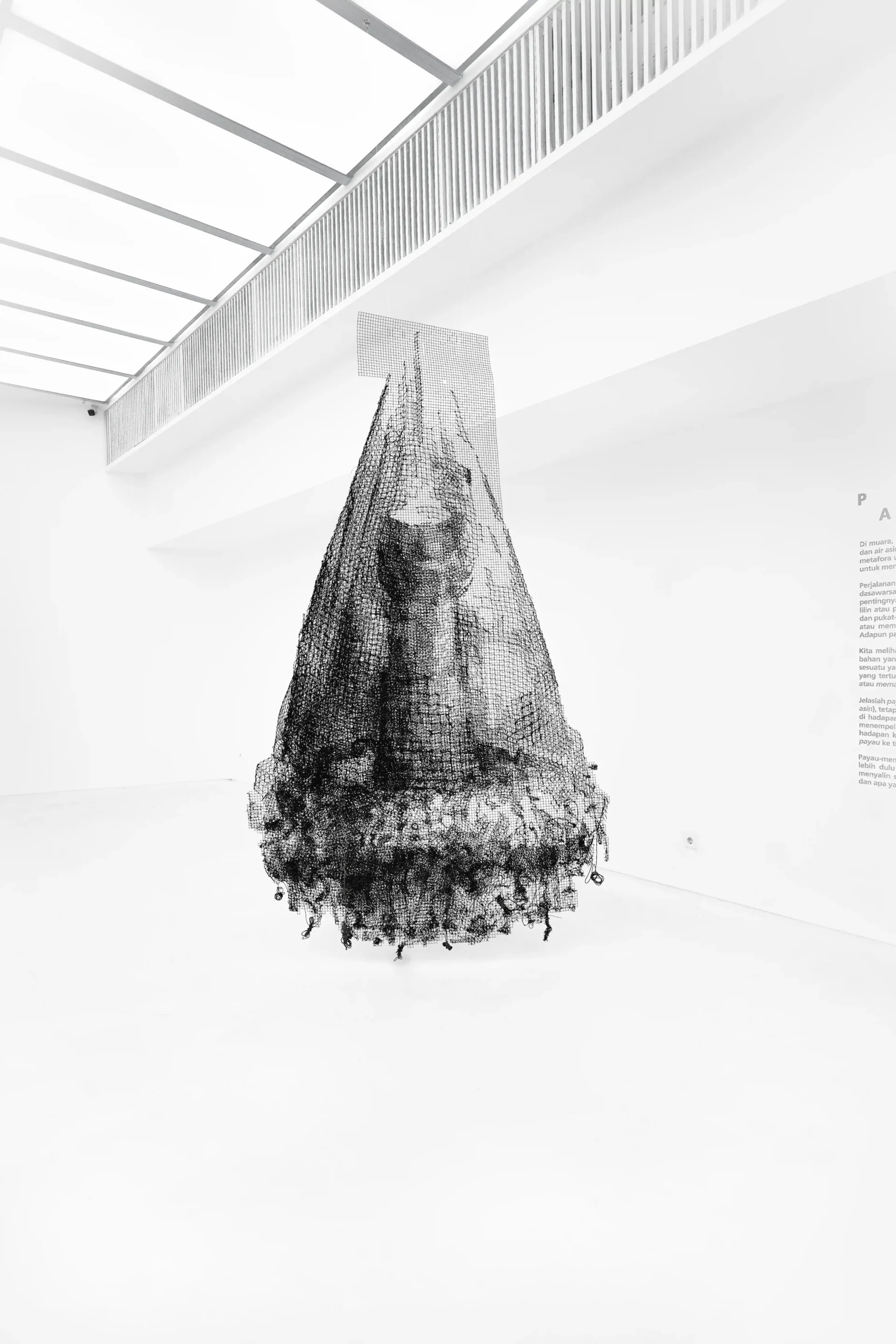
On the adjacent wall, a smaller installation hangs apart from the larger ones. Its shape bends inward and outward, suspended at a height that pulls the eye away from the centre of the room. Occupying the room are three other installations, each differing in form but similar in tonal weight. One spreads outward like a dense mass pressing against the wall. Another forms a circular, vortex-like pattern, while the third hangs vertically, tapering downward. Walking through this space, the works seem to subtly change, appear to compress or expand depending on viewing distance because the netting catches light unevenly across its surface.
As a result, the exhibition positions uncertainty as a productive space for seeing, as the works appear graphic and controlled, but the impression changes as viewers approach and forms begin to compress the space like it is carefully engineered. This distance allows each work to be seen independently but their shared material of tiger trawl nets keeps them in conversation. Additionally, the brightness of the gallery amplifies the darkness of the works but it does not overwhelm the room. Standing in front of these works, one becomes aware of how much effort is required to create each of the works and how to look closely at it.
In the context of contemporary art, PAYAU intervenes in a field characterised by excessive clarity and spectacle. When we talk about form, paintings often remain in a safe-space while installations often describe themselves through domination of space, and Iwan Yusuf maintains his work in a state of constant friction between the two. This restraint is what keeps the viewers engaged. At the same time, it raises a question worth considering: to what extent does the repeated use of fishing nets continue to challenge perception?
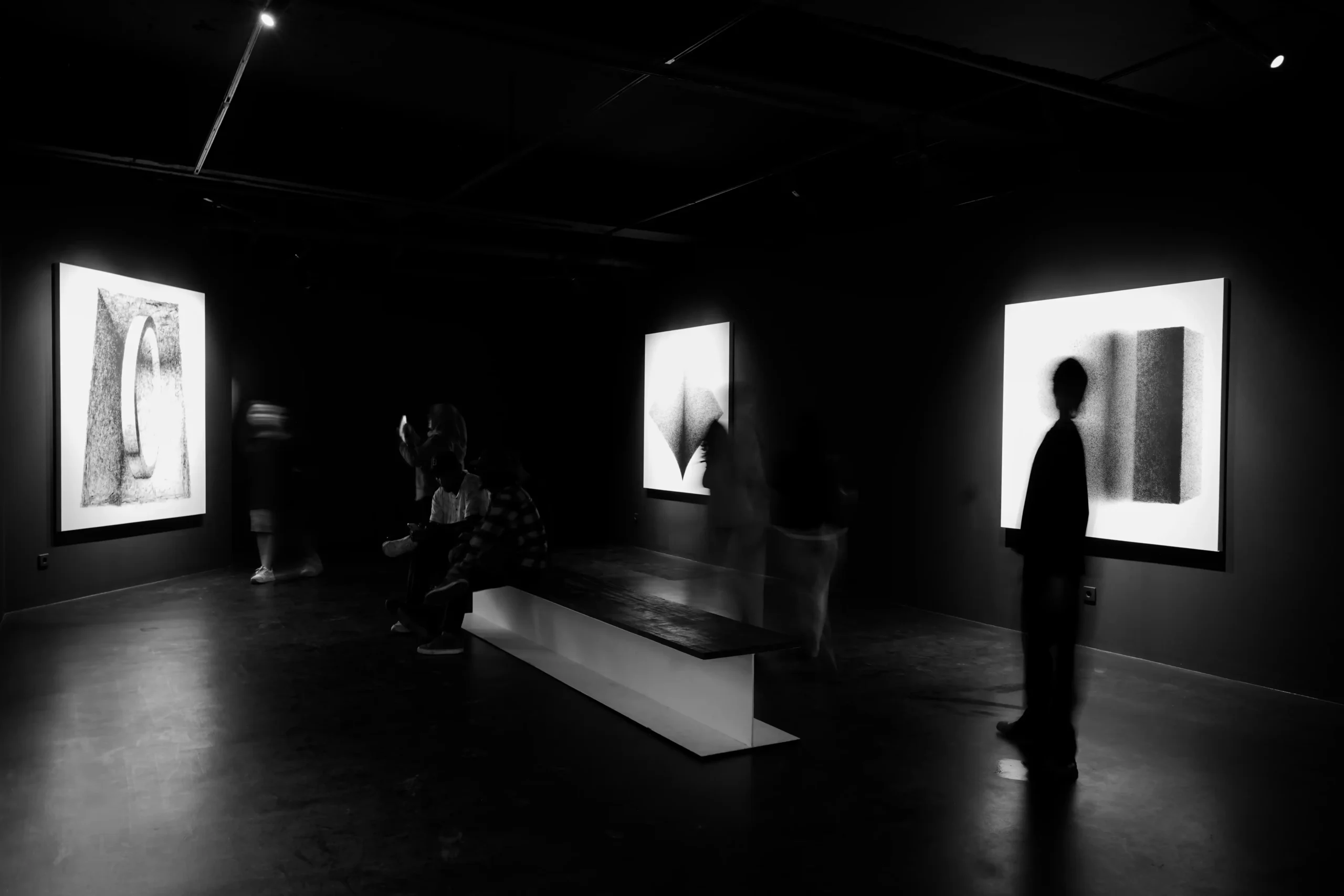
At EDSU House, PAYAU finds a context that supports its careful pacing and spatial sensitivity. The works seem to respond to the viewer’s movement, appearing to advance or withdraw as distance changes. From there, another question remains alongside this experience. What is gained, and what might be tempered, when materials so deeply connected to labour and ecology are presented within the controlled conditions of a gallery space? The exhibition keeps the tension, inviting the allowing to sit with it for a moment.
EDSU House
PAYAU
A Solo Exhibition by Iwan Yusuf
21 November 2025 – 1 February 2026
EDSU House
Jl. Kaliurang km 5,5 No. 72
Yogyakarta 55281