
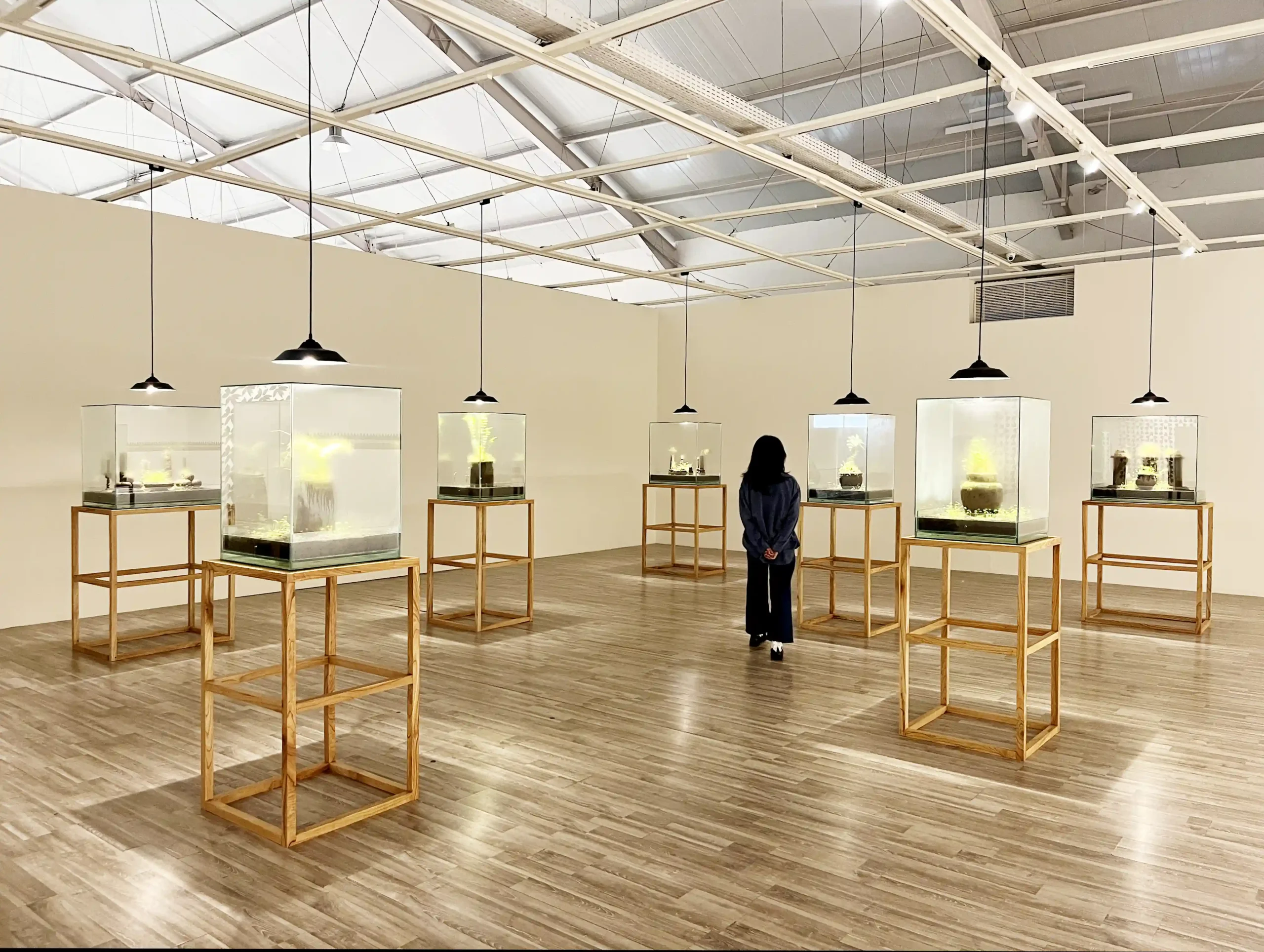
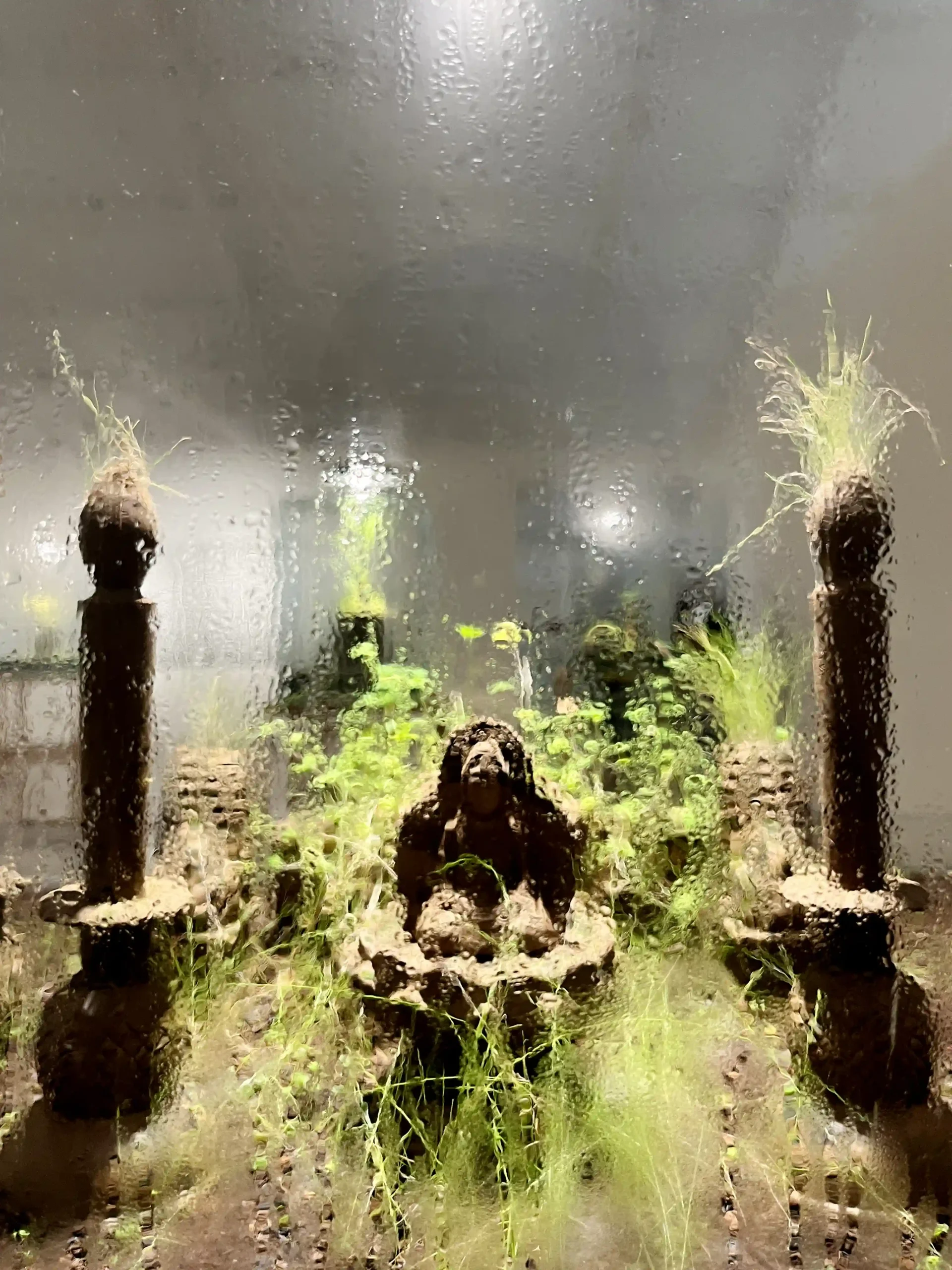
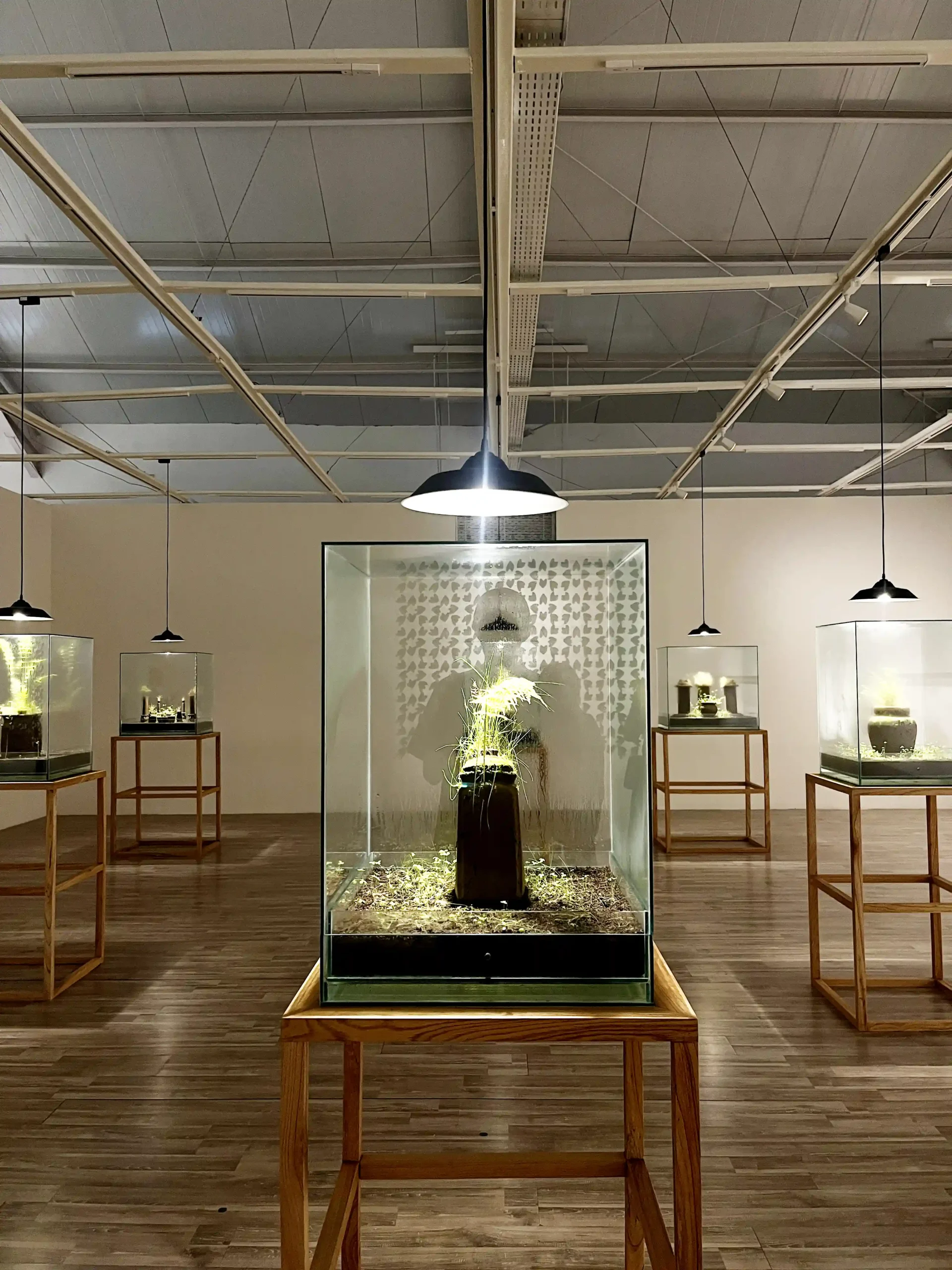
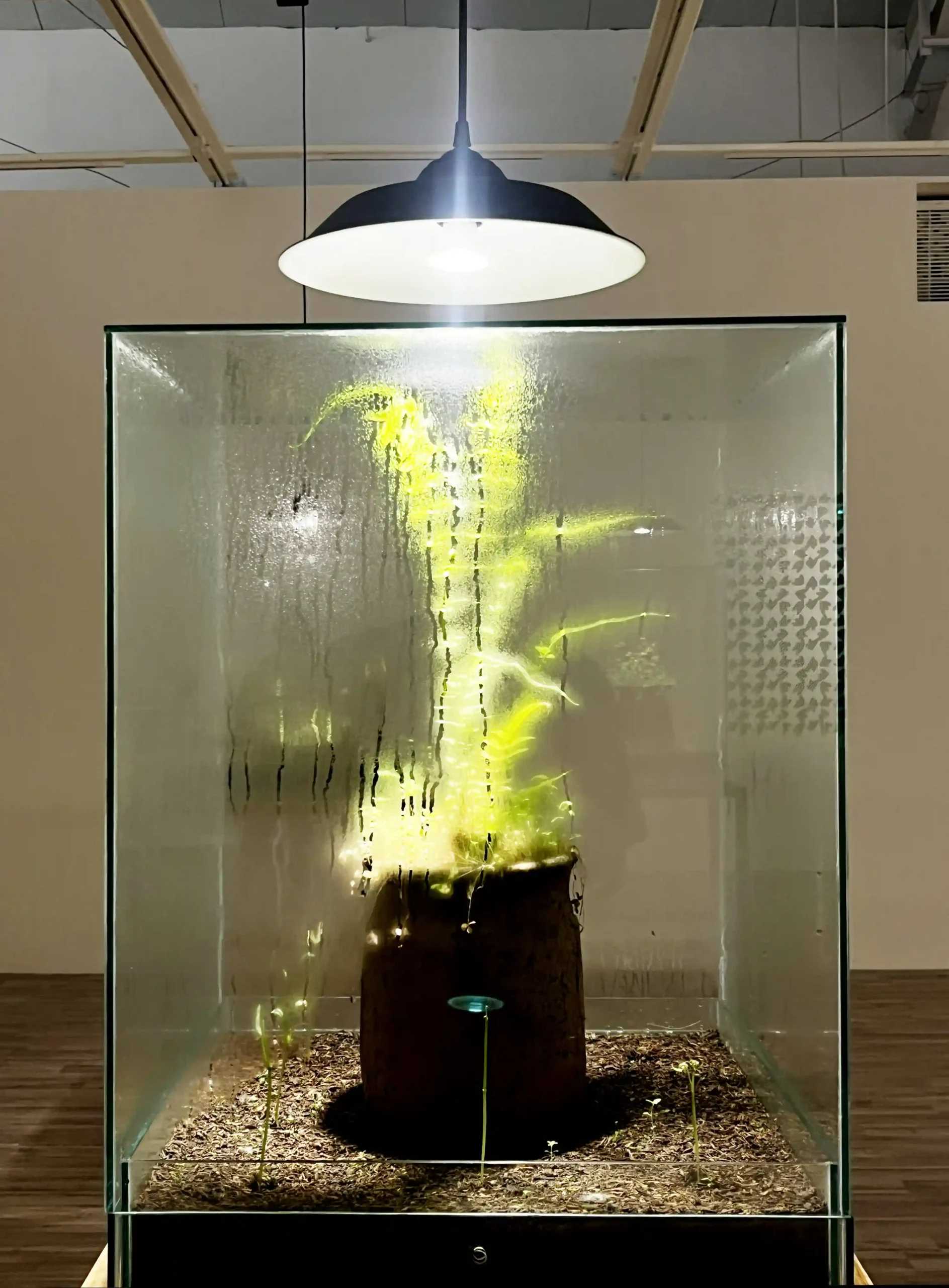
Under the glow of the gallery lights, the artworks in Albert Yonathan Setyawan’s solo show Transitory Nature of Earthly Joy are made from organic materials. Clay, seeds, and plants, constantly changing, slowly decaying over time. Nine terrariums Transitory Nature of Earthly Joy, Tumurun Museum Project (2017 – ongoing), arranged in a way that they are located sparsely in the centre of the space. Encased in glass, shrouded in dew. A high ceiling but narrow room. The minutes stretch; sunlight and water; photosynthesis. Look closer: the sculpture of Guanyin, the goddess of mercy and compassion. Seemingly breathing, as if it is imbued with a quiet, organic life. You’re drawn in, the lust form suggests an awareness of impermanence. Through these choices, Setyawan reflects on the cyclical nature of life, death, and rebirth, ideas that universally feel personal.
Setyawan’s artistic practice often evokes a sense transformation, in literal and metaphorical manner, where in the exhibition, we become witness to the growing seeds. The artist allows the materials to move out of his control and lets nature dictate the final outcome of the work. What begins as a clay object sprouts, day by day. The humidity feels like a pulse, an invisible barrier between the viewers and the essence within. Each terrarium is a world of its own, draped in living patina.
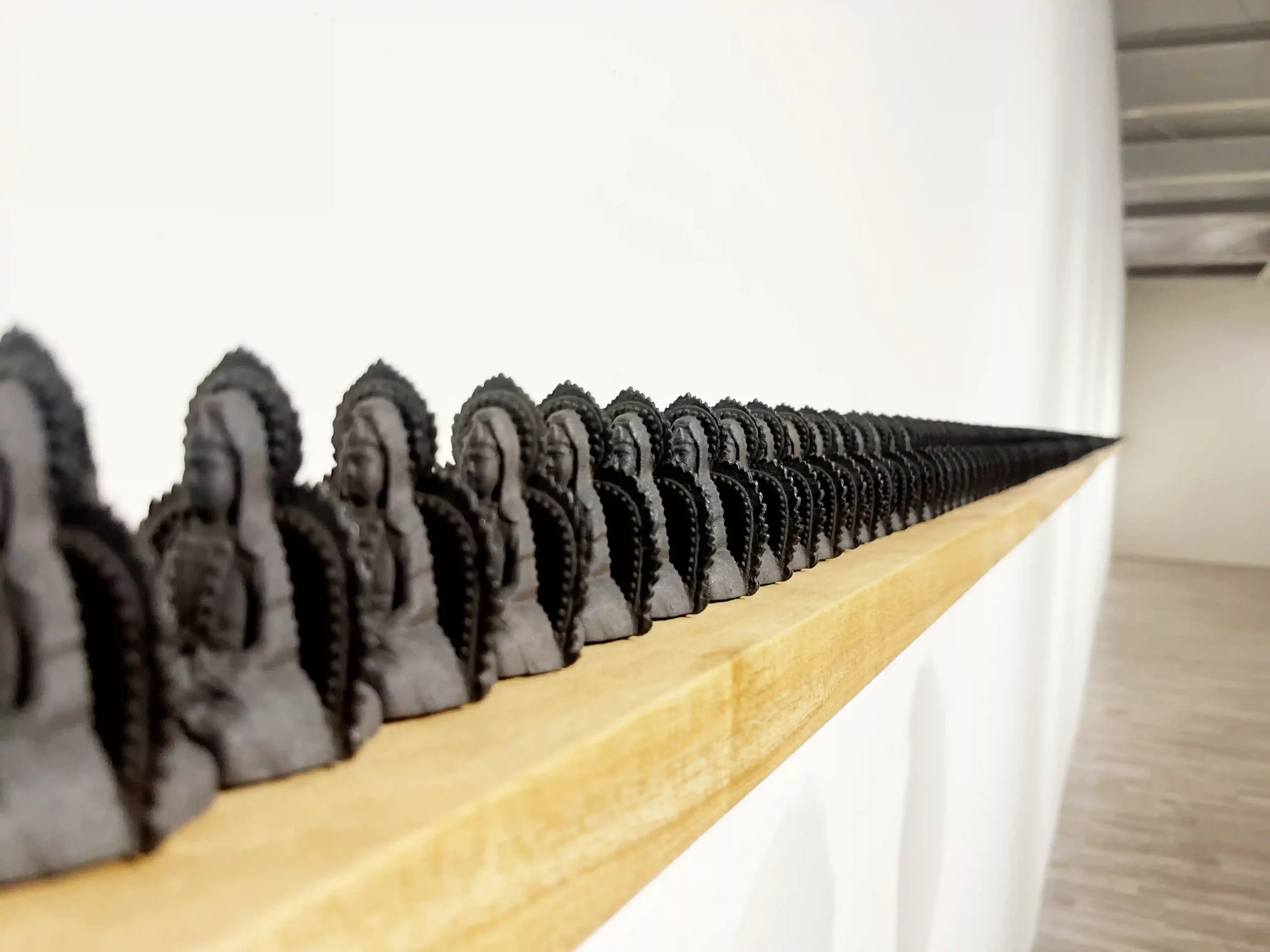
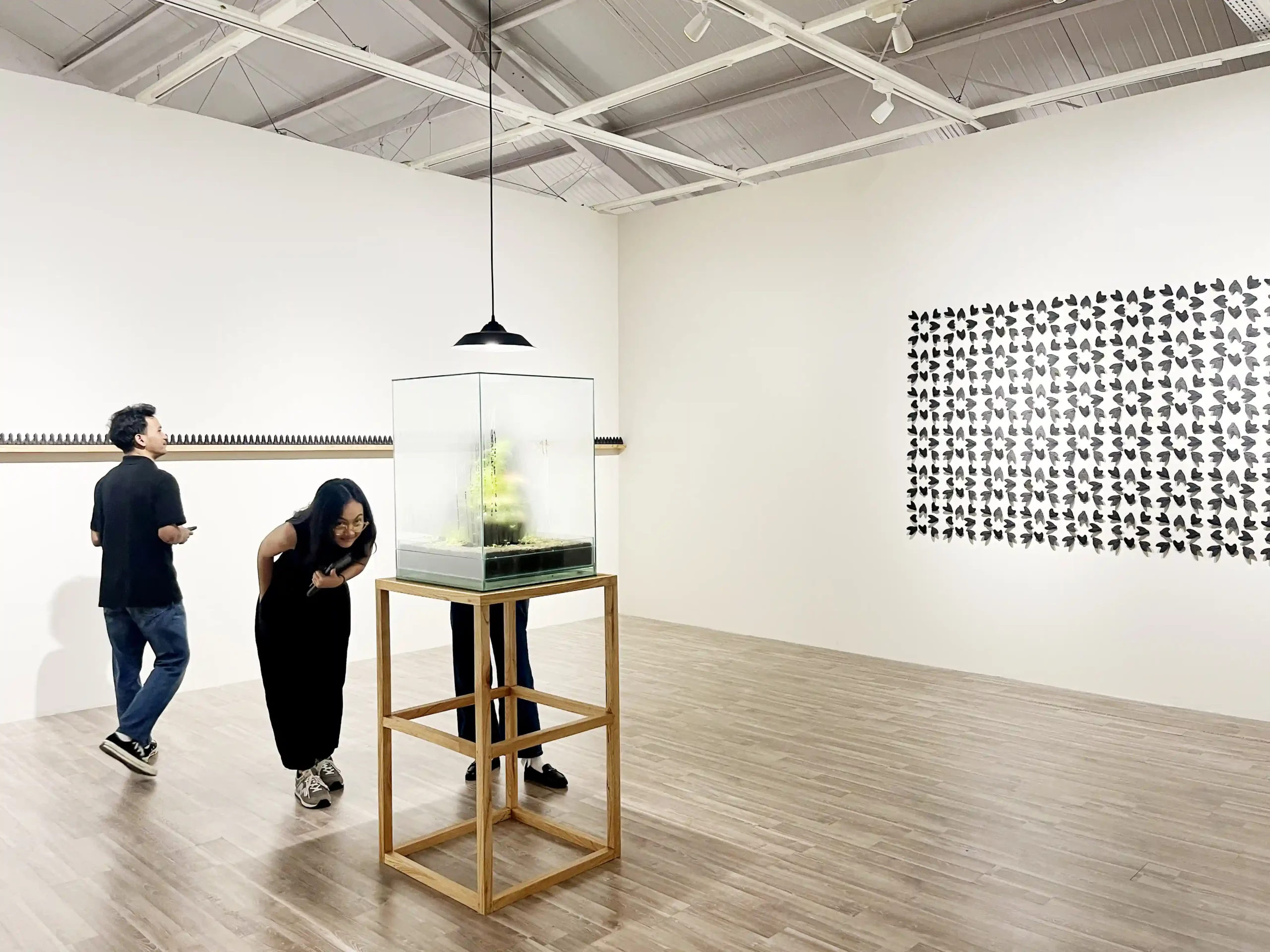
Transformation takes form slowly in Setyawan’s symmetrically arranged Goddess Guanyin installation, Annica: Statues (2024), a row of miniature statues lined along a wooden shelf spanning one gallery wall. Despite the faint echoes of visitors’ footsteps from the floor below, there’s a rhythmic process we can feel within the work. Each tiny statue holds differences, so delicate we can barely notice when first looking at it. Starting from one end of the row to the other, the statues transform from plain stones to carved figures in the pose Padmasana. Each stone is roughly the size of a human palm. With this, viewers can almost sense the hours and labour into every detail went into making each of them. An immediate intimacy. It’s as if Setyawan has multiplied a single presence into a powerful collective. Each figure, though individually unremarkable, gains strength as part of the procession. A reminder of the harmony found in multiplicity.
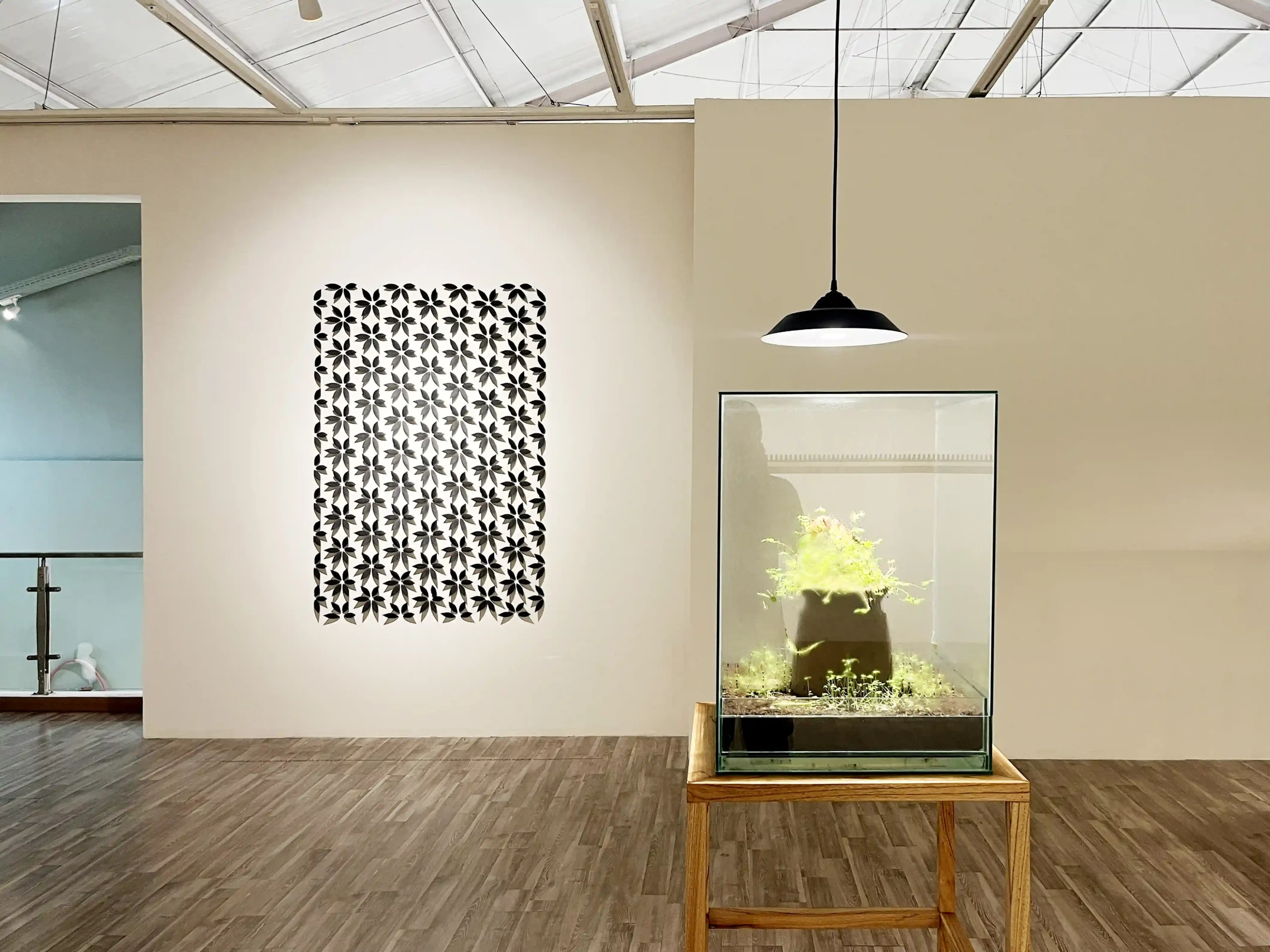
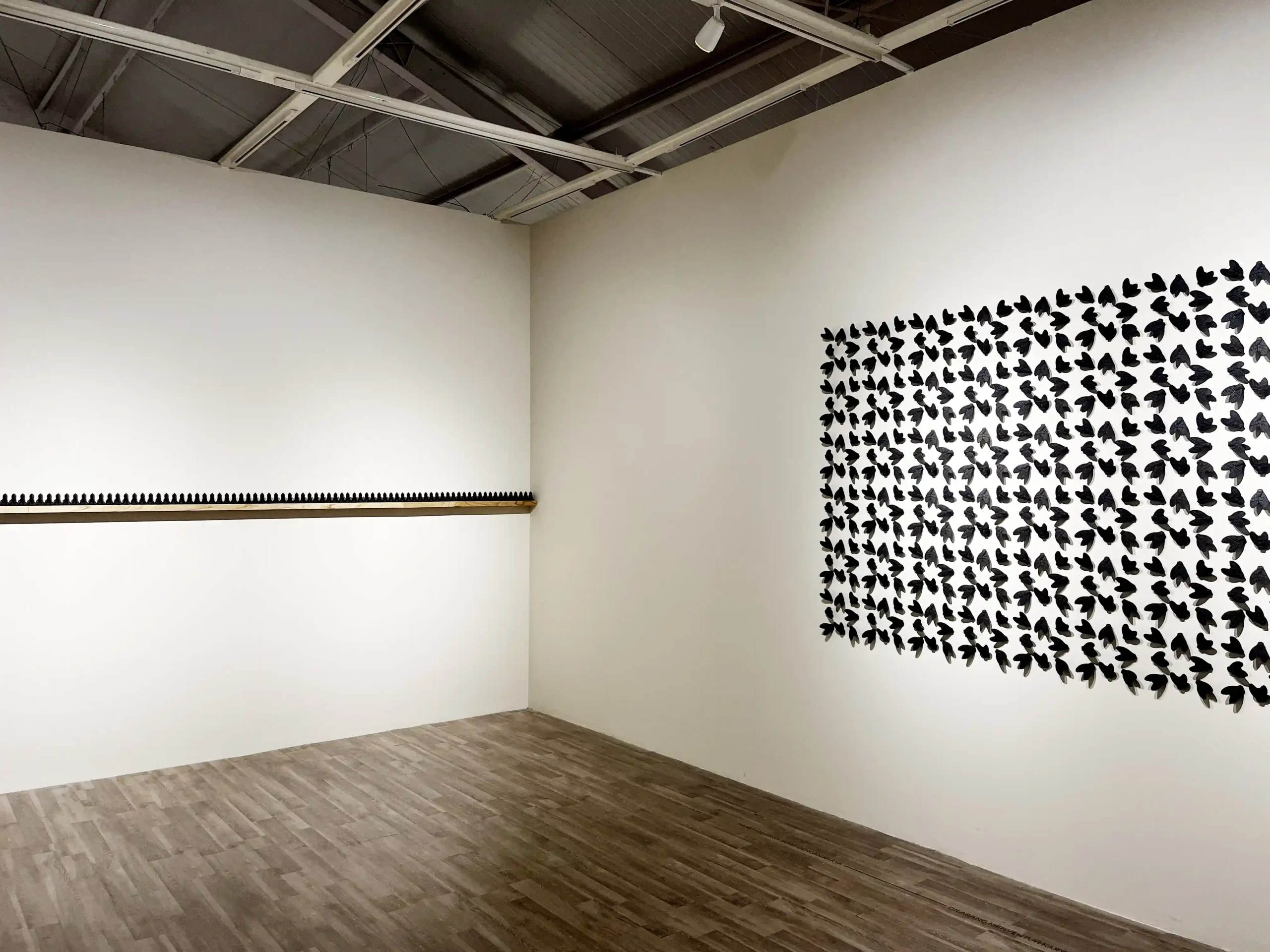
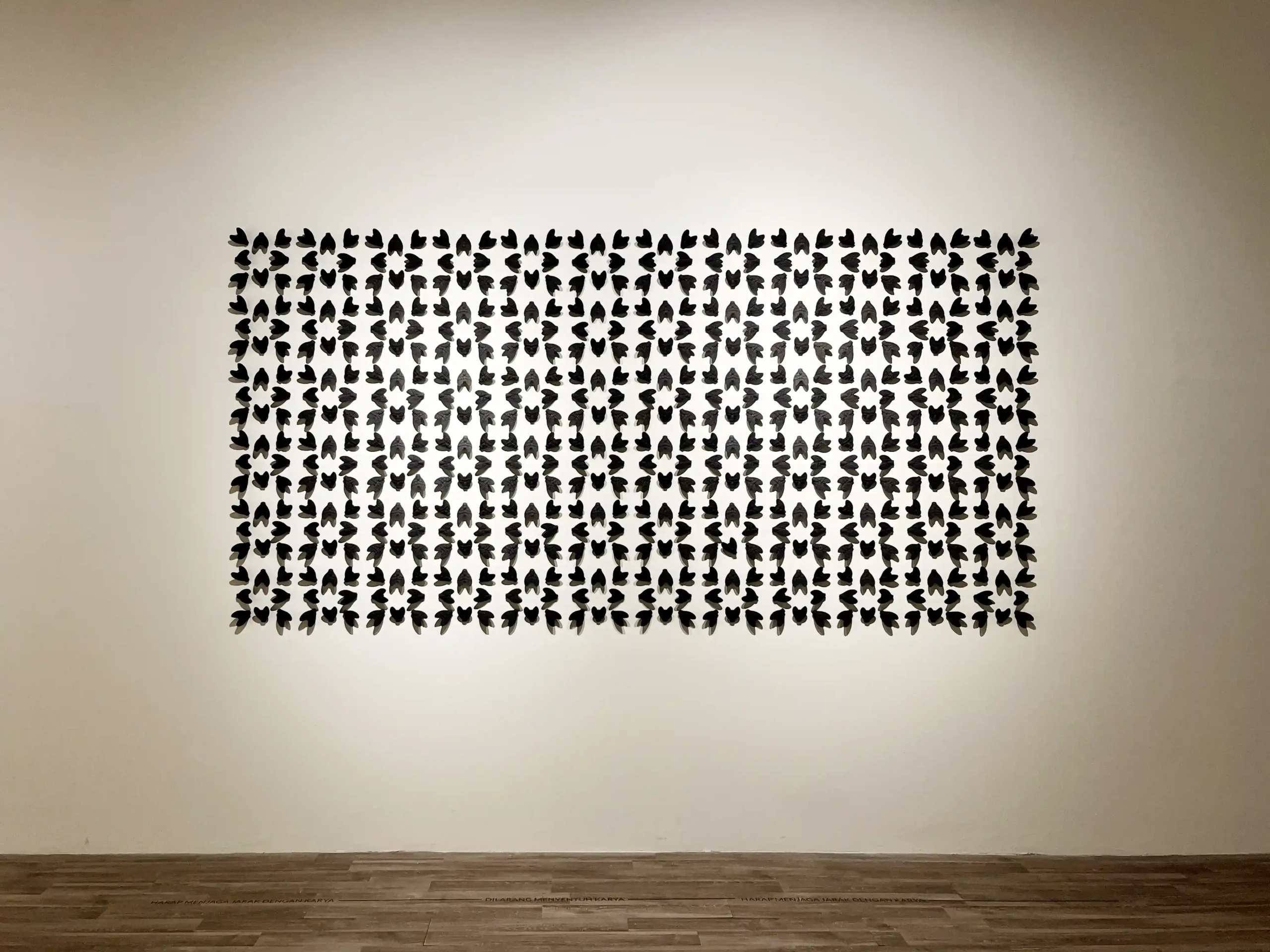
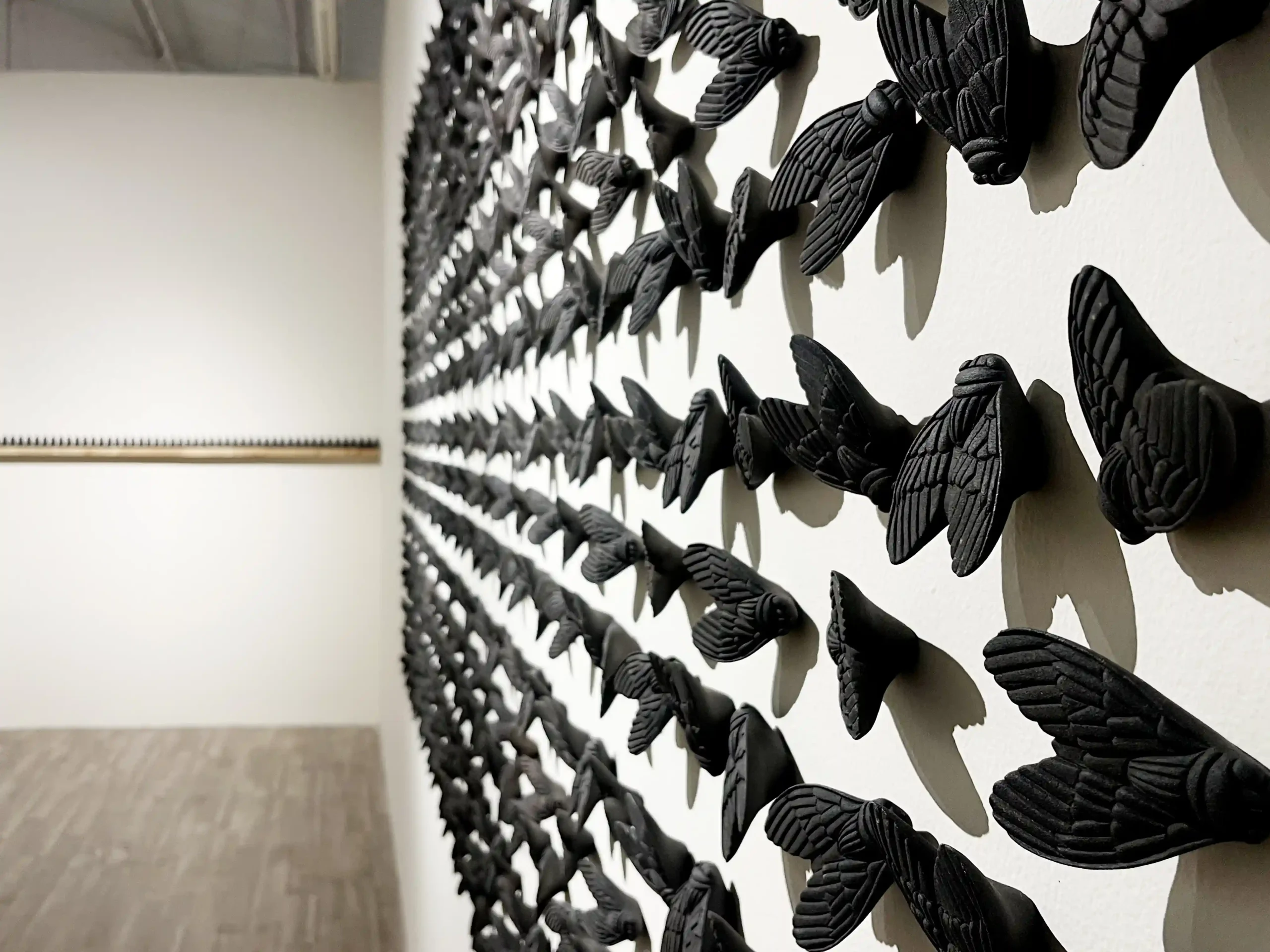
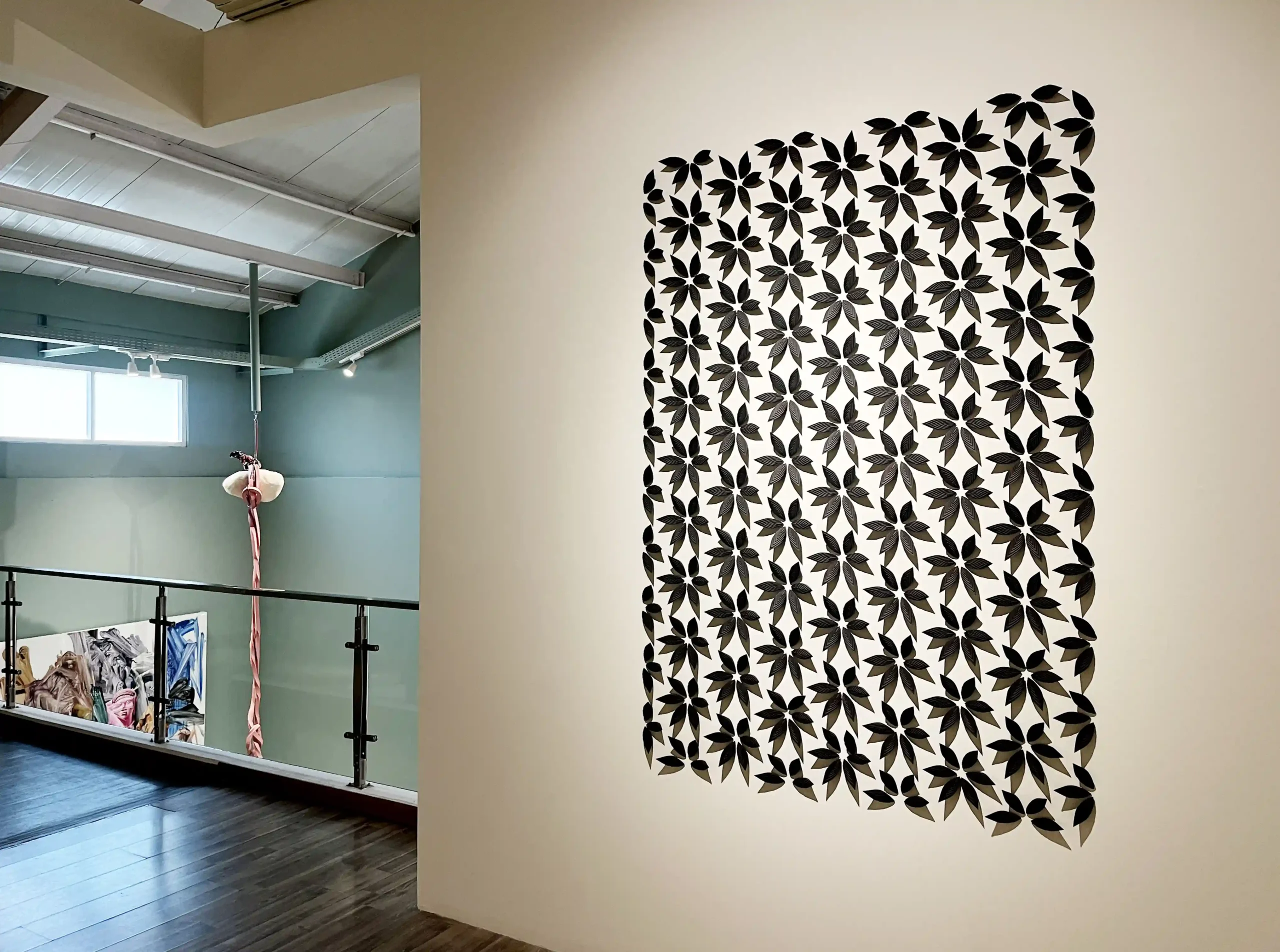
Across the other side of the wall, in the work Palingenesis I (2024) and Palingenesis II (2024), Setyawan takes on repetition as a tool to shift ideas about the “sacred” and the “mundane.” Through his practice of creating the same object over and over, the repetition itself forms a sort of meditation. Setyawan selected these objects because he believes they possess a clear representation of the belief in the afterlife within the Buddhist tradition. Though typically constructed to last, connecting our world to that of ancestors and spirits, he incorporates them here with materials that are destined to decay; the passage of time and the impermanence of all things.
To see this exhibition one more time. Toward which light will those seeds grow?
Albert Yonathan Setyawan, born in Bandung, Indonesia in 1983, now lives and works in Tokyo, Japan. A multimedia artist, he uses clay, an organic, pliable material rich in history, as his primary medium. He shapes clay into objects that reference man-made organic symbols, traditional ornaments, and historical sites across diverse cultural and religious traditions, reflecting his syncretic sensibility.