
The views expressed in this article are solely the author’s own and do not represent nor reflect the views of Qatar Museums, Art Basel Qatar, their affiliates or other organizations mentioned.
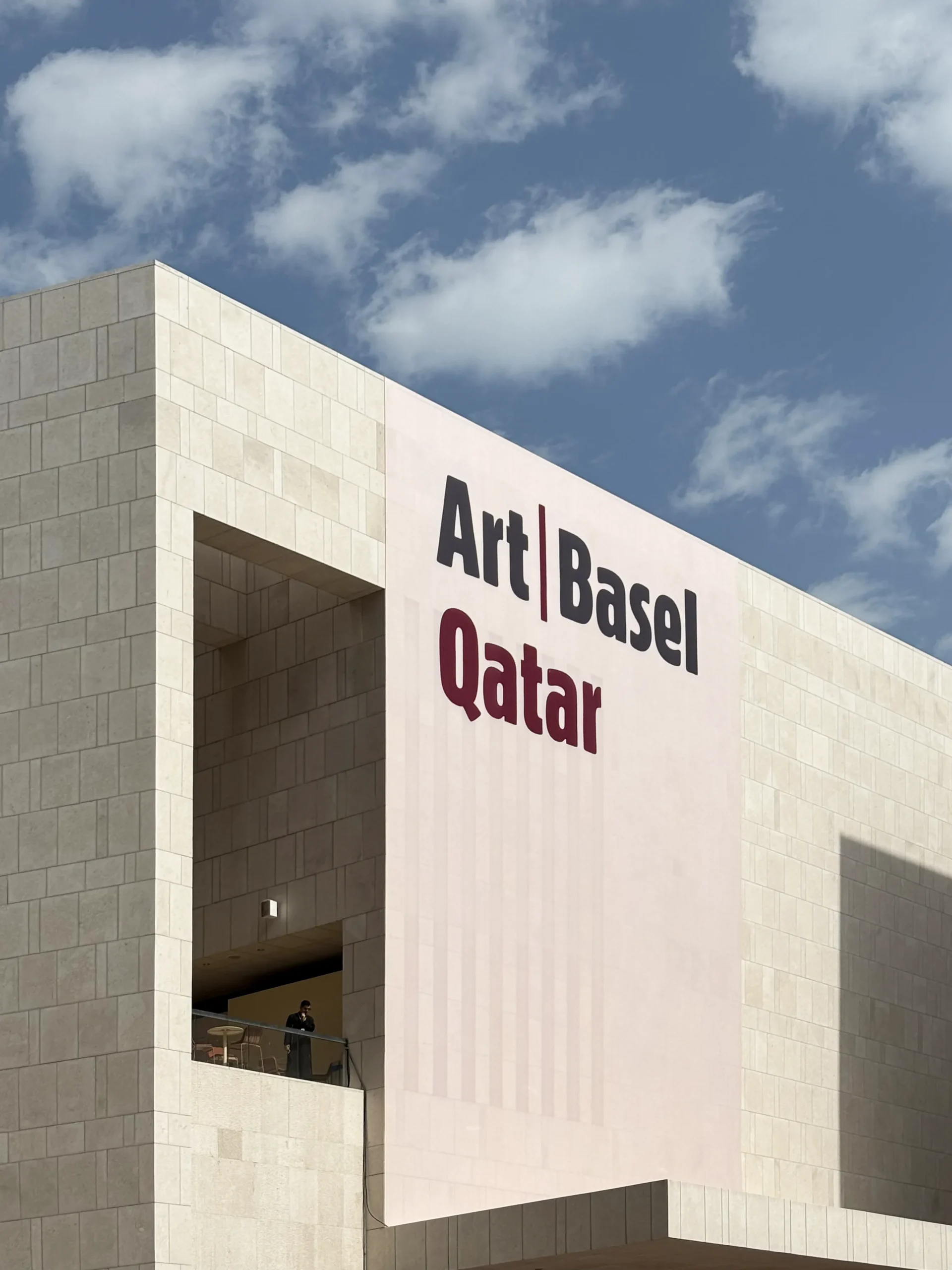
Art Basel Qatar closed its doors on the 7th of February after a four-day long inaugural run.
One may wonder why an article about it is being written more than two months after its end. This piece was originally intended to center the fair’s artistic curation, yet the effects of the US-Iran war on the region’s cultural fabric is inescapable. Art Basel’s arrival has become more than just an exhibition of contemporary art; for Qatar, it has become existential, paving a way for questions about the roles cultural strategy and assets play in a region so exposed to the world’s volatile political and economic tides.
The ‘Campus’ Fair Philosophy
More than its commercial profitability, Art Basel Qatar was always going to be an experimental ground for factors much more critical to the nation than a return on their investment. Globally spotlighted projects in the Gulf more often than not are, at least in part, nation-building exercises.
First, Art Basel tested Qatar’s organizational readiness and curatorial coherence of a high-profile art fair—a temperature check for how the country’s institutions are able to coordinate and deliver a flagship art fair that will, in years to come, function as a beacon of the nation’s contemporary artistic vision.
Second, it is an evaluation of the country’s decades-long state investment in its cultural landscape, and whether such efforts have yielded increased public engagement and interest—indicators, one may say, of a sustainable local art ecosystem.
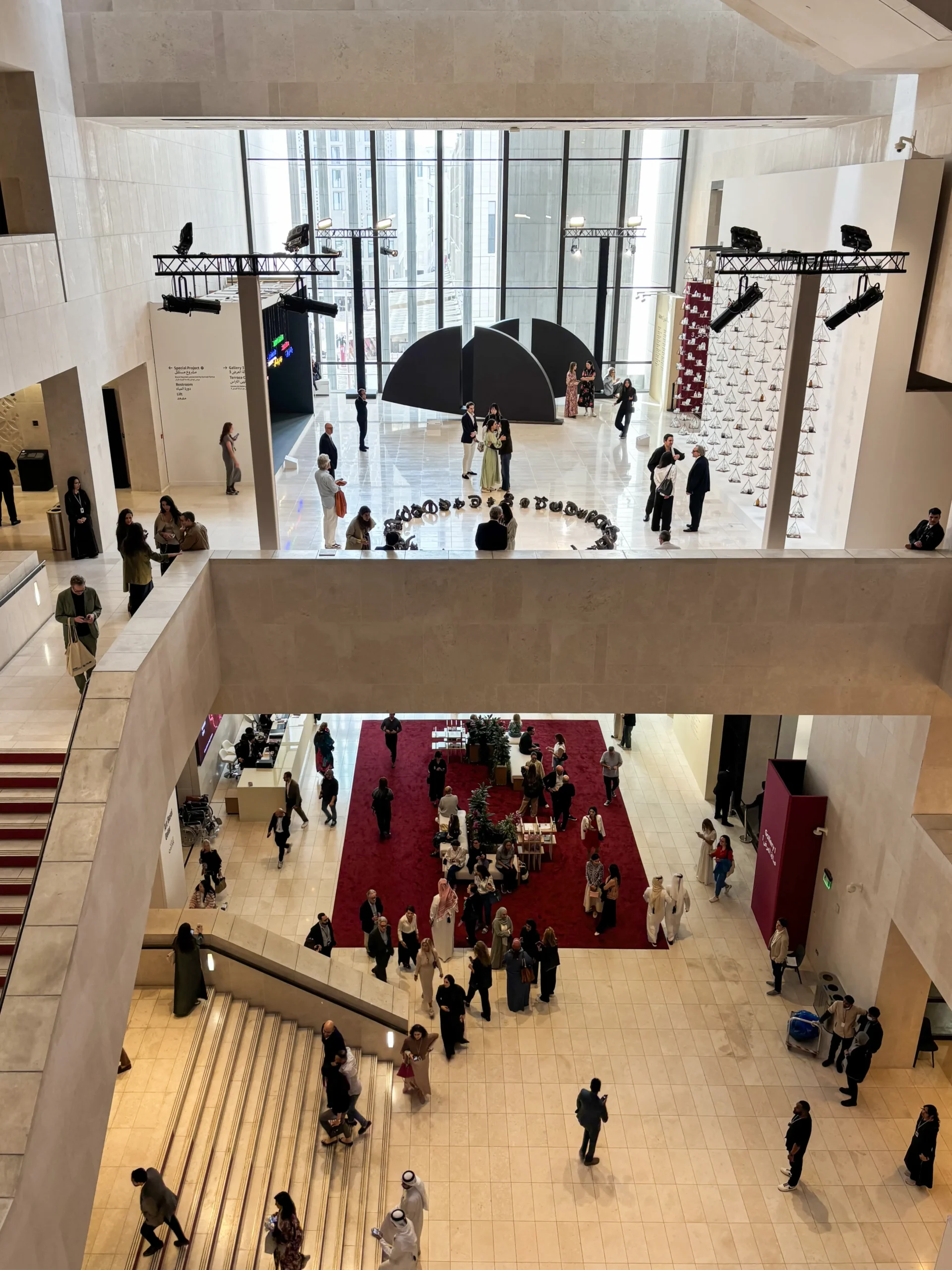
On these two fronts, prior to the war, it can be said that Qatar passes with flying colours. With 84 single-artists from 87 galleries exhibiting, the fair was significantly smaller than the 240-exhibitor-large Hong Kong 2026 edition, while the Paris 2025 edition (the next smallest) stood twice as big. The Qatar edition’s square footage was also compact; it was centred in Downtown Msheireb, a historic area of commercial activity recently regenerated into one of Doha’s most active cultural areas. The fair’s exhibited artworks and core public programming were split into two buildings five minutes apart on foot, the M7 and Doha Design District (DDD, a single building despite its name).
Yet this intimate set-up did not minimise its grandeur—in fact, it emphasised the ‘campus’ feeling that Noah Horowitz (Art Basel CEO) and Vincenzo de Bellis (Chief Artistic Officer and Global Director of Art Basel fairs) envisioned for Art Basel Qatar, a fair that they hoped can become more than just facilitator of art purchases1. In the words of Sheikha Al Mayassa Al Thani (chairperson of Qatar Museums) during a panel discussion, the Qatar edition is “an art fair where engagement is more important than transaction, discourse more important than division, curiosity more important than conviction.”
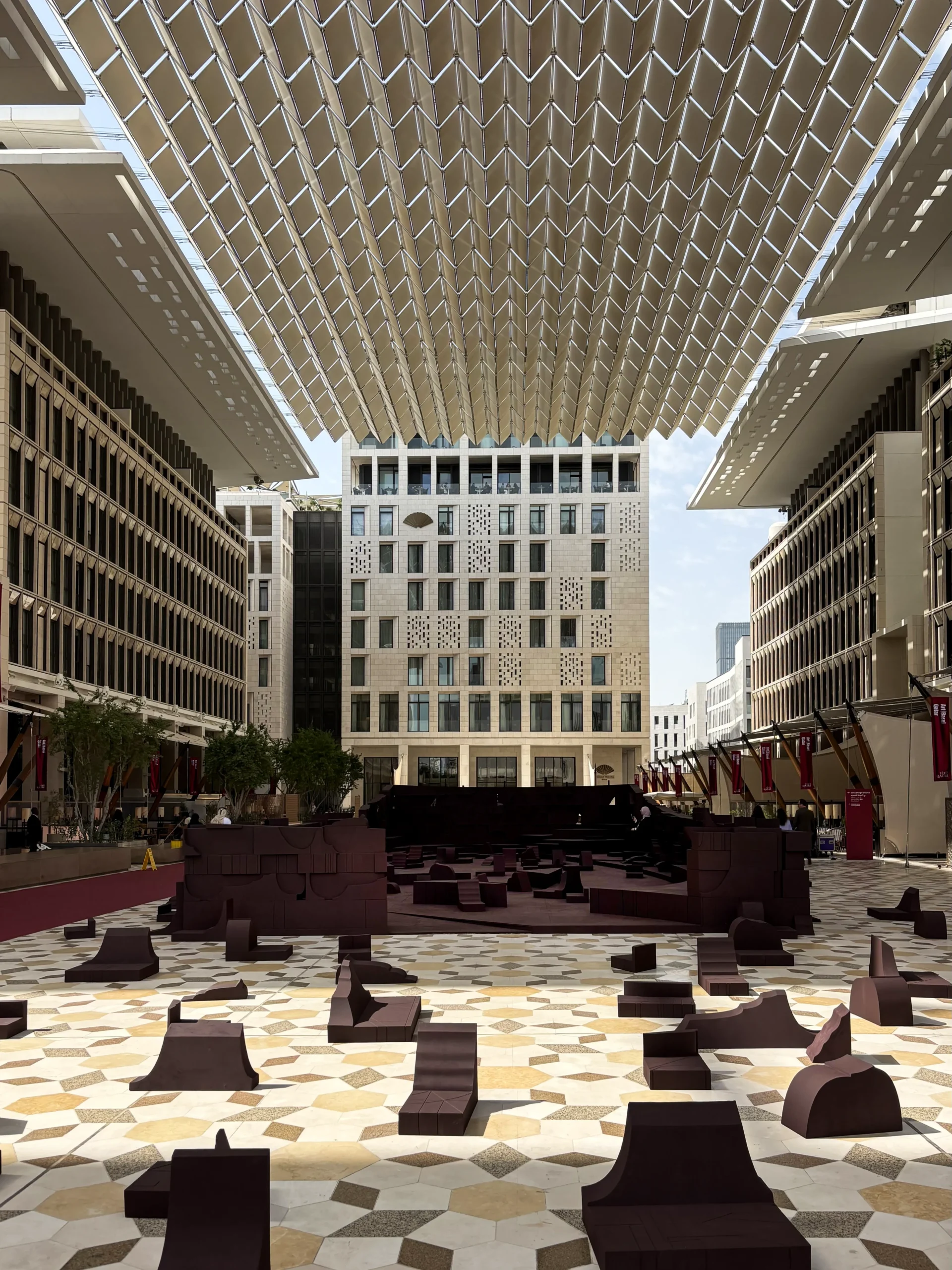
This intentionality paid off. Walking around, visitors were given the time and space to ask artists about their work and practice. The fair subsidised a large number of the artists’ travel to facilitate their presence throughout; on opening day, 40 of the 84 exhibited artists were actively engaging visitors at their gallery spaces2. The appreciation for the curatorial over the commercial aspects is clear; as Art Basel Qatar artistic director Wael Shawky puts it, it allows the artists to “be the center of attention, rather than (be the) products,” a sentiment often lost in large art fairs within the international circuit.
Spotlighting regional narratives
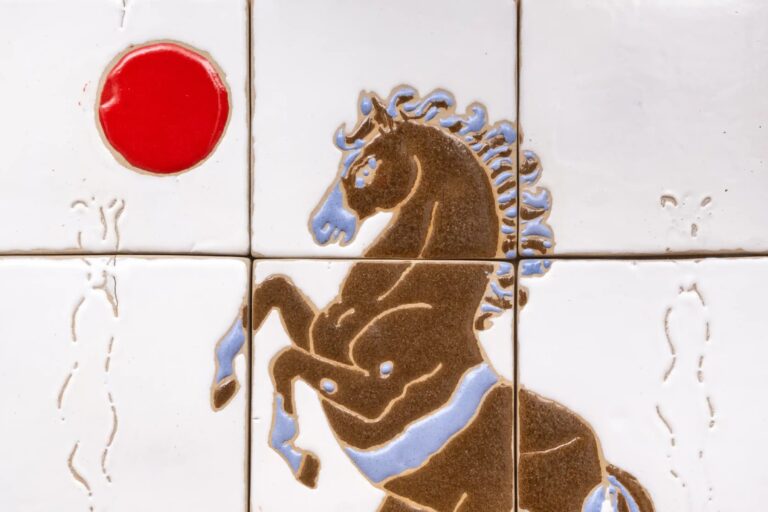
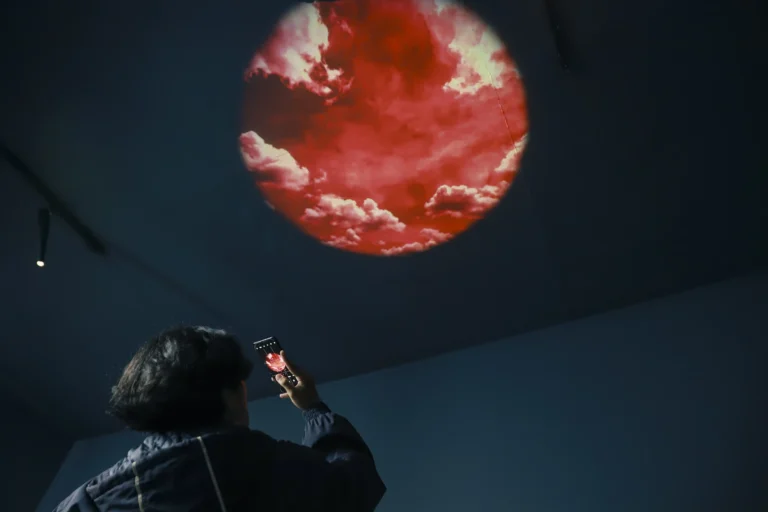
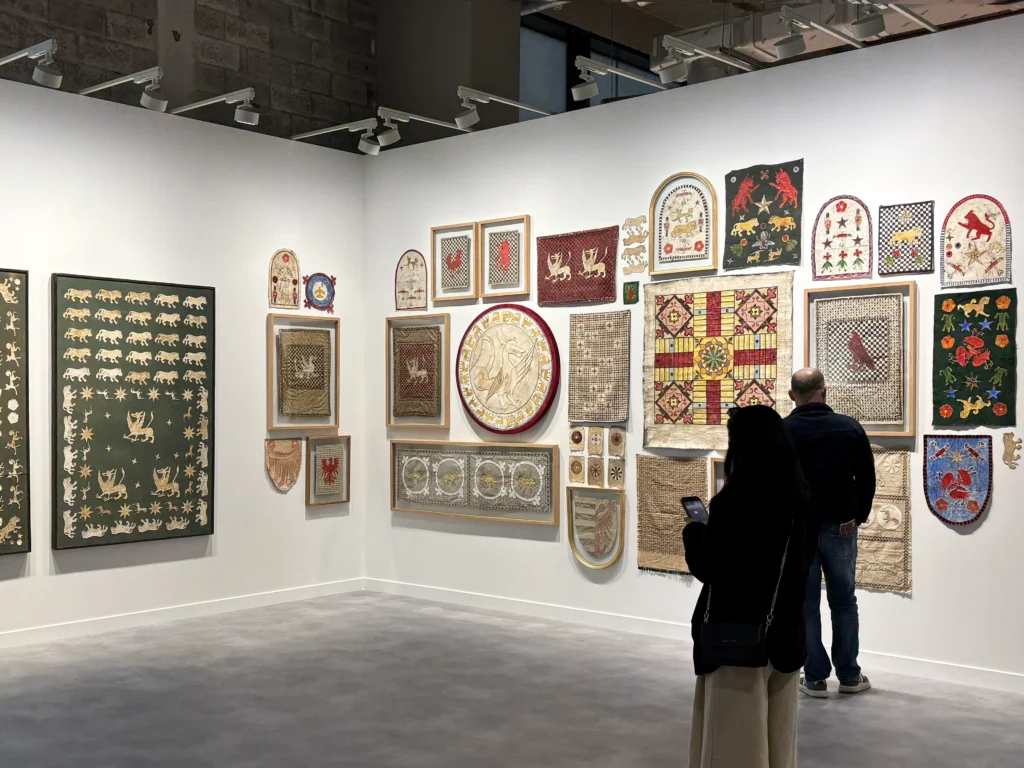
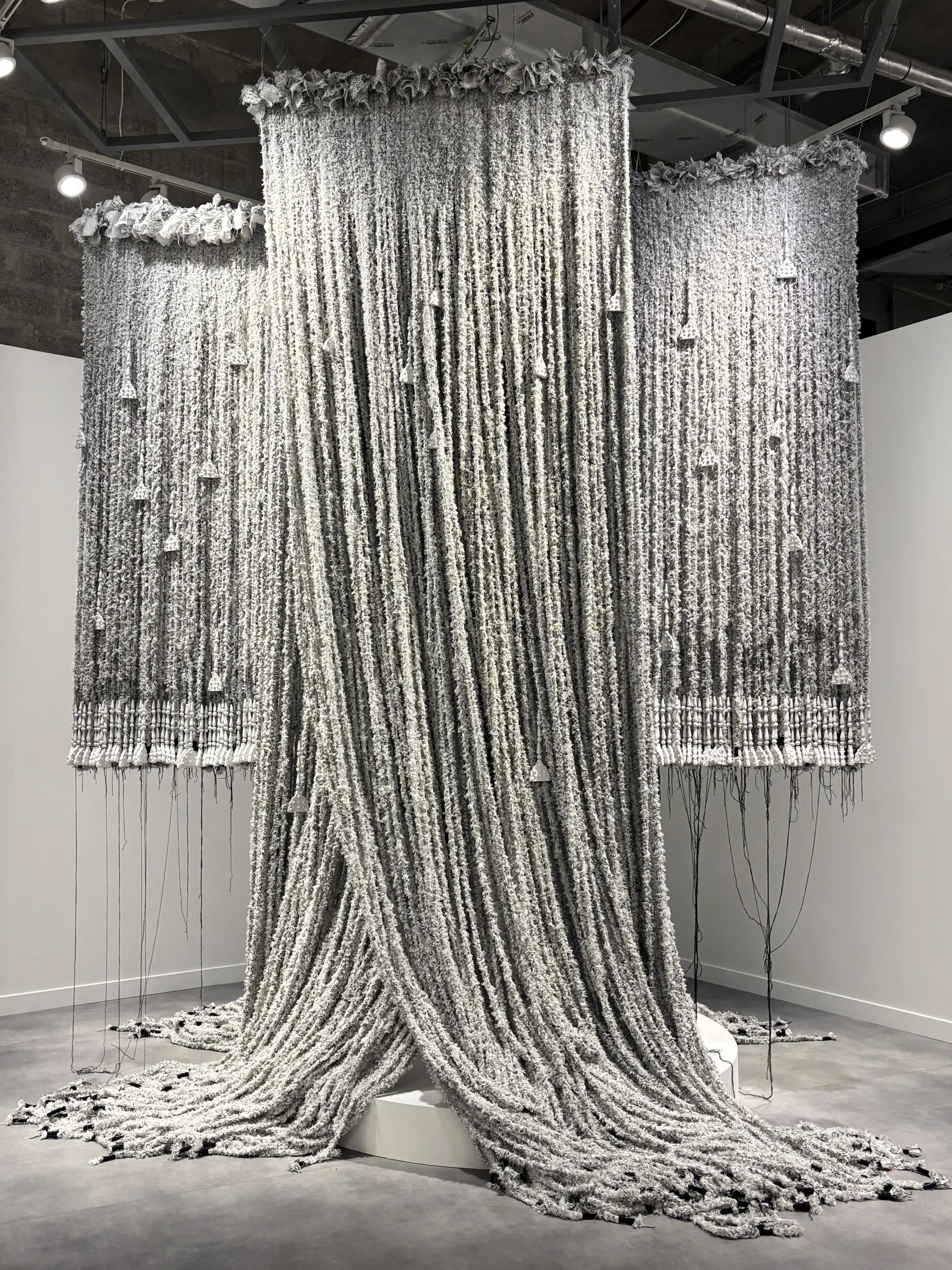
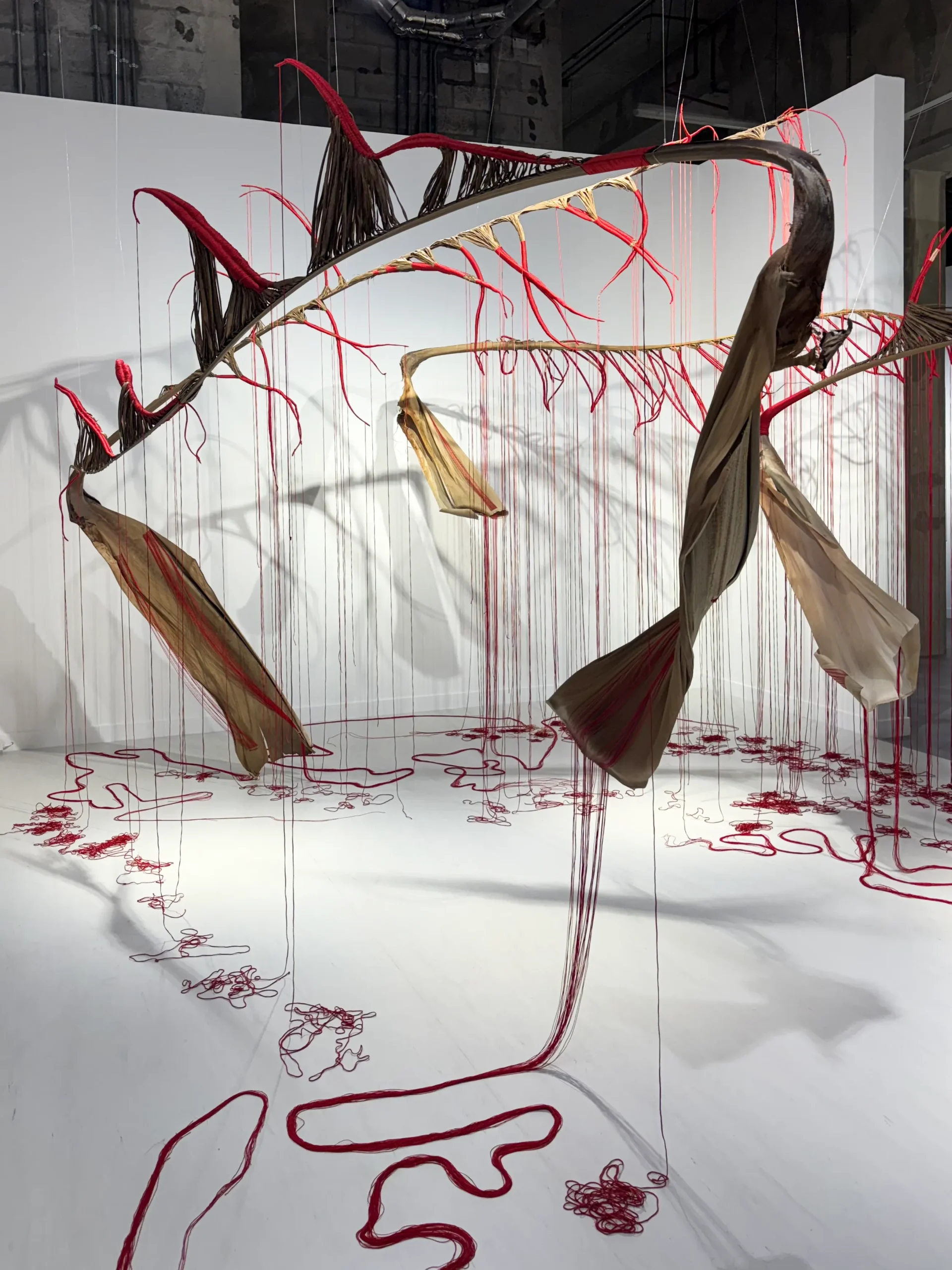
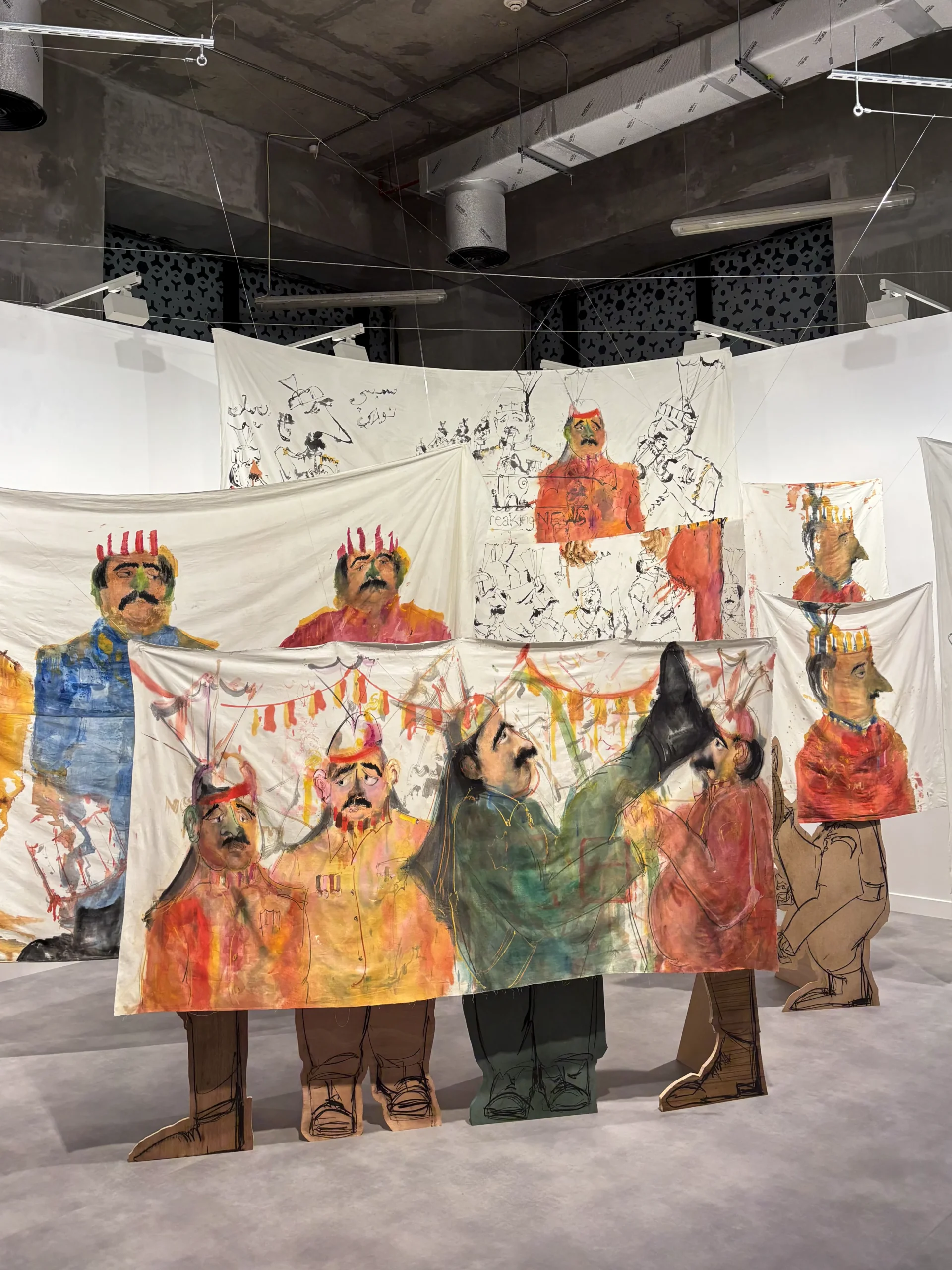
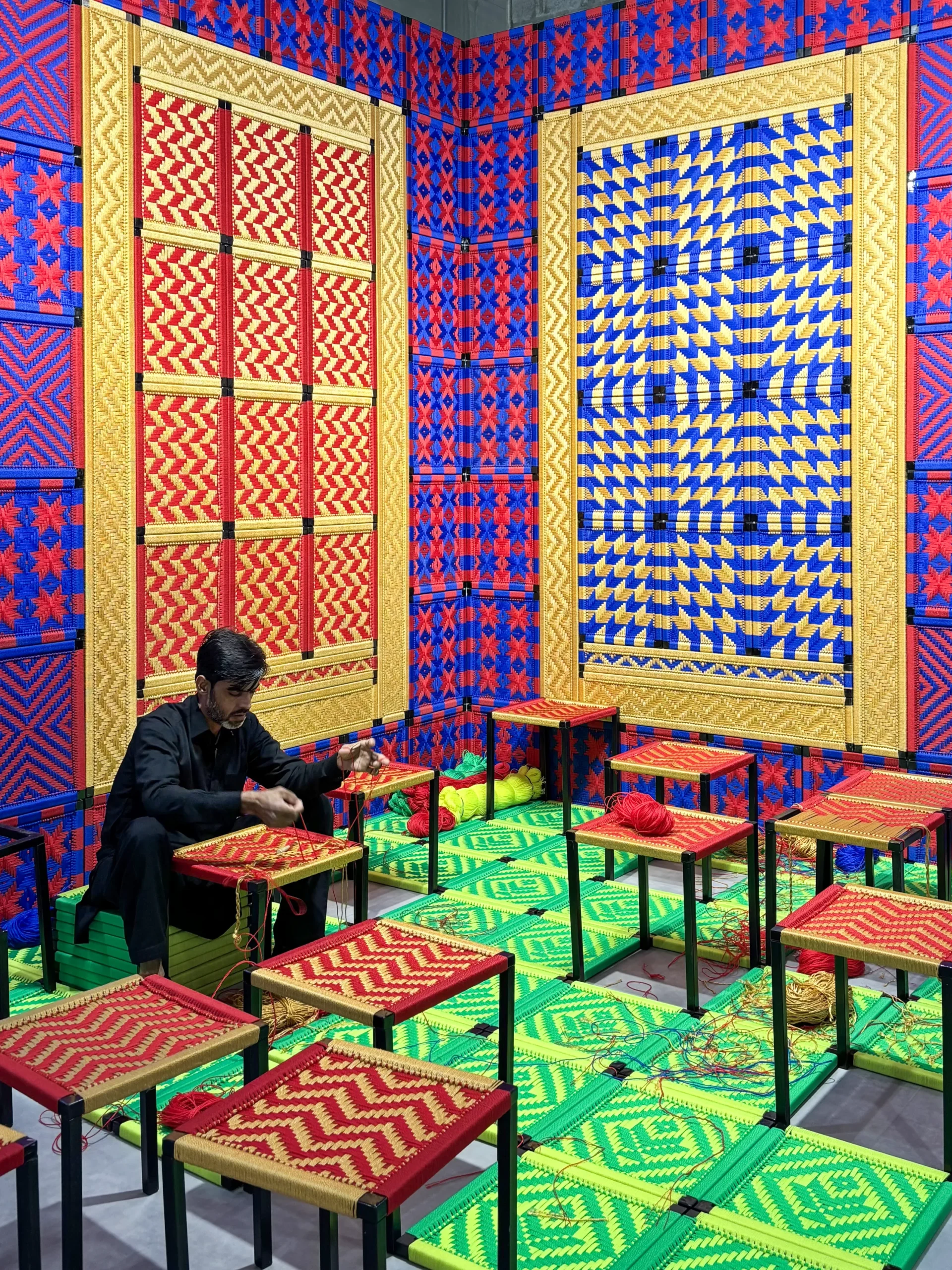
While household names familiar to all visitors such as Jean-Michael Basquiat and Pablo Picasso were represented in the gallery, artists from the Middle East, North Africa and South Asia (MENASA) region dominated the fair. Visitors were treated to works by Qatari artist Bouthayna Al-Muftah and Tehran-born artist Maryam Hoseini’s series Swells; guided to explore the rich textile pieces by Egyptian artist Mohamed Monaiseer; saw the incisive creations of Pakistani-born artist Aiza Ahmed and; experienced the site-specific, interactive installation by Pakistani artist Imran Qureshi, as well as many more works by artists who ground their practice in the region.

Living: Architectures of Memory (2026) by Bouthayna Al Muftah, Al Markhiya Gallery
This is an important—and encouraging—reflection of Qatar’s pivot in cultural strategy in recent years.
The early 2000s to 2010s saw Qatar’s state-led artistic landscape platform internationally-renowned, largely Western-leaning artists (e.g. Olafur Eliasson, Damien Hirst and Jeff Koons). However, as Qatar gained more traction and dominance in the cultural sphere—particularly following the 2022 FIFA World Cup) there was a large shift in narrative focus.
Over the past 5-7 years, more concerted effort has been made in highlighting not only local artists’ talents, but also national heritage, traditions and cultural assets. This effort has always existed, but the scale and focus have undoubtedly increased, highlighted by the numerous museums currently in development by Qatar Museums that do not rely on well-established, foreign museum IPs, but rather original invocations. These aim to centre domestic heritage (e.g. the Qatar Auto Museum, to preserve local car culture), local talent (e.g. the Art Mill Museum, focused on local contemporary art), and regional history (e.g. Lusail Museum, to critically examine orientalist art of the region).
This strategy is not new to the Arab Gulf countries. Leveraging well-known, established names in early adoption is done to build an interest base and sustainable engagement from the public. It is then usually followed by the creation of institutions more inherently ‘local.’
This can be seen as a necessary survival strategy for a region that has historically been overlooked in the Eurocentric and overwhelmingly Western cultural sphere. However, it is also important to safeguard underrepresented regional narratives in this effort, to ensure they have a stage to shine on and not be submerged by the already-dominant zeitgeist.
This is why Art Basel is crucial in Qatar’s strategy as the first large international art fair in the MENASA region. With Qatar’s young commercial gallery ecosystem and ambitious cultural vision, the art fair can prove to be an important instrument in shaping the region’s gallery market and the participation of art enthusiasts and collectors alike.
And that would have been the extent of its role, had the political and economic climate of the region remained the same.
Footnotes (2026) by Aiza Ahmed, Sargent’s Daughters
Opening Word of This New Scripture (2025) by Imran Qureshi, Nature Morte
The Inseparability of Art and Politics
From the moment I wrangled with the seeds of this article’s ideas and throughout its writing process, the conclusion of this piece has been changed multiple times. The ongoing US-Iran war has impacted (and is still impacting) the region in ways that are too vast to surmise in this singular piece of writing—effects that will be discussed, dissected and analysed for decades to come, if not longer.
Since the start of the war, Qatar has been forced to halt its most important export of liquid natural gas (LNG) and to reopen its tools of crisis management—honed from the country’s experience of the 2017-2021 diplomatic blockade and Covid-19 restrictions. But arguably the biggest blow to Qatar—and, by extension, its cultural sector— is the decades of reputation-building that have been undermined in a handful of weeks.
In light of this, Art Basel Qatar can no longer be seen as a standalone achievement of the nation ‘leaving its mark’ in the contemporary art world—it is now more significant as part of a larger cultural strategy that is crucial in rebuilding the public’s confidence in Qatar.
The 2025 winter season (typically eventful due to the cooler weather) saw the country chock-full of cultural programming that drew in crowds beyond the region; Doha Film Festival, the Web Summit, and various sporting events. With 2026 on the horizon, Qatar looked poised to take its stage as a powerhouse of culture, and Art Basel Qatar was yet another cherry to top off the proverbial sundae.
But the war has put a violent stop towards this momentum and confidence built over many years. And confidence that cannot be rebuilt overnight—especially among international stakeholders.
When the dust settles and the country looks to rebuild its previous momentum, Qatar will ask itself: what brings people back? And what will make people stay?
While commodities may eventually stabilise the Qatari economy and market, such improvements will go largely unnoticed by the general public, for whom a direct experience of Qatar will not be through its oil and gas exports. It will become imperative for the nation to understand that its cultural assets are a resource capable of securing its social capital value (and, perhaps, its economy) against the world’s volatility. People come together over conferences, exhibitions, festivals—ultimately, it will be these experiences of culture and art that become key to restoring and strengthening Qatar’s reputation.
Art Basel is bound to be used as an indicator for how much confidence there is in Qatar, on a global level, to deliver key cultural events and become a global hub of culture.
Therefore, the second Art Basel Qatar must be a standout success. If Qatar was already facing scrutiny before, there is even less room for error now. To avoid the danger of a downward reputational trajectory, Qatar must show that they can weather this period of political and economic uncertainty and come out on the other side already re-engaging, committing to a vision that is just as strong. If future editions are to follow, it must draw sizeable crowds, have incisive curation that spark conversation, and be an experience that stands equal among more established art cities such as Paris and Hong Kong. It is a daunting task to prove that the cultural sector is indispensable even during strife, but it is a task that the state leadership seems eager to prove capable of handling.
At the time of writing this article, the situation has yet to stabilise, but there is strong optimistic messaging. Various conferences and events are cautiously postponed to the end of the year. Personally speaking, work on museums and creative infrastructures, as well as grant awards in media such as filmmaking, have not been halted. State leaders seem eager to get things back to normal as soon as possible. They seem determined to prove that this incident serves as a stress-test for Qatar—a country that has spent years trying to diversify its economy beyond oil and gas exports—and that they will pass with flying colours.
There is an acknowledgement that the landscape to navigate has become much more complex, and all assumptions made previously will have to be revisited, redressed, and reanalysed.
But there is also belief that it will survive. The arts is one of the ways a society remains in conversation and introspection with itself.
And for that, future fairs must continue to be a space to sustain these conversations.
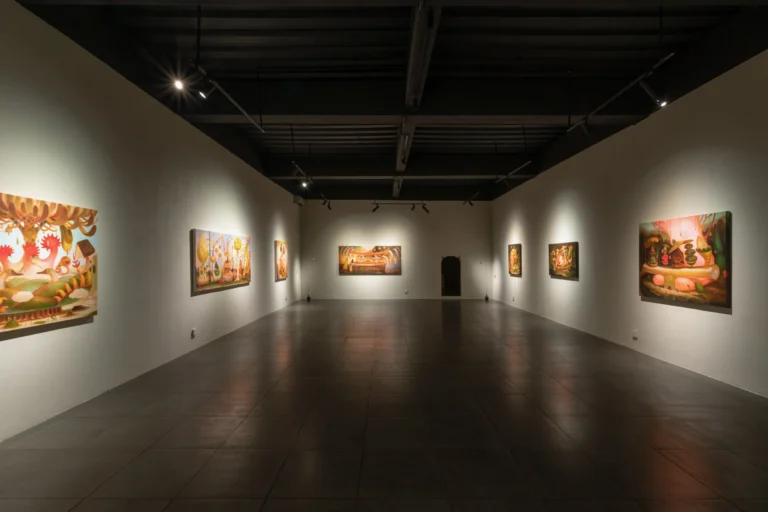
Interior of M7 building, shot from the 2nd floor
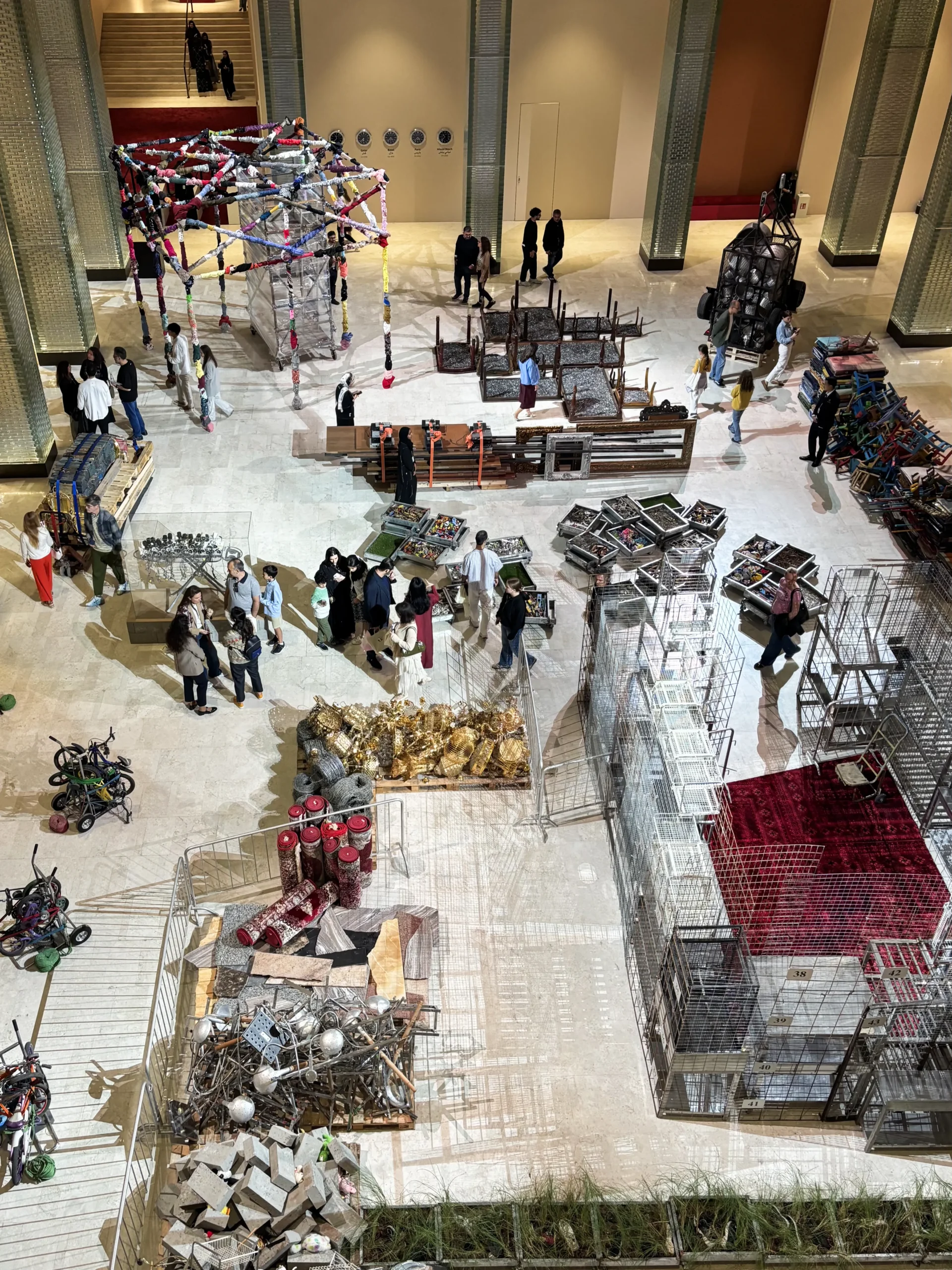
Transition, among other things (2025) by Khalil Rabah. Displayed in the lobby of DDD
References
- “Art Basel Qatar: Noah Horowitz on Why Doha Matters Now,” Scale. Link
- Tim Schneider, “On the Ground at Art Basel Qatar: 84 Booths, a Sprinkle of Sales, and One Place to Drink,” Cultured Magazine, February 4, 2026. Link
Author’s Biography
Rania Putri
Rania Putri is a Curatorial Affairs and Museum Development Researcher at Qatar Museums. Beyond programming and curation, her work lies within the sphere of arts and culture policy, looking into how the creative industry can be a driver of socioeconomic development and empower marginalised voices. She is particularly interested in the intersection of culture, history, politics and nation-building. Born in Jakarta and raised in Doha, she is constantly learning about various cultural landscapes, with a particular interest in the Southeast Asia and MENA regions. Rania holds a Master’s in Public Policy (MPP) from Yale University and a BSc in Government and Economics from The London School of Economics (LSE).